Have been back here in Indiana now for about 3 months or so… my wonderful sojourn in Paris seems like a dream now. That said, it is terrific to catch up with spouse, colleagues & good friends again – I missed everyone a lot. The creatures have also been cuddled many times over – missed them immensely also while I was away…
It is time to give thanks for the wonderful connections & interactions one makes as a scientist. I was also fortunate to catch up with old colleagues & friends while I was in Europe. Also, I have got to know so many young scientists as well in my travels over the last 6 months. Many of them I had already made contact with on science Twitter, but now was a chance to meet them in person! That was a lot of fun – whether visiting them in their home cities [Helsinki, Paris, Ghent or Singapore] or meeting them face-to-face at a conference. I look forward to doing more of this in future as I expand my contacts on science Twitter. I am enjoying regular Skype meetings with colleagues across the pond, as we continue to discuss ongoing projects.
As to what I have actually come back to, that is an interesting question. I left at the start of January 2018 & returned mid-July 2018. I had originally decided to do a post on what was different between 2 cultures on my return, but I have contemplated that for about 3 months now & have come to the conclusion that that no longer is viable. Why? Because it no longer feels like it is the same country here. I am not really sure what the culture really is about now, so I guess I will have to do a lot of navel gazing so I can figure that one out.
What to do? Instead I will share with you a couple of photos – the ‘then’ and ‘now’ of Paris, if you will. I went back to a couple of spots that I had taken some pics that I liked years earlier – in one case almost 20 years ago. I tried to take the same shot – same perspective etc. But there are different seasons, different times of day… The camera is different: the ‘then’ was an SLR, either digital or film, and the ‘now’ was my iPhone 8 with its 2 excellent little cameras. I also wonder how much my eye has changed over the years?
What you think of the images – do you like the old or the new best? [The ‘old’ is on the left & the ‘new is on the ‘right’.]
The old…
..and the new.
The old…
…and the new.
And for those of you who need data, here are the two original [& uncropped] new shots straight out of the iPhone. The old shots were taken with the explicit purpose of shooting in black & white – a medium that I absolutely adore. The new shots were taken with the aim of converting them to black & white.
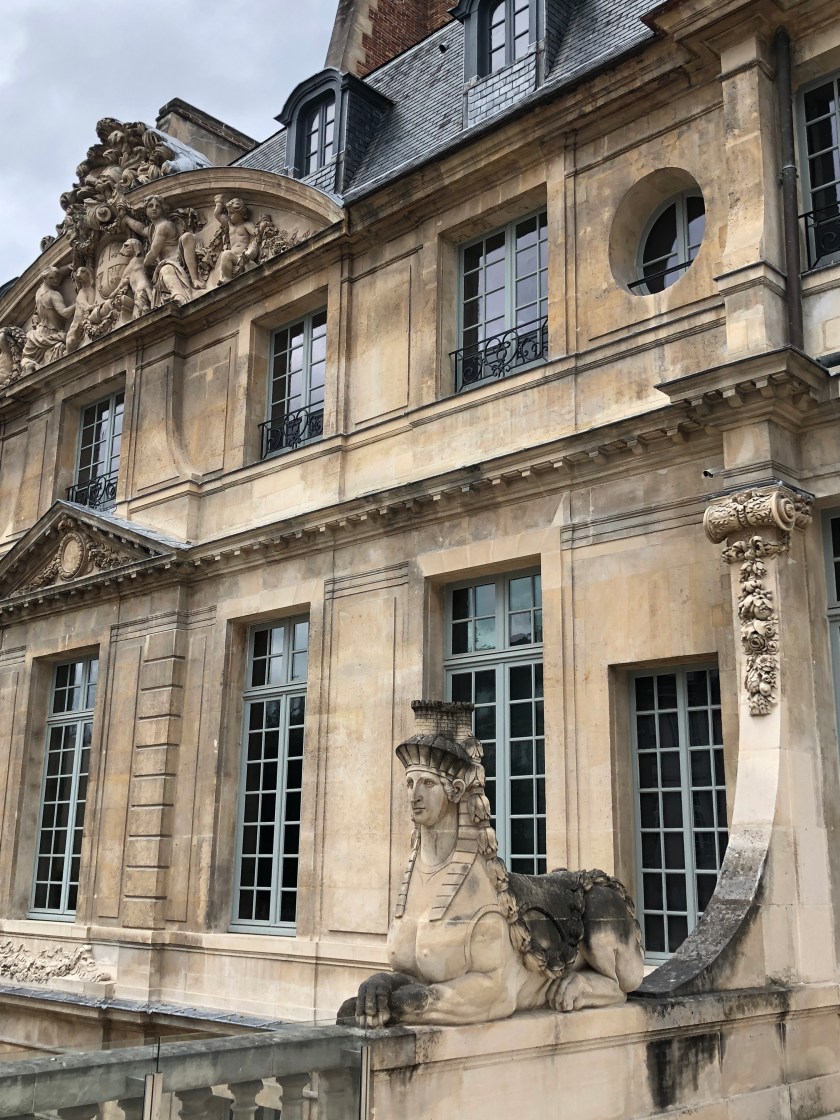
In an earlier post I talked about my visit to the Musée Rodin & the many talents of Auguste Rodin. Another individual who was very successful in traversing genres of art, but who is best known for his paintings is Pablo Picasso [1881-1973]. The museum devoted to him, the Musée National de Picasso-Paris, is in the 3rd arrondisement of Paris & it’s magnificent building also has an interesting history [http://www.museepicassoparis.fr/en/]. Pierre Aubert originally bought the land & the mansion’s construction was completed in 1659. The building was known as the l’Hôtel Salé, because Pierre Aubert collected taxes on salt in the name of the king.
The building was renovated between 1979-1985 by the architect Roland Simounet. One of the building’s original features is a magnificent central staircase. There is an interesting contrast of the old & the new: see the images of 2 staircases below – one of the original main staircase & the other of a [minor] staircase connecting the cafe with the rest of the building. The latter reminds me of some of Picasso’s curved brushstrokes…
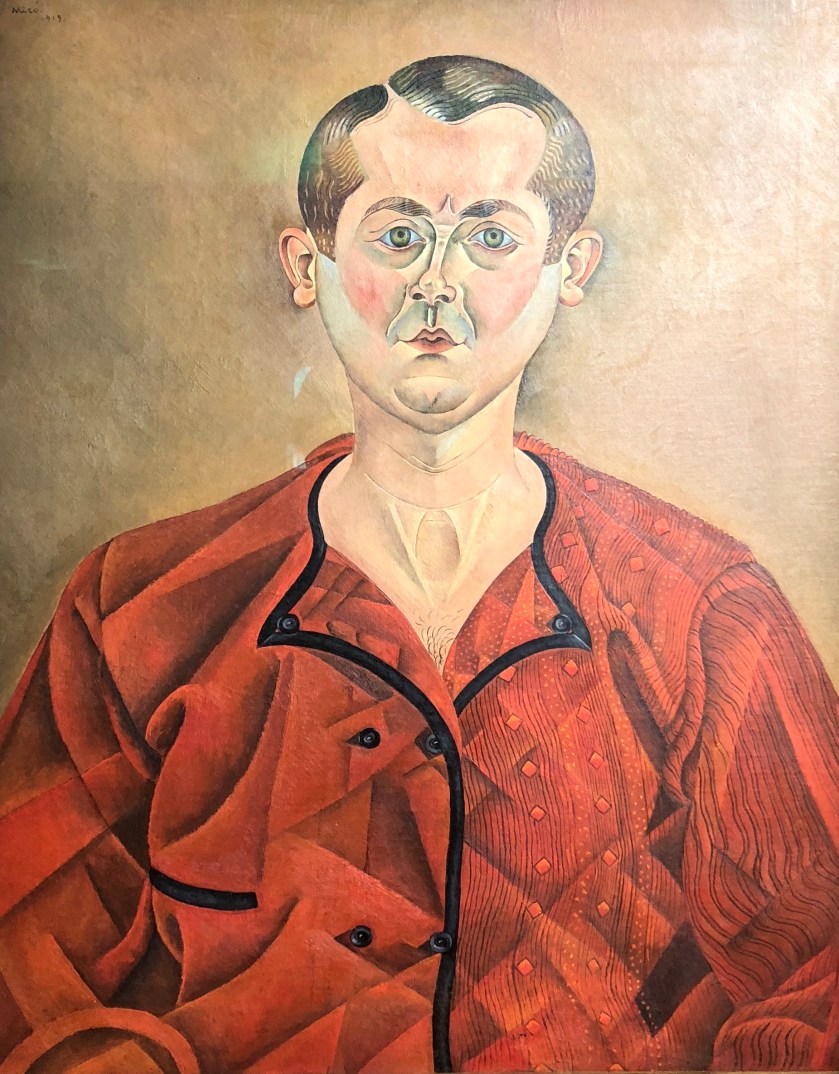
Similar to the Musée Rodin (see earlier post), the creation of the Musée National de Picasso-Paris also has an interesting story. In March 1985, the Paris City Council made the decision to house the national museum devoted to Picasso in the renovated Hôtel Salé building, to house the collection of Picasso’s works that had been amassed by the state in earlier decades from two donations in 1976 & 1990 by members of Picasso’s family & friends. What is really interesting also is that Picasso’s personal archives were also part of the donations & this includes his personal art collection [donated by Picasso himself apparently] – which is housed on the top floor of the museum. This was something that I found particularly fascinating – for a number of reasons. First, it gives insight into the artist’s appreciation of the work of his peers, as well as artists who lived before him. Second, some of the works were unusual for the artists that painted them – either thematically or stylistically. For example. here is a rare self-portrait of Joan Miró [1893-1983] that was completed in 1919.
Miró came from Barcelona & is most celebrated for his paintings of an abstract nature. He was certainly not known for self-portraits or for representational art… [https://en.wikipedia.org/wiki/Joan_Mir%C3%B3] I think that the treatment of the face & the textures/patterns on the shirt are very unusual & interesting. I have not been to his museum in Barcelona [https://www.fmirobcn.org/en/] – but that is on my list for my next visit there.
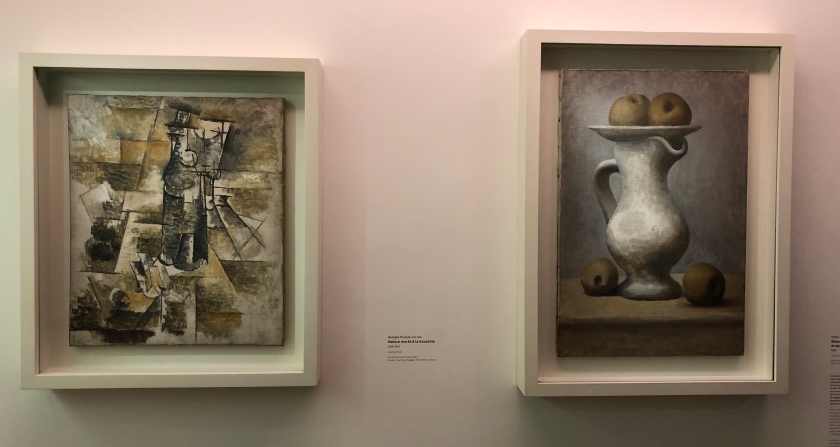
Picasso also owned a couple of paintings by Georges Braque [1882-1963], a Frenchman who among other things was a proponent of fauvism & cubism, alongside Picasso [https://en.wikipedia.org/wiki/Georges_Braque]. Here is an image of two of Braque’s paintings – examples of still life, hung side-by-side:
The image on the right [Nature morte au pichet et aux pommes] is quite representational & was painted in 1919, AFTER the very cubist image on the left [Nature morte à la bouteille], which was painted in 1910-11. Interestingly, while the artist could radically change his style of painting, he kept the same relatively muted & harmonious color palette. That is something that I have always enjoyed in his work – the sharpness of the cubist lines & angles has always been tempered by his gentleness in coloration…
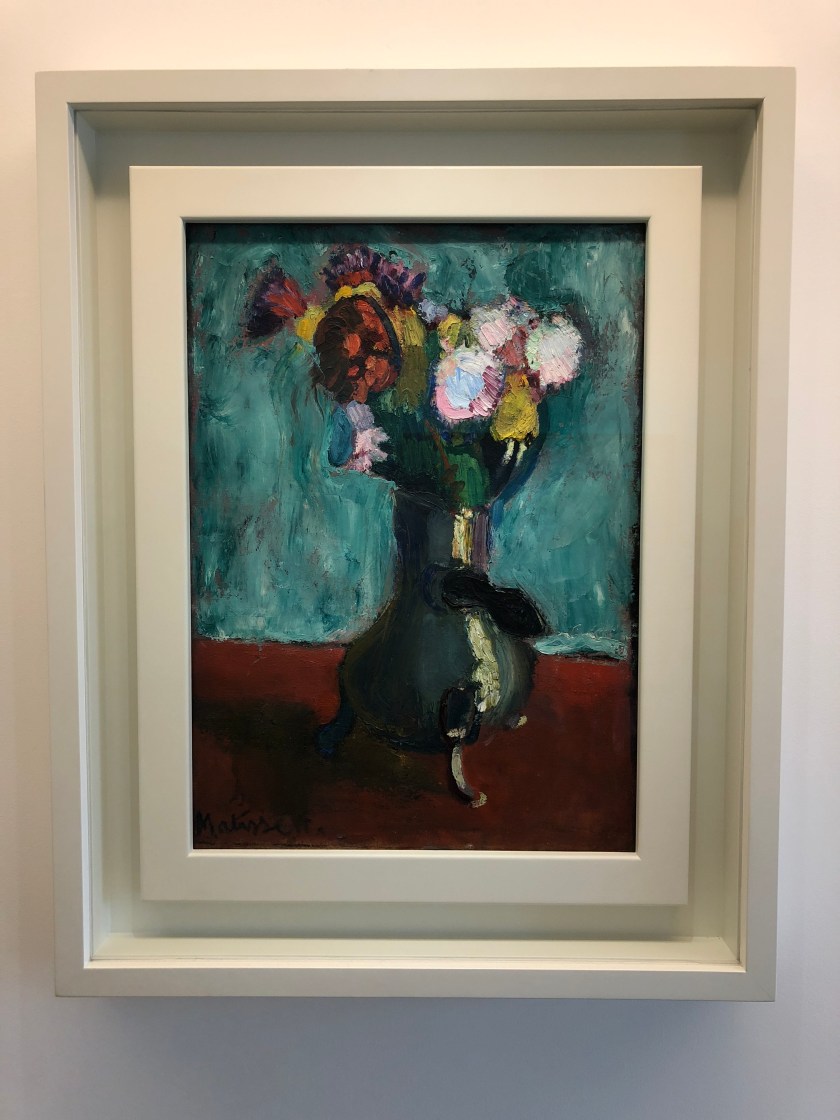
Finally, the last image that I found fascinating was this fairly subdued still life from 1902 [Bouquet de fleurs dans la chocolatière] by Matisse – so different to what he would generate years later…
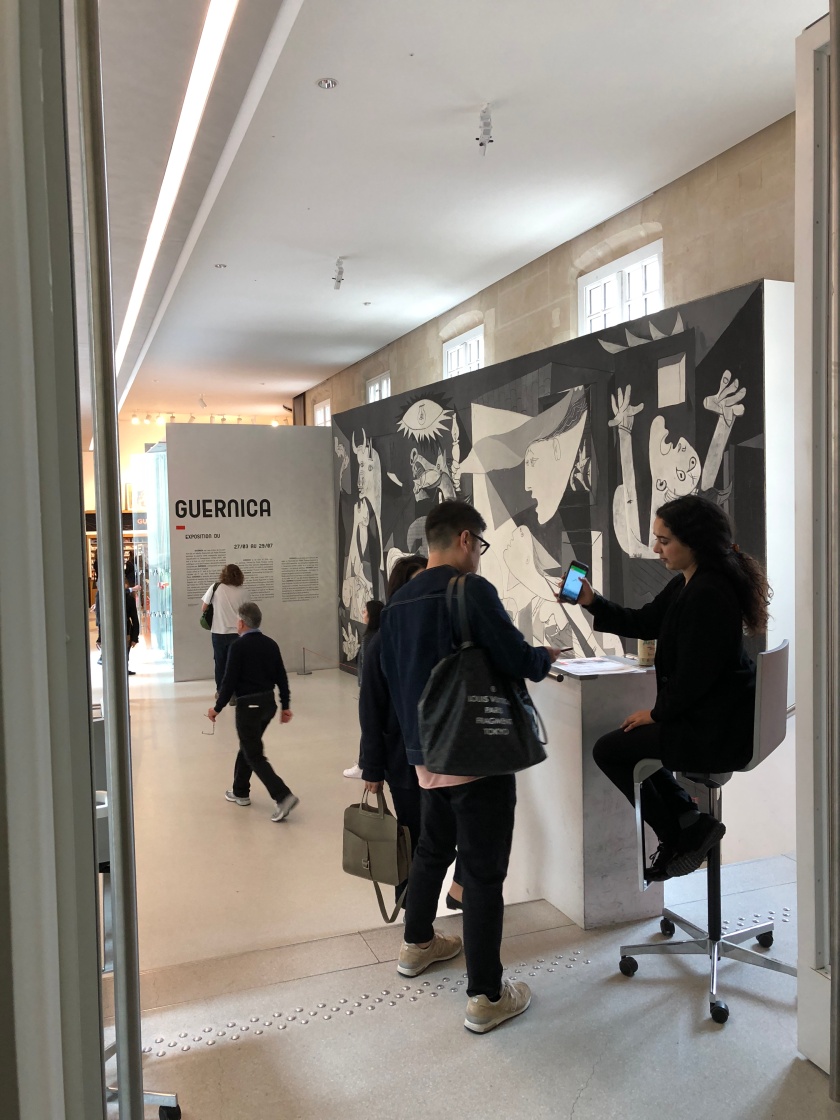
But what about Picasso himself? What drove him & influenced his work? The temporary exhibit at his museum in Paris was devoted to examining these themes & the background work & context for Picasso’s magnum opus Guernica – a work that today remains permanently housed in the Museo Nacional Centro de Arte Reina Sofia in Madrid. I have had the good fortune to stand in front of this monumental canvas at the Reina Sofia in Madrid. It is a work not just of huge physical proportions [3.493 m x 7.766 m], but also of monumental human themes. The entire work is painted in a greyscale palate – blacks, greys & whites. The temporary exhibit in Paris featured a print of the work at the exhibit’s entrance – thereby setting the context for the exhibition. [I have not been able to reproduce an actual image of Guernica here for you due to copyright issues…]
Picasso finished Guernica in 1937. The canvas represented the horrors of the Spanish Civil War – in particular, the April 26th 1937 bombing by Nazi planes of the town of Guernica – a Basque country stronghold of the Republican resistance. Incredibly, General Franco had allowed the bombing the town of Guernica by Adolf Hitler – letting the Nazis try out some new weaponry & military tactics on Spanish citizens. What made this particularly egregious was that the casualties were mainly women & children – apparently the men were away fighting in the Spanish Civil War. The wooden buildings in town produced a massive fire as a result of the bombing. The people of Guernica had no escape because the roads & bridges out of the town had been destroyed by the bombs. I bought a book of the story of history of the town of Guernica after the exhibition & it is very distressing reading indeed… [For a historical background see https://en.wikipedia.org/wiki/Guernica]
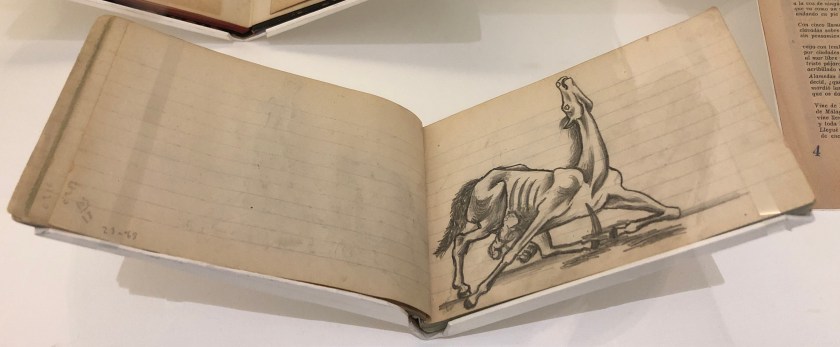
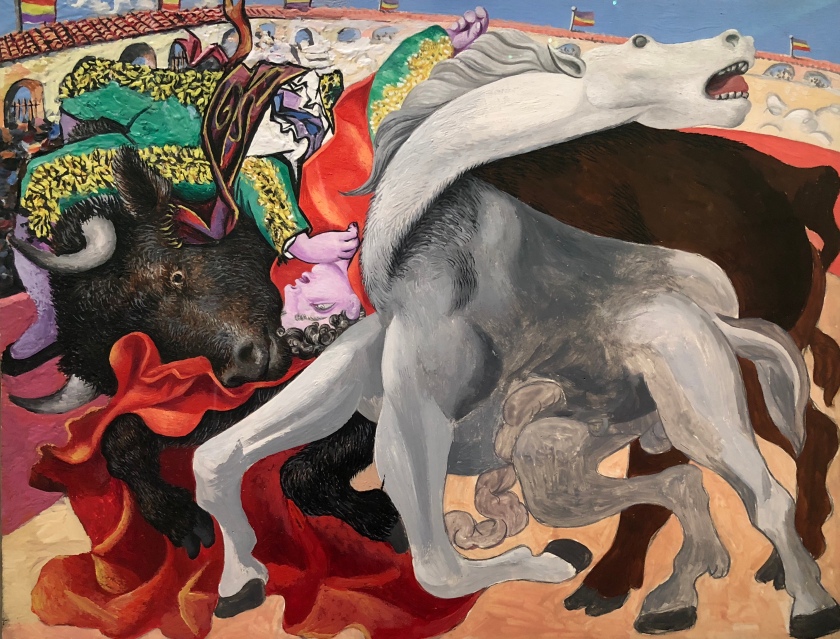
In 1937 Picasso was living in Paris, & had been commissioned by the Spanish Government to create a work of art for the Paris Exhibition of that same year. After hearing about the events in Guernica he changed his mind about the proposed theme & created a monumental canvas devoted to depicting the horrors of war & the suffering of humans & animals. In order to create his masterwork, Picasso create many drawings & smaller paintings – trying out potential images & themes to include in his magnum opus whose main elements are a bull, a horse & humans. The distress & agony of the horses leaps from the sketch [Étude pour Cheval] and the painting [Corrida: La mort du torero] below – studies that preceded the painting of Guernica.
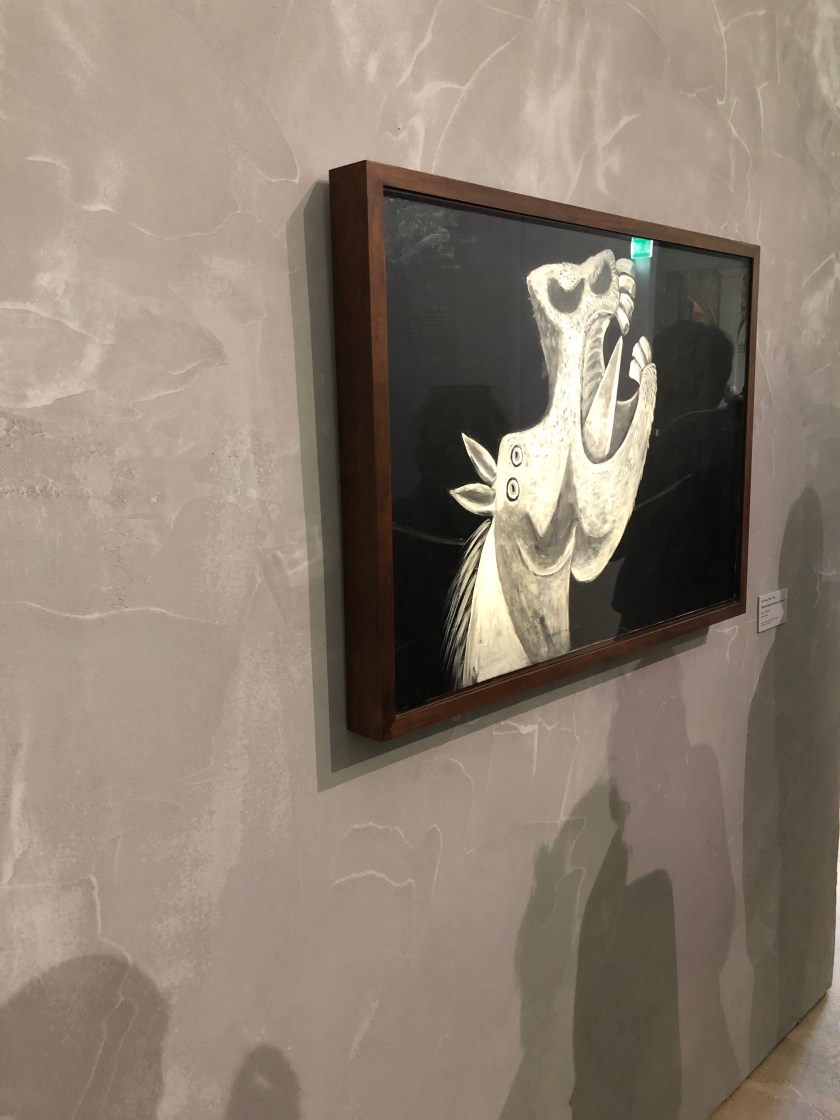
The horse is a central feature of Guernica & Picasso also did a study of it’s head – as seen in the image below [Tête de cheval, étude pour Guernica].
At one point in time Picasso had said that the horse in Guernica symbolizes the people of Guernica, but there have been other reported interpretations. Another prominent feature of Guernica is the bull – that on one occasion Picasso had said was meant to symbolize brutality and darkness [https://www.spanish-art.org/spanish-painting-guernica.html]The destructive bull can also be seen in one of the images above [Corrida: La mort du torero]. That said, Picasso is also on the record as saying: “…this bull is a bull and this horse is a horse… If you give a meaning to certain things in my paintings it may be very true, but it is not my idea to give this meaning. What ideas and conclusions you have got I obtained too, but instinctively, unconsciously. I make the painting for the painting. I paint the objects for what they are.” [see https://en.wikipedia.org/wiki/Guernica_(Picasso)]
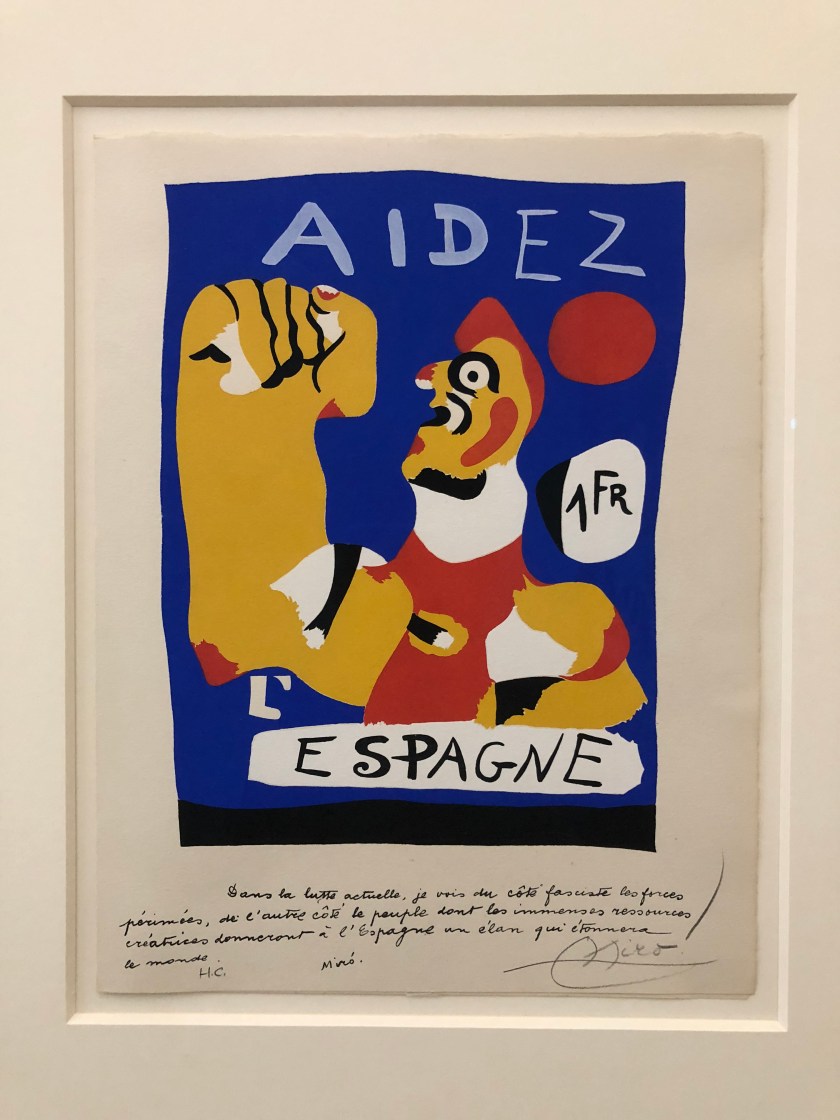
Whatever Picasso meant when he painted Guernica seemed to resonate with so many people – it became a symbol of protest. After its showing at the 1937 Paris World Fair [Exposition Internationale des Arts et Techniques dans la Vie Moderne] it was sent around the world on tour to raise money for Spanish war relief. Indeed, many artists made posters to support this effort to raise money for the casualties of the conflict, as this poster by Miro [see below] shows:
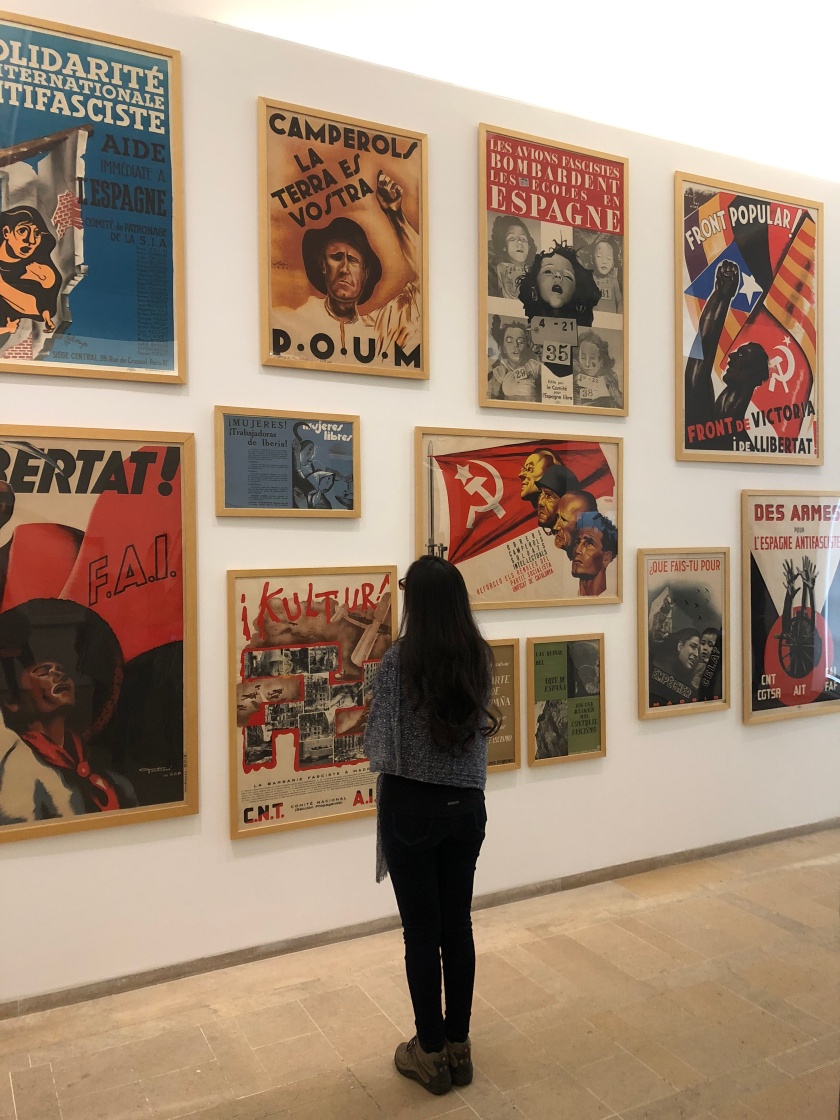
… & this wall of posters supporting the resistance indicates:
Artists & writers have always participated in political movements throughout history. Given that history currently seems to want to desperately repeat itself I am sure we will see a renewed effort in the creative arts in this sphere…
But back to Picasso. Painting is the main art that we associate with Picasso, but he was one to experiment with other media too – moving into collage, sculpture, stage design & also ceramics. The museum in Paris had mainly paintings, but I would like to see a collection of his other works.
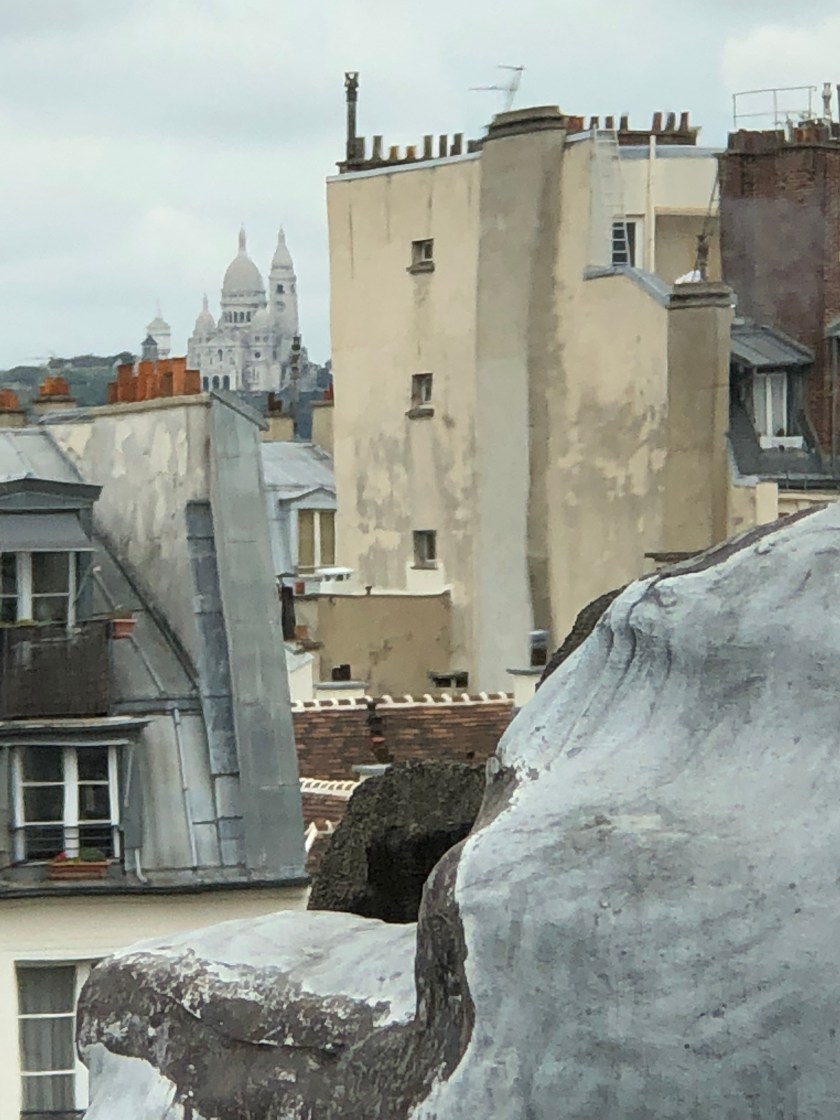
I am glad that I found time to go to Picasso’s Museum in Paris – that visit & some background reading I did on him gave me a newfound respect for him. He was one of those rare individuals who can make the most of different media – producing memorable & astounding works – because he could imbue each medium with the representation of his idea. As I mentioned earlier, the building that the Museum is housed in is also interesting in its own right. But there are also interesting views of Paris from the upper floors of the Museum – as this picture of the rooftops looking out to Montmartre shows…
I still have a couple more posts on my Paris experience – here is one of them.
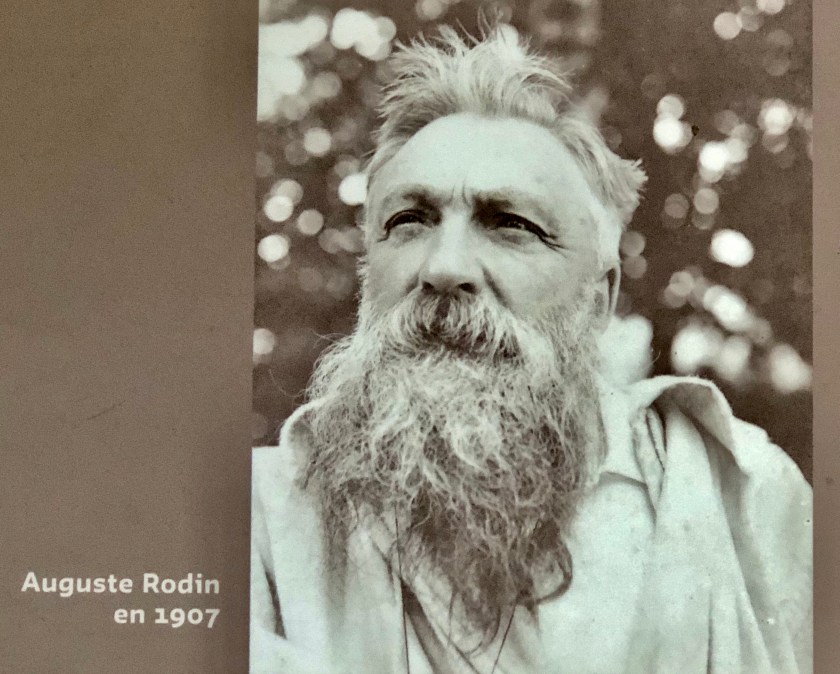
In every field of endeavor there will always be those who show exceptional skill at a particular activity. But quite rare is the individual who has mastery of multiple fields of expertise. In my wanderings around Paris I have had the opportunity to visit the respective museums devoted to Rodin [1840-1917] [Musée Rodin] & Picasso [1881-1973] [Musée National de Picasso-Paris] – two individuals who seemed to find success at whatever genre of art, sculpture or ceramics they turned their attention to. I had never visited these museums on previous visits to Paris, so these were definitely on my list of things to do – especially before the tourist season peaked here.
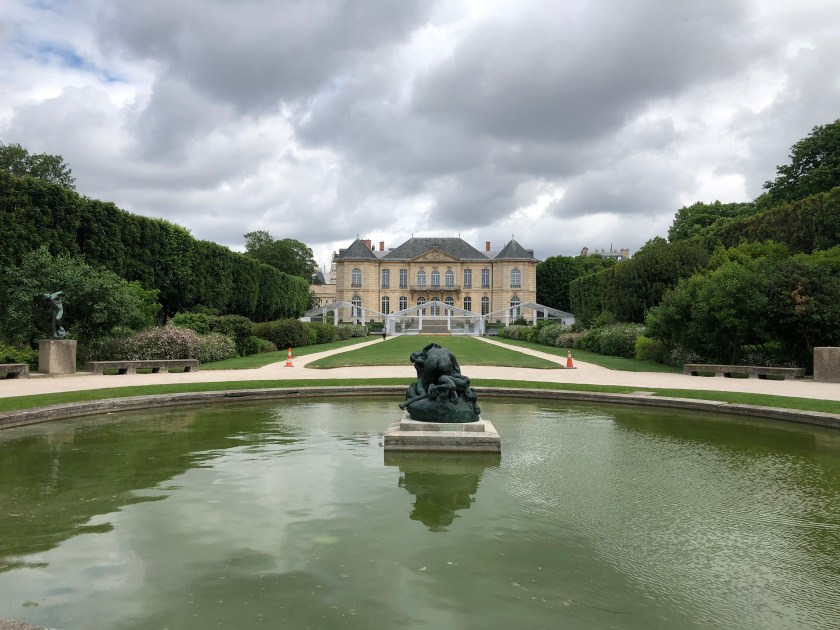
The Rodin Museum itself is housed in a magnificent building, which was built between 1827-1837 by a wealthy financier [Abraham Peyrenc de Moras]. Unfortunately, de Moras passed away before construction was finished. de Moras’s widow lived there until 1853, when she sold the place to Louis-Antoine de Gontaut-Biron. The place is still known as l’Hôtel Biron. It changed hands & purposes over the course of the years, but in the early 20th century it was the place to be renting space if you were an artist or writer. Matisse hung out there as well. Rodin ended up renting 4 rooms there on the ground floor where he was able to also have his studio. Interestingly, in 1911 the place was sold to the state to be repurposed. All the tenants left, with the exception of Rodin… He offered his collection of works to the state for the purpose of having them kept in one place to help train artists & sculpturs, with the idea that eventually [on his passing] it would become a Museum devoted to his work. In 1916, the state agreed & the place became the Musee Rodin in 1919. [Rodin died in 1917. For more information on the history behind the museum, see http://www.musee-rodin.fr/] The building is gorgeous, as are the gardens where a lot of Rodin’s larger sculptures are housed.
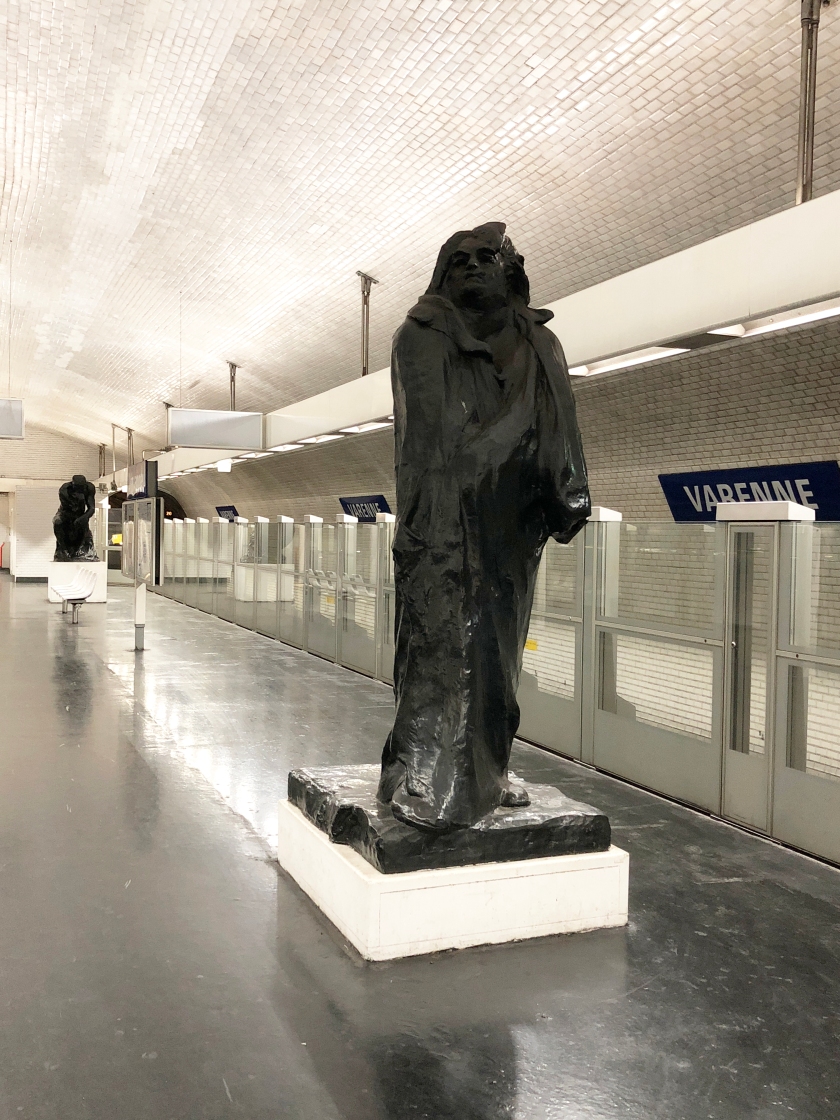
His most well known works are Le Penseur [The Thinker] & of course his sculpture of Balzac wearing the dressing gown in which he would apparently always write in.
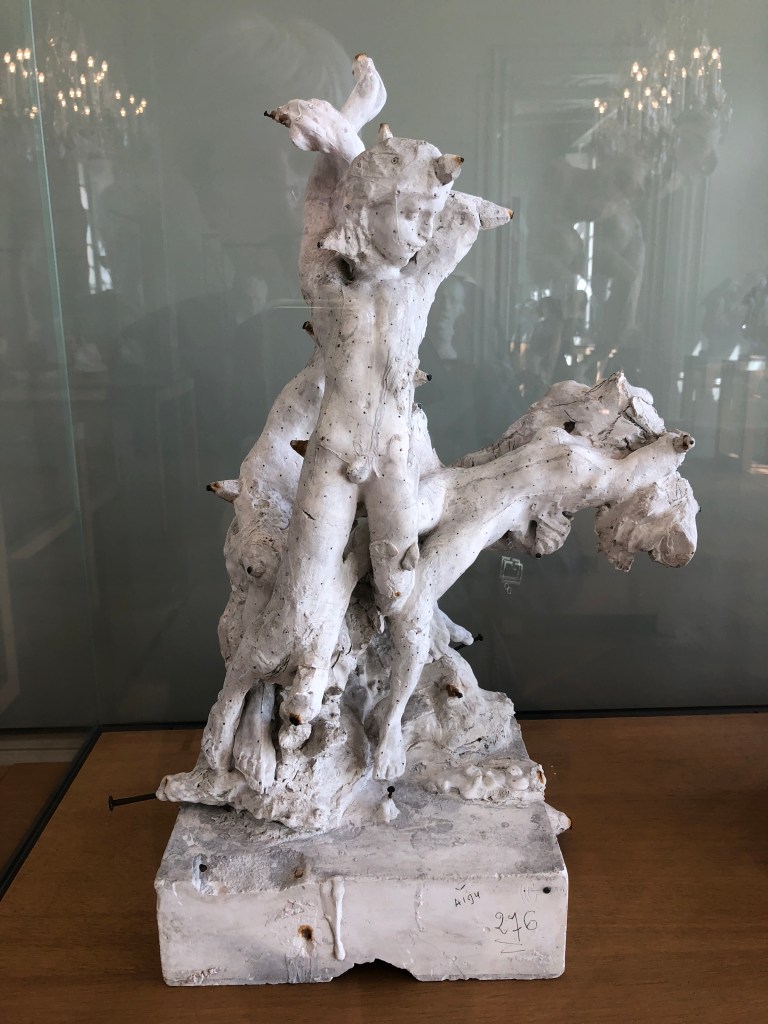
Rodin did a number of studies of Balzac in plaster – no doubt planning this monumental work over time. One of them was a nude, which is displayed inside in the museum. Another was a plaster model of a dressing gown. Mercifully for us all, he chose to clothe Balzac for his magnum opus! This statue of Balzac has been reproduced & displayed in so many galleries around the world. I remember as a child begin dragged along by my parents to the National Gallery of Victoria in Melbourne, Australia where there was a reproduction of it. It was quite dark & evil looking, as I recall it. The work displayed in Paris of it does not look anywhere near as sinister. Interestingly, the closest Metro stop to the Rodin Museum in Paris, Varennes, also has a couple of larger than life renditions of these works. Another nice bit of whimsy [not unlike the Metro stop Arts & Métiers I mentioned in an earlier blog post.]
The museum features many examples of his working models in plaster & there is a really informative video of the many steps in the process of making a bronze statue, from the initial plaster model, the ceramic mould, etc.
One of the most amazing works by Rodin, for me at least, is La Porte D’Enfer [The Gates of Hell]. Rodin took his inspiration for this work from Dante’s Inferno. It is absolutely enormous – it is 6 metres high & 4 metres wide! It has a total of 180 figures! To design & fabricate such a work requires not only excellent artistic skills, but also incredible spatial ability. It looks like Rodin started out with a really small model [less than 1 m high, image below left] & worked his way up to the real thing [image below right shows some of the detail from this monumental work]…
…in any case it took him 37 years to complete it. Le Penseur also features in it & can be seen in the image above. Needless to say, that this work of Rodin has been reproduced & displayed many times around the world.
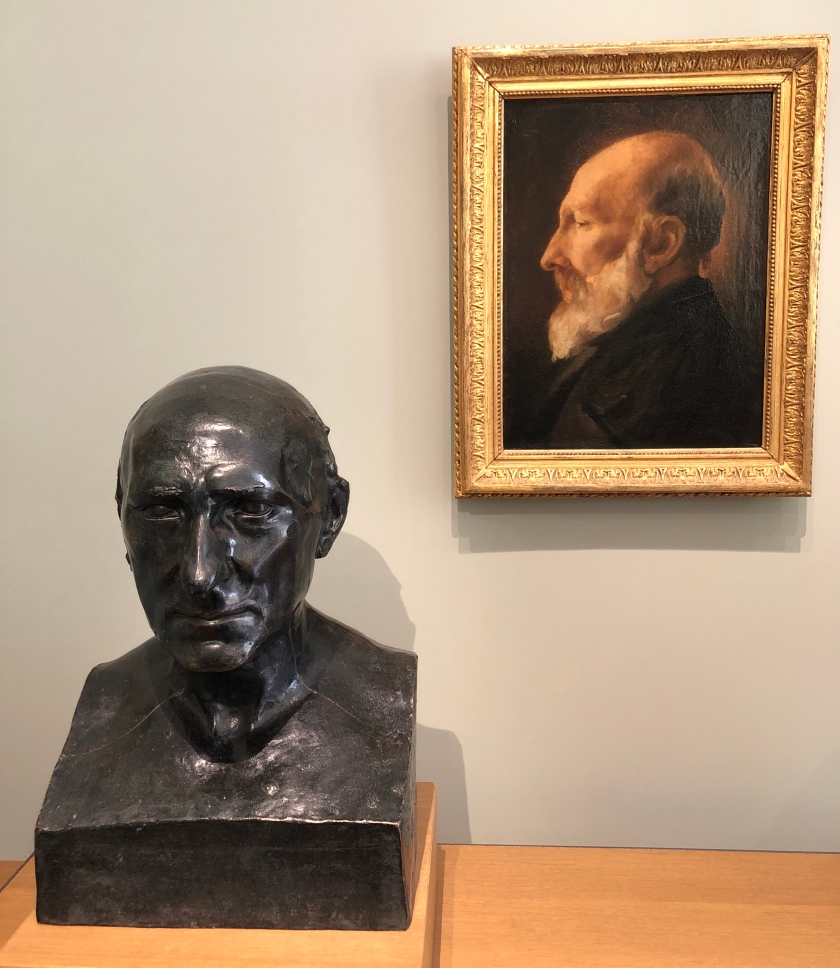
As I mentioned earlier, Rodin seem to master any technique he touched. Here is a wonderful side-by-side study of his father, Jean-Baptiste Rodin. At left below is a bronze bust & at right is an oil on canvas portrait.
There are also examples of works in terracotta, faience, carvings in marble, as well as sketches for works. Plaster models of faces, hands are also abundant. The museum is great in that regard because it shows works in the various steps that make up the artistic process of creating beautiful sculptures.
As a feminist, it would be remiss of me not to discuss Camille Claudel, Rodin’s muse of many years, but more to the point a wonderful sculptor in her own right. The museum features some of her works as well. Here are 2 exhibits that I liked the best: The image at left below shows a carving in onyx with bronze trimmings called Les Caussesses [The Gossips]. The details is gorgeous & it took her years to finish this group of 4 nudes [1893-1905] because apparently onyx is so difficult to carve – it is both very fragile but quite hard as well. The image at right below shows her bronze bust of Rodin [1886-1892].
She was also accomplished at working with plaster, clay & in marble, the museum shows various examples of her talents.
Camille Claudel has her own museum [Musée Camille Claudel]which is located in the town of Nogent-sur-Seine ~100 km southeast of Paris [http://www.museecamilleclaudel.fr/] This has been on my list of things to do, but with the 3+ month long train strike in France, it has sometimes been tricky to travel as train schedules are disrupted for a couple of days every 4-5 days. So as a consolation prize for now, I bought a book on Camille Claudel, in French, at the museum.
The Musée Rodin is a great place to visit at any time of year – lots of nice views of city landmarks from the gardens, not to mention Rodin’s sculptures in the garden, as well as in the stately home itself…
Six months seems like a long period of time, but it really does pass quickly. My time here in Paris is fast coming to an end… In the short time I have left I tried to cram in a visit to Belgium to give a talk & then attend a local EEG conference in Paris, tie up loose ends on projects & spring clean of my apartment so I can hand it over to my landladies with a guilt-free conscience.
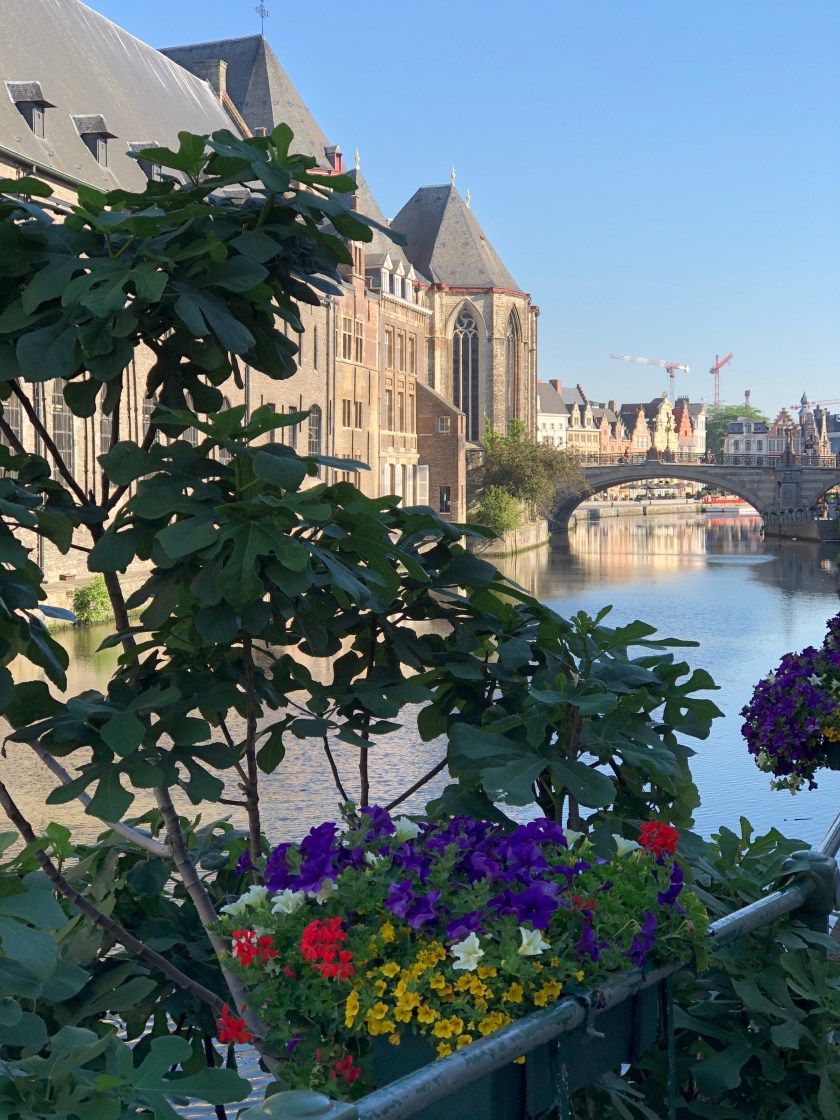
I was fortunate to visit the city of Ghent in Belgium – at the invitation of Daniele Marinazzo [@dan_marinazzo] in the Department of Data Analysis in the Faculty of Psychological & Educational Sciences at the University of Ghent. I had to plan my travel around the 3-month train strike in France & ironically on the way back to Paris was almost a victim of a sudden train strike in Belgium! Decided to not risk it & travelled back to Brussels to stay the night before heading out to Paris in the morning, because of the disruption to local trains. The city of Ghent is a really beautiful – unfortunately I did not spend much time there, but if I had to describe it in one phrase it would have to be ‘the city of churches’. It has had a really interesting history – at one point being a medieval city-state & being the largest city in Europe [with Paris being in second place]. [https://en.wikipedia.org/wiki/Ghent]
It is an easy city to get to know – very walkable. It is possible to walk from one end of the city to the other in ~ 40 minutes or so. Lots of old, narrow cobblestone streets, interesting buildings & picturesque waterways.
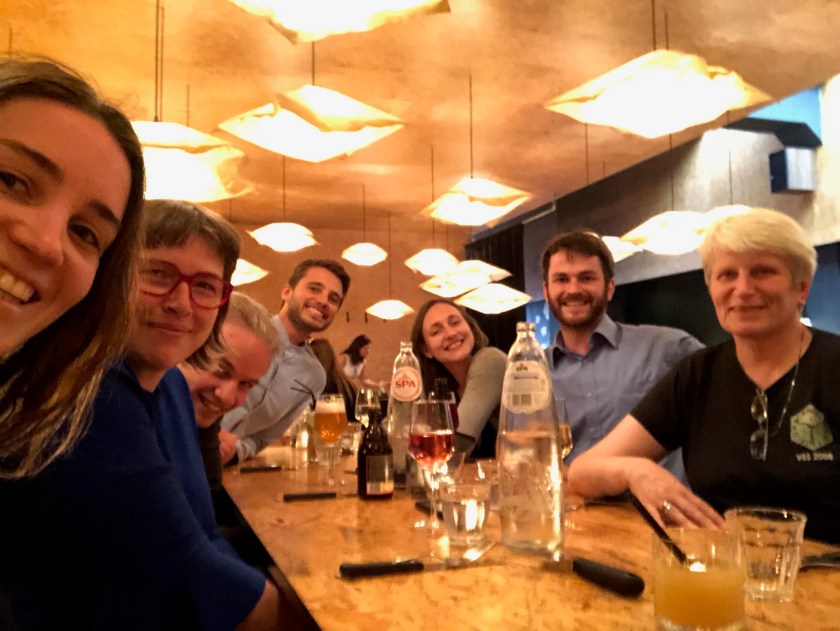
It was great to get to know the faculty & students in Daniele’s department & to get to know Daniele – who I only know from science Twitter! We all went out to dinner one night – although unfortunately Daniele could not join us on that evening.
Needless to say, the students were excellent teachers regarding the finer points of Belgian beers & the unusually warm & sunny weather was a great stimulus for tasting the brews…
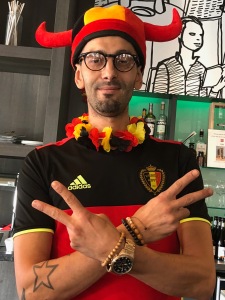
Was in Belgium during a world cup match when Belgium played England – was in a bar & the bartender was certainly dressed for the part. [He even had a vuvuzela.] Belgium won that night, so there were a lot of people partying!
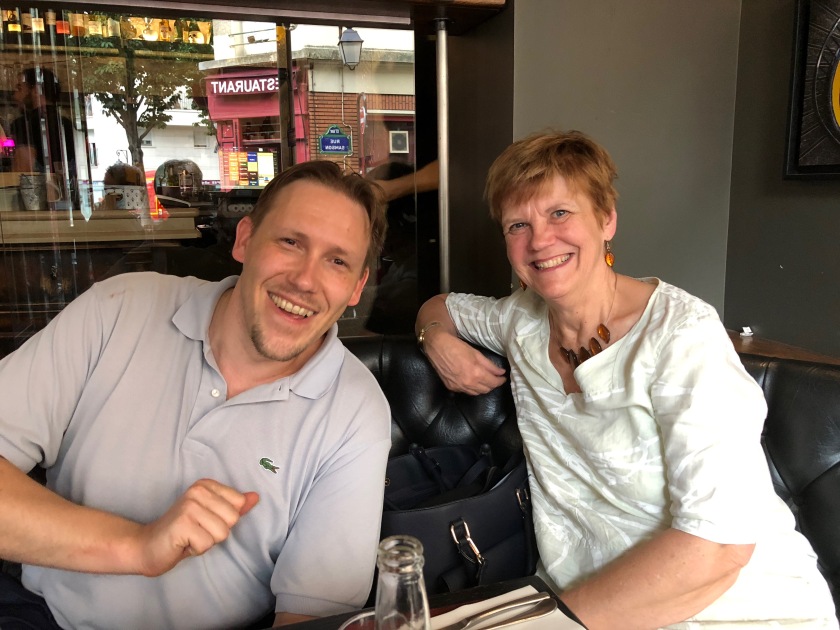
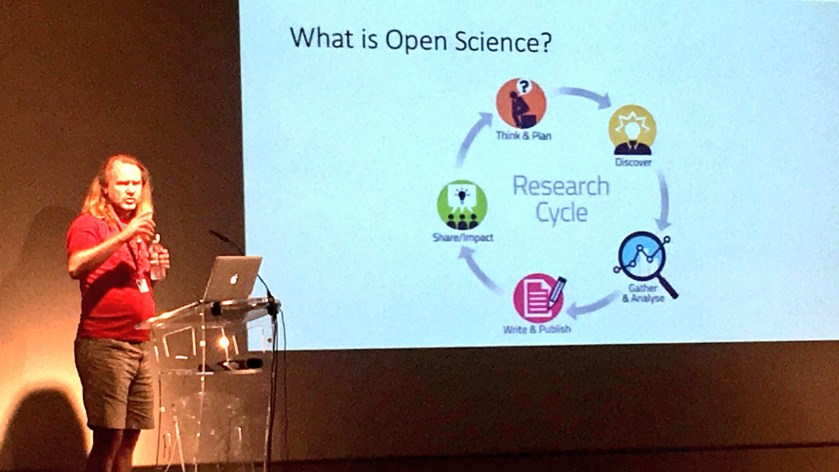
No rest for the wicked though… straight back to Paris & a very nice & bleeding-edge EEG meeting called ‘CuttingEEG’ [#CuttingEEG] run by Max Chaumon [@DNAcombo] at the ICM. It was a terrific meeting – lots of enthusiasm & great reproducible science. Was able to catch up with a couple of folks the night before the meeting started: Dorothy Bishop from Oxford [@deevybee] & Cyril Pernet from U of Edinburgh [@CyrilRPernet]. I had only ‘met’ Dorothy previously on science Twitter, so it was great to finally meet face-to-face! It was a nice coincidence that the speakers from the meeting were staying just around the corner from me, so I was able to take some of them to one of my local haunts.
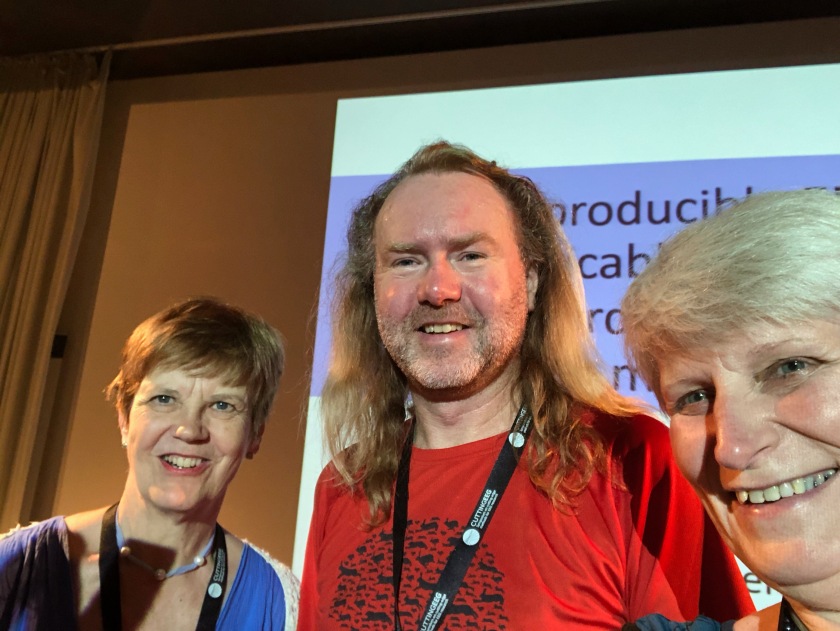
The first day of the meeting was devoted to practical workshops – hand-on methods related stuff… Cyril ran one also. The next morning scientific part of the meeting began & it was a great honor & privilege for me to be sandwiched between Dorothy Bishop & Robert Oostenveld [@oostenvr] in a session on reproducibility & open science! Here is a selfie just before we started the session…
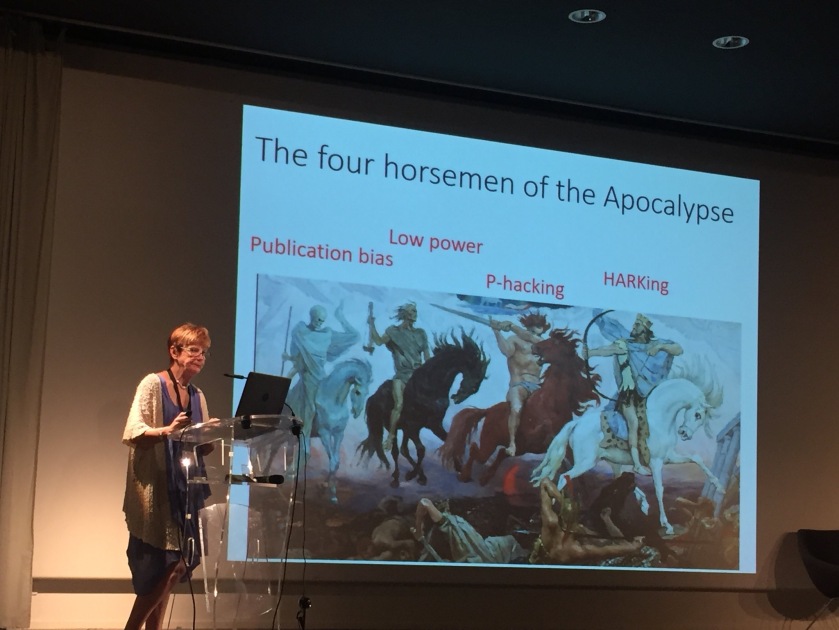
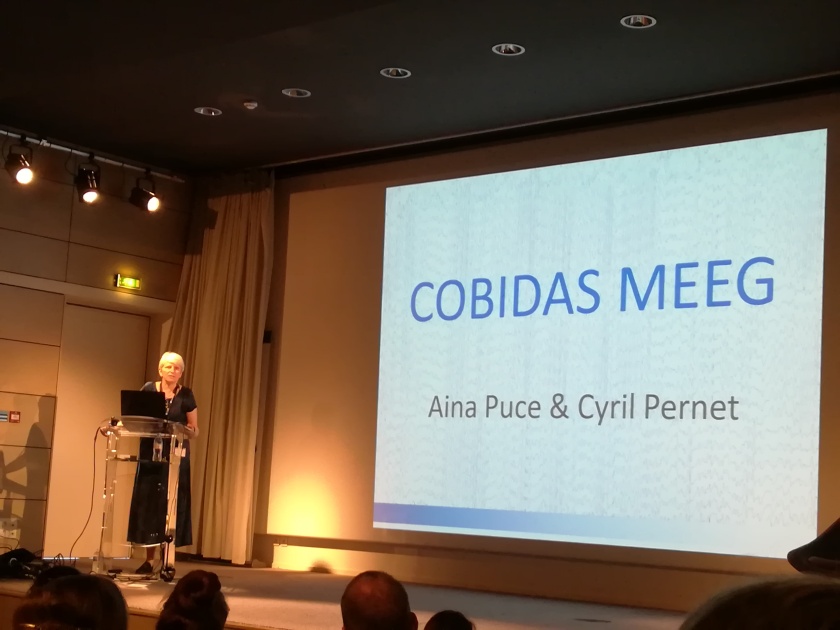
…and a number of kind souls took pictures of us during our talks & Tweeted them – thanks to those people [I am not exactly sure who they all were now…]
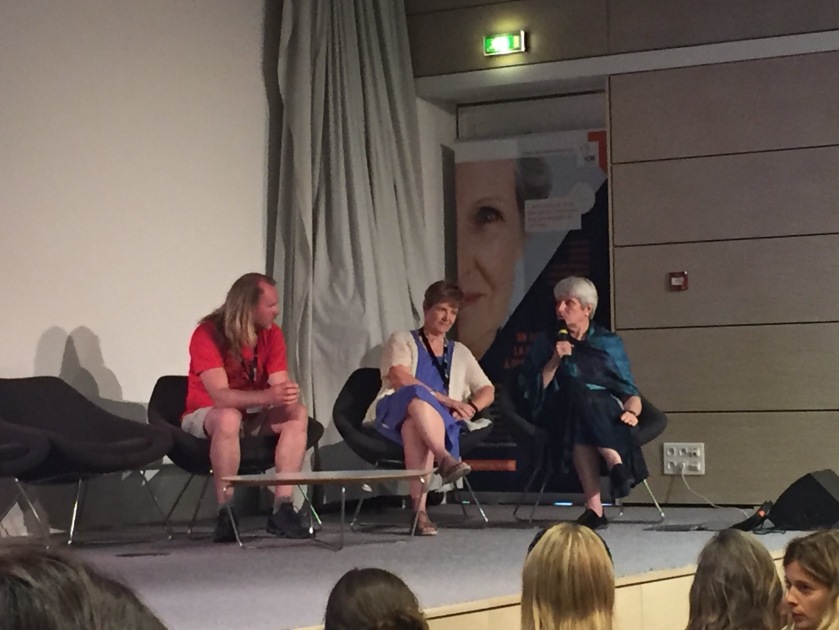
…and we had a panel discussion following the session. Lots of great questions from the audience & a good dialog between speakers & audience to boot!
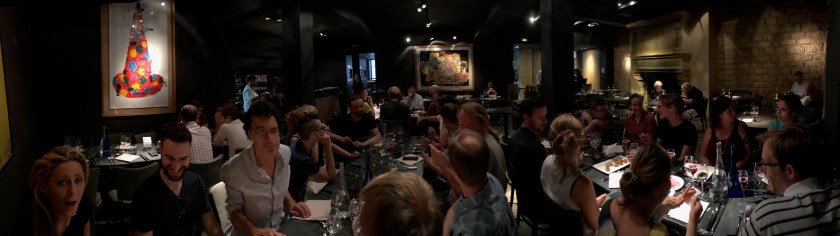
The meeting, of course, was also a very social one! On one evening we had the speaker’s dinner…
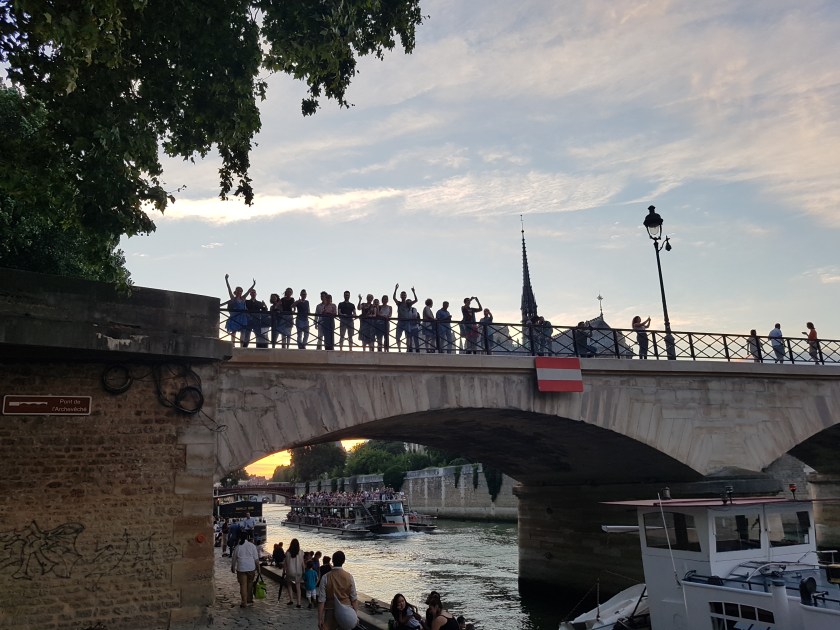
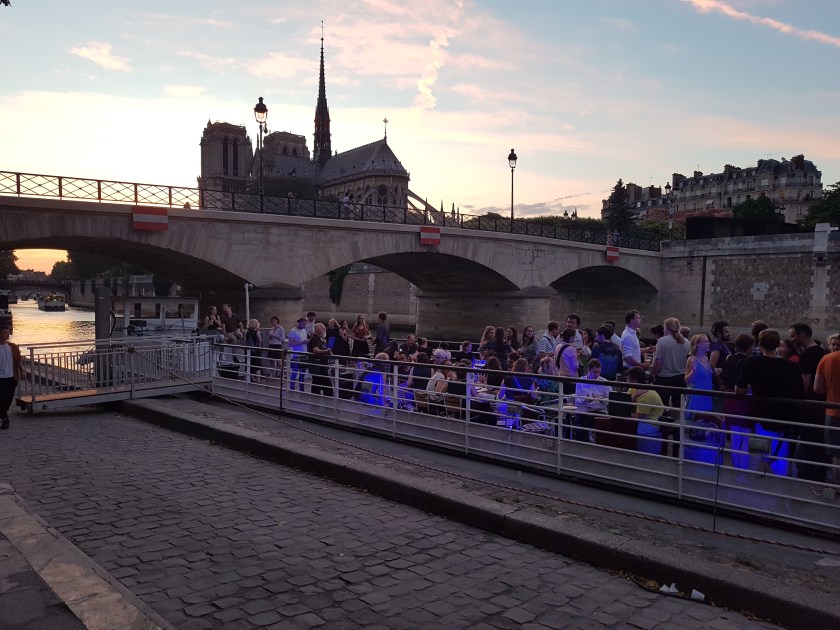
…after which we headed to off a party on a barge on the Seine… the image below shows Max Chaumon trying valiantly to herd cats [i.e. speakers] on the bridge on the way to the barge…
…where the meeting delegates hung out until the morning hours…
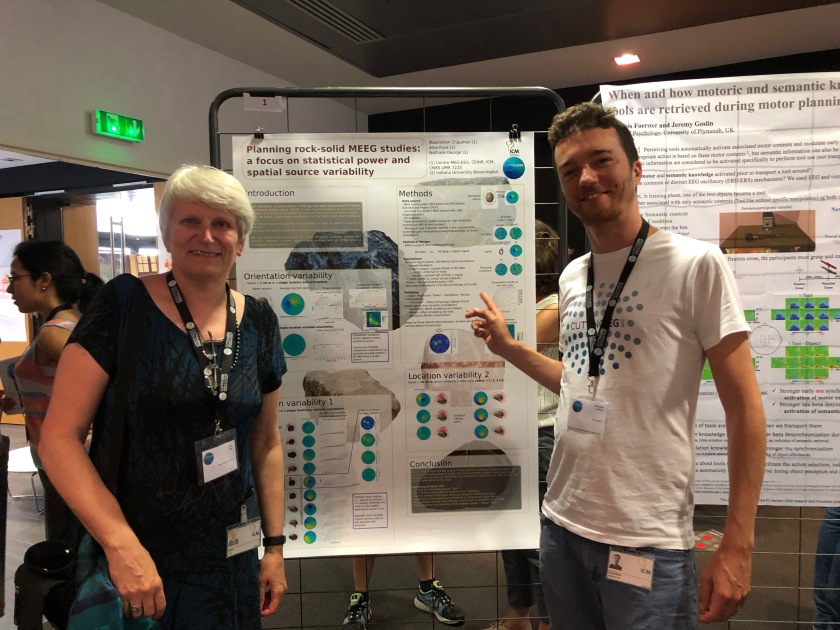
Indeed, many thank yous to Max Chaumon for organizing such a wonderful meeting! I will definitely try to come again to next year’s CuttingEEG meeting. Here is a pic of Max ‘crushing it’ at our poster on ‘rock solid’ MEEG at the meeting.
The future of EEG looks young & bright & it is great to be a part of that!!!
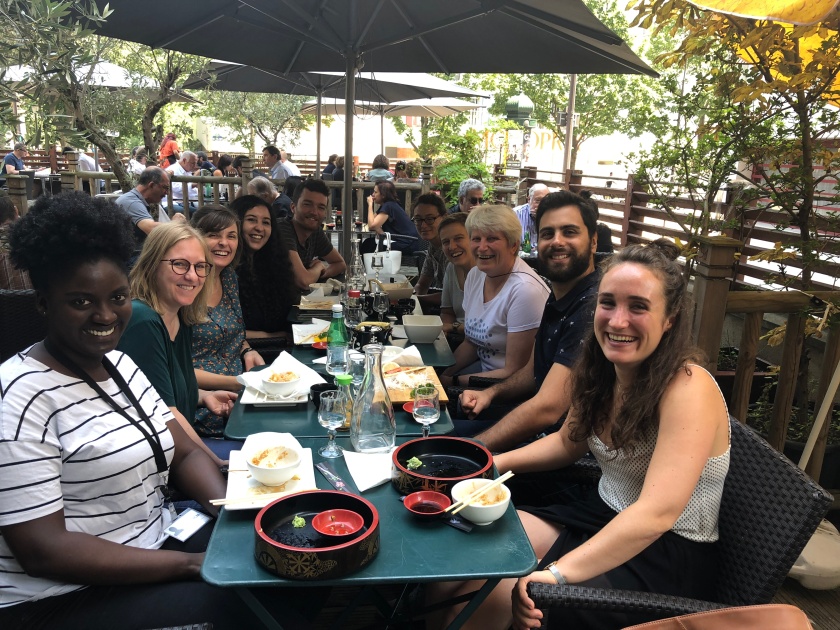
Activities in my guest lab are also in full swing, but we took time out from that one lunchtime: there was a surprise lunch for me in my favorite Japanese Restaurant. Nice to see everyone’s smiling faces in the image below:
I have to say I will miss everyone here immensely. They were also kind enough to give me a number of really cool presents – more about those in future posts. 🙂
I will also miss the rest of the World Cup madness that began last night when France nudged their way into the final against Belgium – the sounds of people celebrating & tooting their horns into the long hours of the night was a real experience!
I have to say I will also miss those views of the Eiffel tower from my kitchen window. By this coming weekend it will all seem like a beautiful dream…
In an earlier post I discussed the importance of green spaces for our mental & physical wellbeing. But greenspaces also provide a wonderful environment for commemorating & honoring those who are no longer of this world. The Père Lachaise cemetery in Paris is one such place. Located in the 20th arrondisement, it is the largest cemetery in Paris with over 1 million interments! It is also set on quite a hilly part of Paris with beautiful treed walkways & winding stone paths. [https://en.wikipedia.org/wiki/P%C3%A8re_Lachaise_Cemetery].
Many of the tombs & graves are very old – dating back to when the cemetery was first opened in 1804! Nature persists in working its way around all the stonework…
… & the sound of the birds singing in the trees at this time of year is really beautiful.
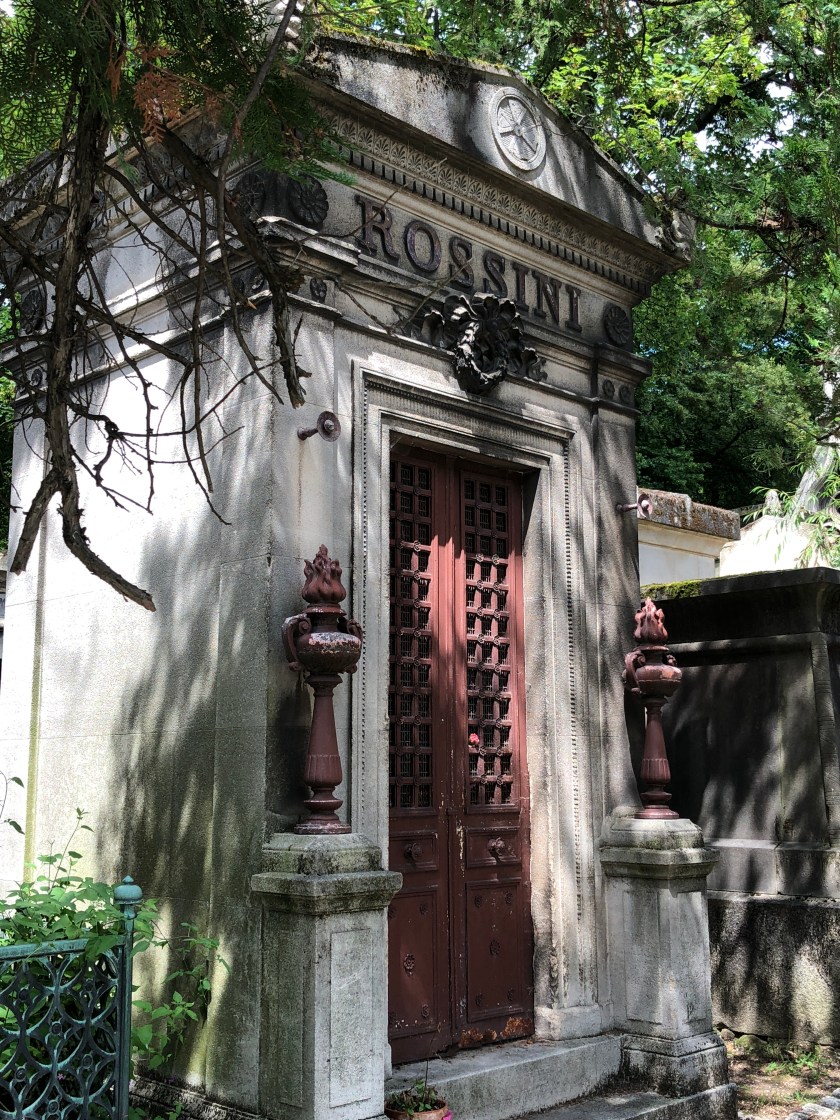
The variety & diversity of the graves & tombs is really staggering & there are some really unusual embellishments on some of the memorials.
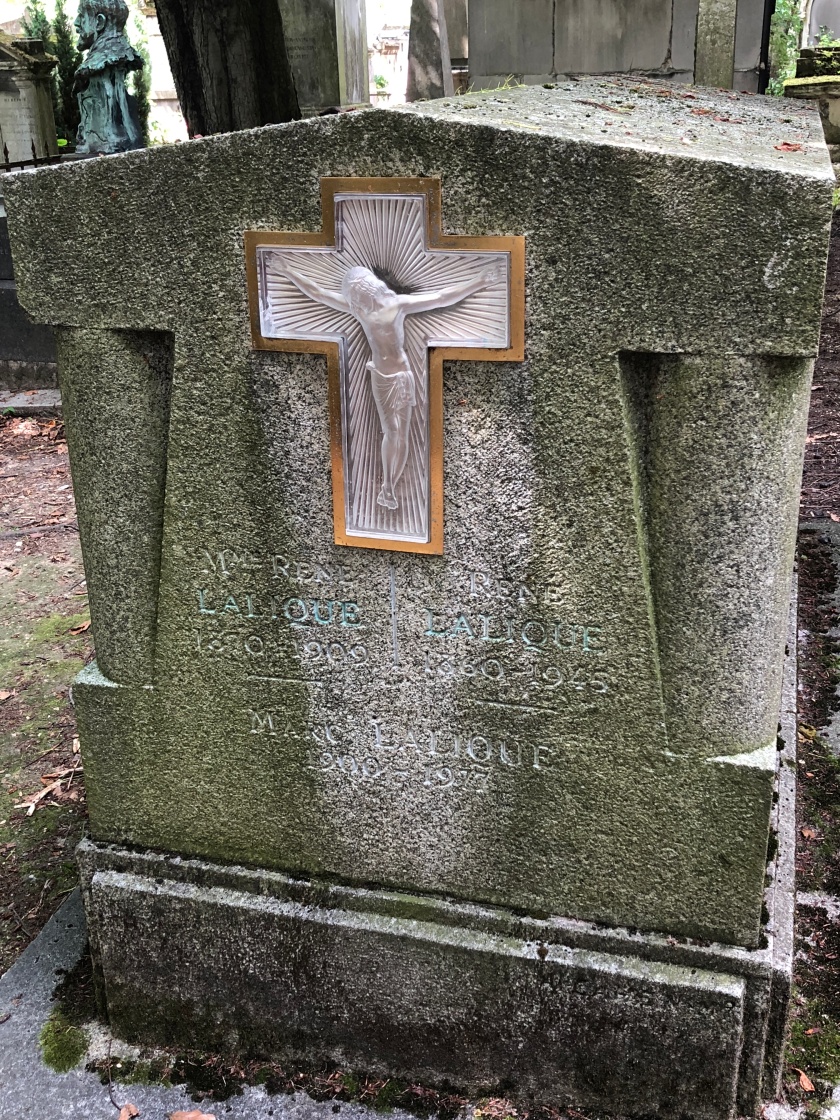
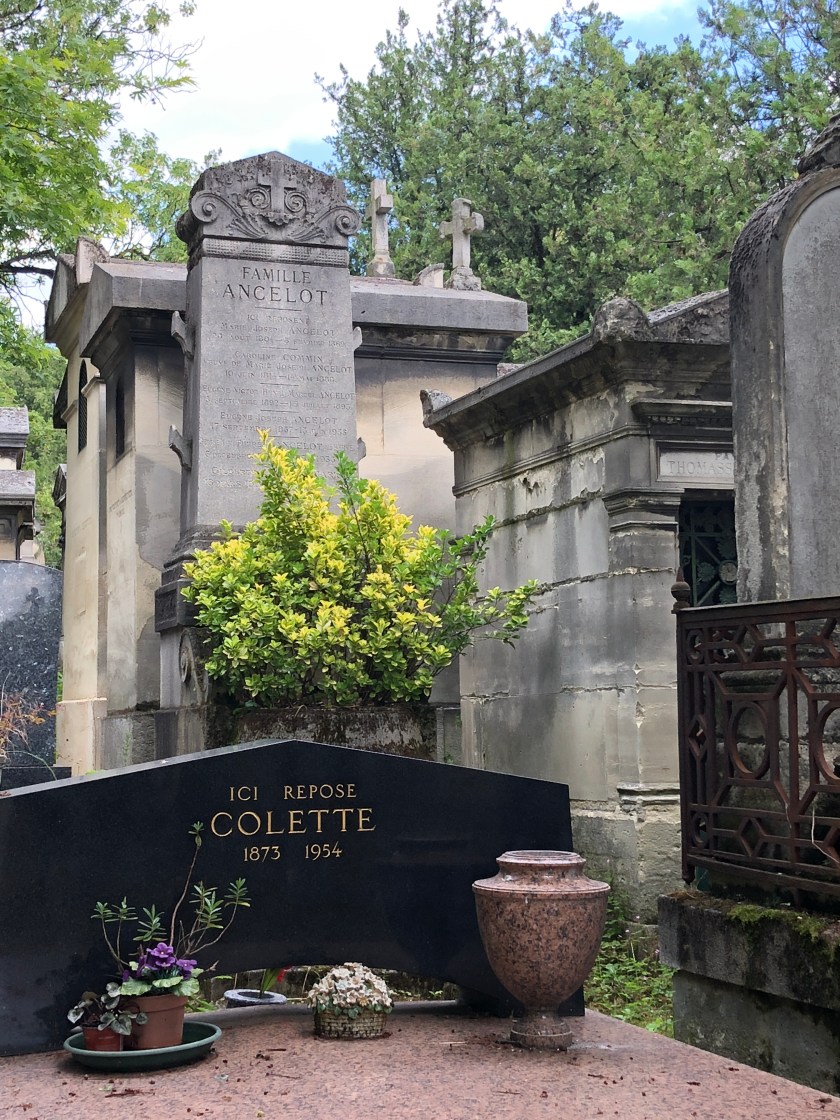
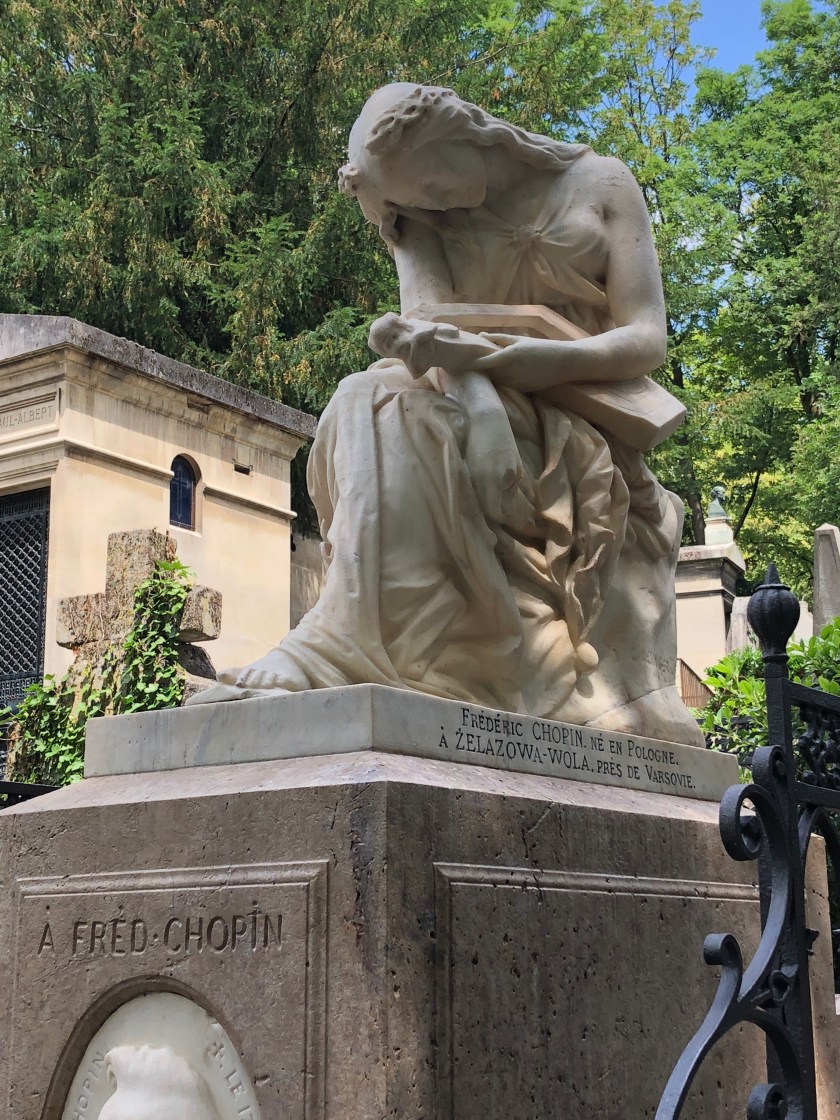
What attracts more than 3.5 million visitors to the cemetery every year are the many famous individuals who are interred there. So many writers, artists, composers, singers, actors & culinary greats repose there including Edith Piaf, Oscar Wilde, Molière, Marcel Proust, James Morrison & many, many others. Some of the graves are quite hard to find – locating them becomes an adventure, as they are designated as being in a particular area of the cemetery & some of those areas are quite large… I tried to find Amadeo Modigliani’s grave – one of my all-time favorite artists – but did not succeed. But no matter, that search will be continued on another visit… But here is who we did find: René Lalique – whose grave was decorated by an exquisite piece of sculpted glass – as you would expect for a tribute to the famous glass artist & designer… [https://fr.wikipedia.org/wiki/Ren%C3%A9_Lalique]
Some people prefer to have a guided tour of the cemetery. This can take some of the guesswork out of finding some of the graves: the maps of Père Lachaise are somewhat funky as there are a number of official versions of them – I have yet to find one that lists all the notable people who are interred there. I had downloaded a number of them [by profession] & decided beforehand which ones to look for.
As I already mentioned the graves can be hard to find as they can be quite unobtrusive. The tours are certainly very informative – I eavesdropped on a couple of them as we snaked our way between the tombs. There are also those who wander around approaching people with offers to find particular graves – for the right price…
The image above shows the combined tomb of Héloïse & Abélard. This 12th century story of these two lovers & scholars is a long & complicated one, but is famous for an enduring love despite a separation of many years. Apparently they were eventually interred together at Père Lachaise centuries later as a result of an action by Marie Antoinette[https://en.wikipedia.org/wiki/H%C3%A9lo%C3%AFse] [https://en.wikipedia.org/wiki/Peter_Abelard]
Overall, a visit to Père Lachaise is a huge step into French history – the tombs give something very tangible to it & make you wonder about the life & the times of the individuals in question & also those who buried them there. Makes you turn to the history books as well. This is a place I definitely plan to come back to on subsequent visits to Paris.
Have just got back from Singapore – the Lion City – where I caught up with friends & colleagues at the Organization for Human Brain Mapping annual scientific meeting. The meeting was held at Suntec City – a really great high-tech convention center with excellent facilities – the consensus of pretty much everyone I spoke with.
Great to catch up with old friends & get to know new people – particularly some of the younger ones in our neuroimaging community! In the session I chaired, a lot of trainee scientists presented talks & it was great to see them do such a fine job. Since I am on the program committee, I also made a point to connect with as many people as possible to get feedback on the meeting. The meeting itself opened literally with a big bang – a local drumming ensemble started us off…
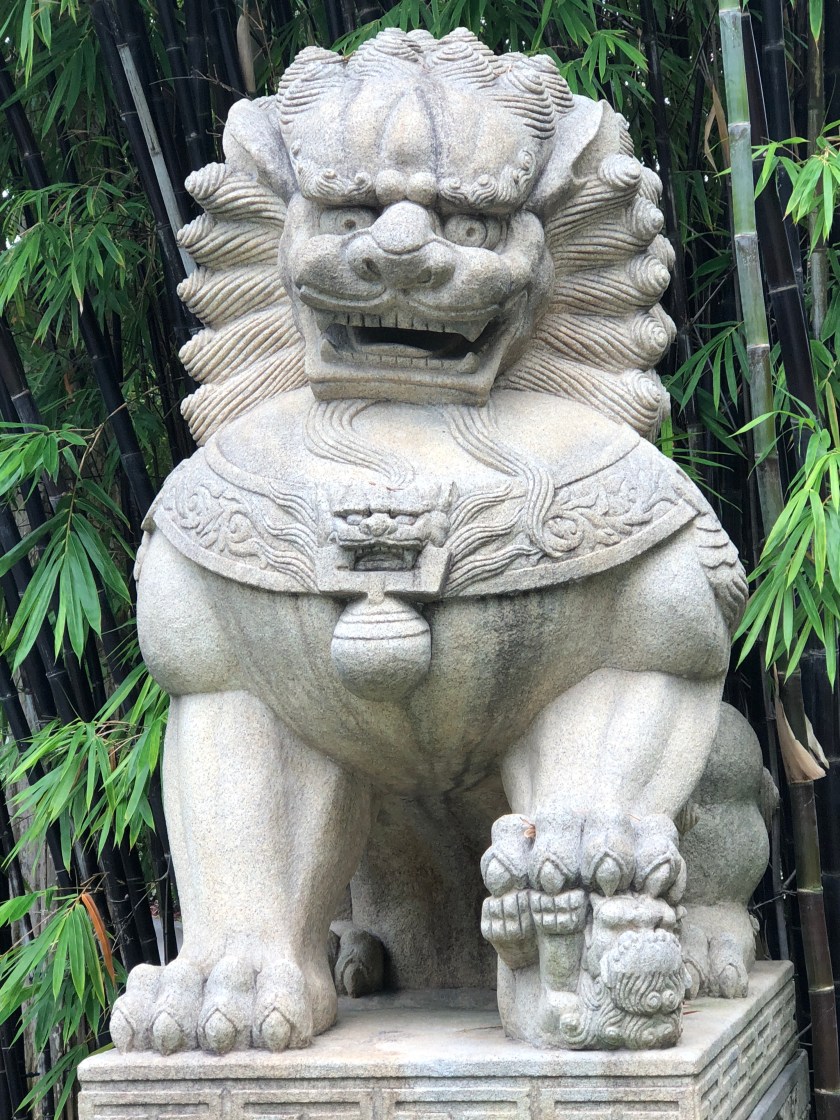
Overall, the 5 day meeting was intellectually very stimulating, but also a lot of fun. A big thanks to Mike Chee & his very capable team for hosting such a wonderful meeting! The opening reception was outstanding – a variety of great entertainment & no shortage of good food & drink. My favorite was the Chinese Dragon…
The OHBM meeting always has a really feel-good inclusivity vibe to it, so I am always mentally re-energized after each year’s events. That said, this time around I had the worst jet-lag that I have had for a long time. Everyone else was complaining too. In this post I will not talk more about the meeting – it has been covered well on science Twitter [#OHBM2018] & science-related blogs etc [https://www.ohbmbrainmappingblog.com/].
Unfortunately, I did not have much tourist time in Singapore [unlike my usual trips to OHBM meetings], so I leave Singapore with a long to-do list of things to see for my next visit. That said, when I look back at what I did see in Singapore – I focused on some of my many obsessions, so those of you who know me well will probably laugh when you read the rest of this post!
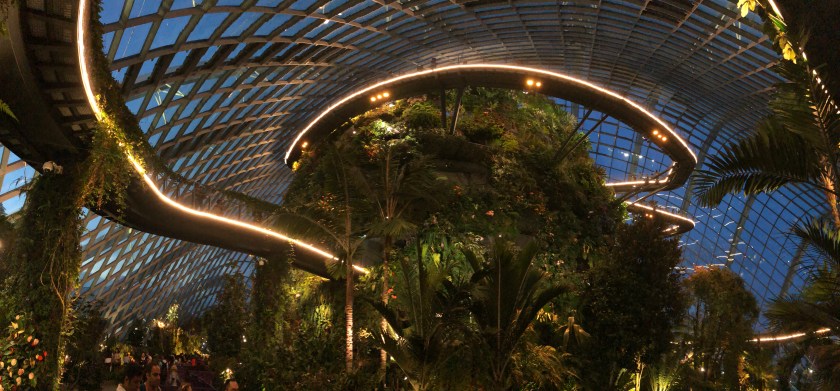
Since I am a gardener, for me the Gardens By the Bay was a must see – a place to explore either during the day or at night. I made time to see it at both times. It opened in 2012 & features award winning outdoor & indoor [two very large, distinctively shaped conservatories] that feature tropical plants in one [‘The Cloud Forest‘] & varied types of plants & flowers in the other [‘The Flower Dome‘]. [See http://www.gardensbythebay.com.sg/en/the-gardens/our-story/introduction.html ] The Cloud Forest is amazing – it features a mountain of tropical plants that is 30 meters high & includes a really high artificial waterfall. It also has an arial walkway that almost reaches to the top of the mountain – with stunning views of the plants & views out to the city of Singapore as well. The walkway also has misting pipes, so that it also serves to push moisture out into the environment to let the plants flourish & help create a cloud forest habitat. It is very atmospheric in there when the mist is present…
There is a huge orchid garden, where orchids grow & flower like weeds, as well as a display of miniature orchids – only seen by magnifying glass…
The other greenhouse, the Flower Dome, is also really great – it is a longer & flatter structure relative to the Cloud Forest. It features different types of environments from around the world.
It has an excellent collection of succulents & cacti among other things.
The featured temporary exhibit was on begonias this time – so many varieties & colors. Who knew?
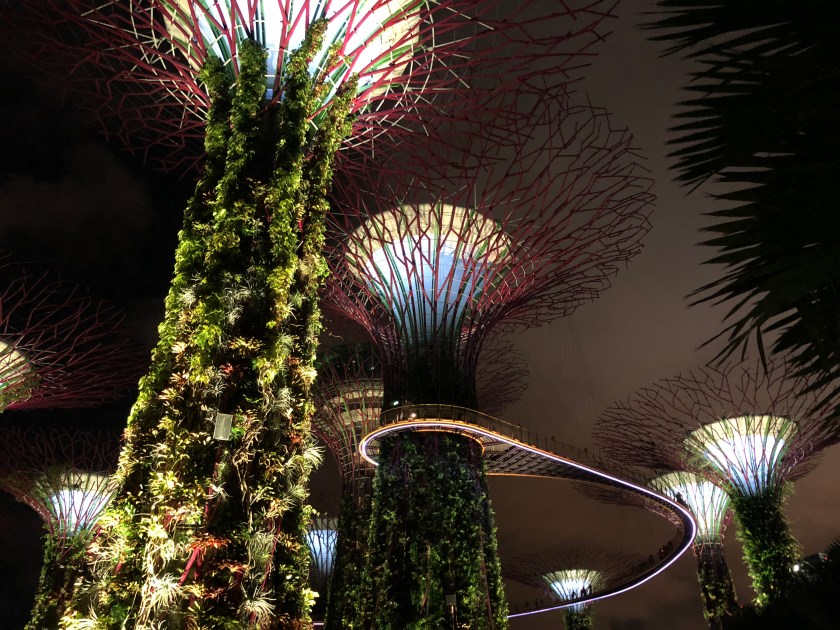
Outside in the Gardens by the Bay there is a grove of ‘Supertrees’ – striking man-made structures that are essentially columns for tropical vegetation to grow.
But that is not all – the columns are simulated canopies that house elaborate lighting, so at night these things really come to life. Apparently, the exhibit is solar powered & has rain water catchment systems that are directed to watering the plants. It feels like you are truly in another world when you stroll through there at night…
The exhibit has a nightly light show set to music which attracts whole families of locals, not only visitors to Singapore.
What really struck me about the visit to the gardens was how this was such a great bonding experience for whole families – grandmothers to toddlers are all fascinated by the plants & flowers. Teenagers [who are usually unimpressed with most things] were going crazy on their cell phones taking close-up pictures of flowers & plants instead of taking the usual copious selfies. That was really cool. Plants have that power!
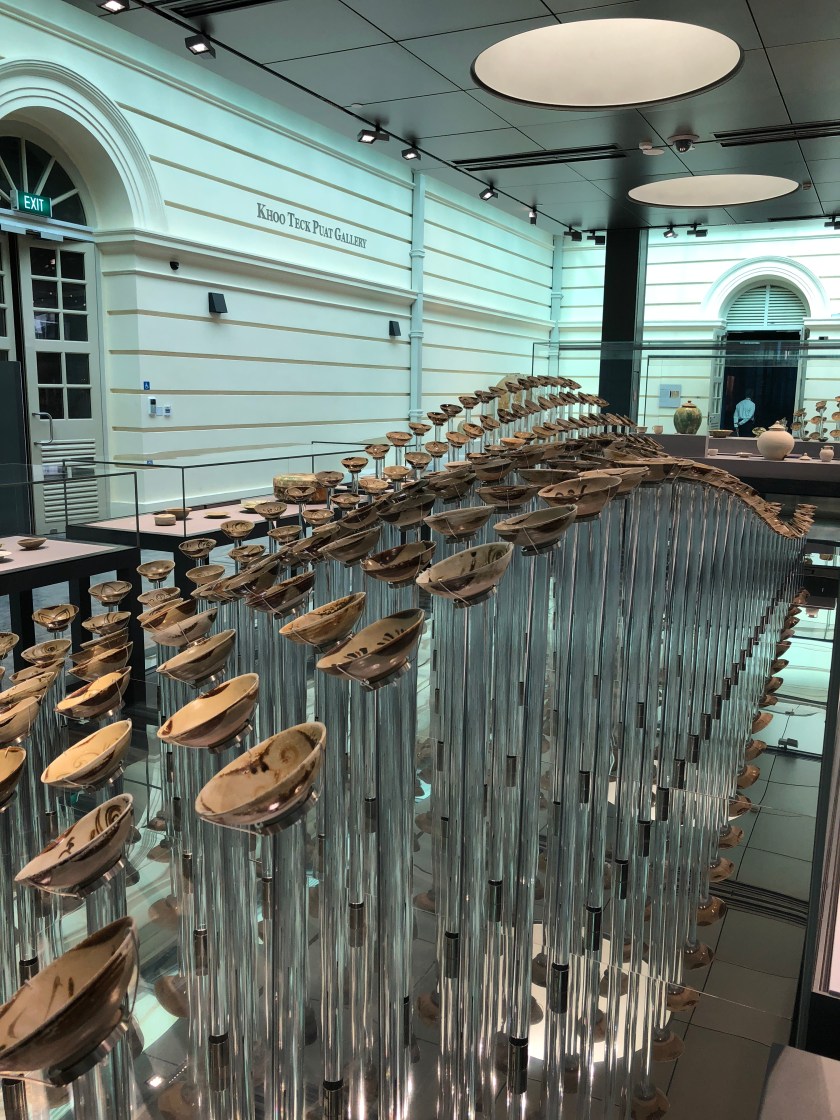
I have written a number of previous posts on art & I also have more than a passing interest in ceramics. So a must do was a visit to the Asian Civilizations Museum – reputedly one of the best of its type in Asia [https://www.acm.org.sg/]. The afternoon I went was hot with a blazing sun, so it was nice to enjoy a cool space for a few hours. [Because of the combined heat & humidity, there are so many shopping malls in Singapore, so restaurants, cinemas etc. are usually located in them.] The ACM features a very striking exhibit of ceramics from the Tang dynasty [7th-10th century] shipwreck that was discovered off the coast of Java in 1998. The story of the shipwreck is astounding for a number of reasons. First, it was carrying 25 tons of ceramics – mainly modestly decorated bowls that were produced on a commercial scale for the market in Asia & the Middle East. Yes indeed – commercial production of Chinese pottery was already a thing in the 7th-10th centuries!
Second, when the ship sank, incredibly all of the pottery survived – because the bowls were packed loosely in lateral circles [left image below] & cushioned with straw. The silt on the ocean floor acted to protect the ceramics from damage as well, so they still look pretty pristine now. Incredible to think that they were submerged for so long. That said, the archaeologists took 2 years to dissolve the coral & other deposits on some pieces with a simple, slow chemical etching process [right image below shows some ‘before’ & ‘after’ pots].
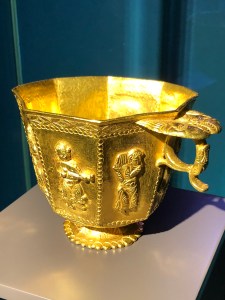
The ship was also carrying a small number of precious objects crafted in gold & silver – the workmanship was very fine indeed as the image below shows:
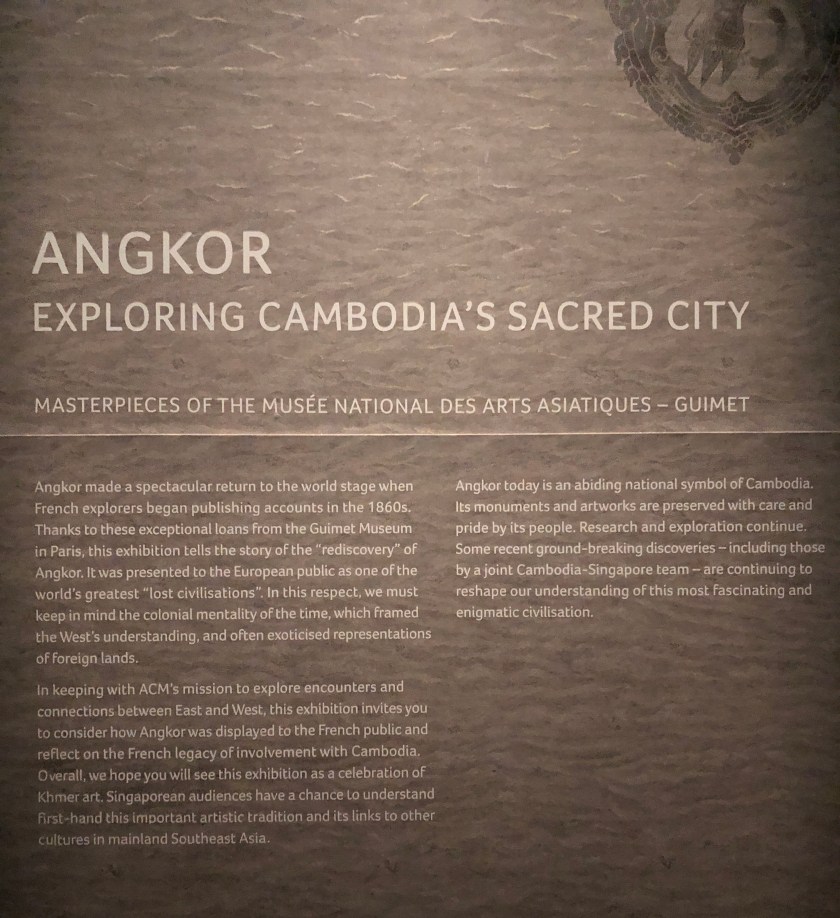
The other amazing exhibit I saw at the ACM was centered on the famous Angkor Wat temple in Cambodia [https://en.wikipedia.org/wiki/Angkor_Wat] . Incredibly, many pieces of the exhibit were on loan to the ACM from the Guimet Museum in Paris! Funnily enough, I have not yet been to the Guimet [http://www.guimet.fr/] – but it is on the top of my list of things to do before I leave Paris. It’s funny how life is a series of coincidences [something I have previously posted on related to Finnish & Baltic Art]. The exhibit was incredibly informative & featured old photographs of an archaeological expedition to the Angkor area by a French team. Interestingly, when they wrote about their observations, they had to make drawings of the temple & other features, because photographs could not yet be produced with the commercial printing process!
The ACM is also full of other interesting artistic curiosities – showing ceramics, silverware, enamel work, filigree in silver, ceramics, textiles. In all of them the workmanship is very delicate & fine. Each piece would have taken a very long time to make by hand… This is one of the most incredible museums I have ever visited. The works were truly amazing. The image below left shows a sireh set – a combination of ceramic & metal with fine filigree. The image on the right shows a door that has been crafted of mother of pearl.
Sireh sets were designed around the practice of chewing betel nut leaves – a practice popular among the Peranakan people. The sireh set will also feature storage for betel nuts, tobacco, lime & a nutcracker [which is seen in the bottom of the image in a highly decorated form]. Peranakan culture is a hybrid that resulted when Chinese traders married local Malay women. There is a great example of a typical house from this culture – with the characteristic open space in the center of the house, which allows heat exchange with the outside air. It is a museum which also houses the ‘True Blue‘ Restaurant [http://www.truebluecuisine.com/true-blue-cuisine/]. I was taken to the True Blue Restaurant [see http://www.truebluecuisine.com/true-blue-cuisine/] by a friend who has a Peranakan family history. The food was delicious – very finely prepared & spiced – apparently most dishes take about a full day to prepare!
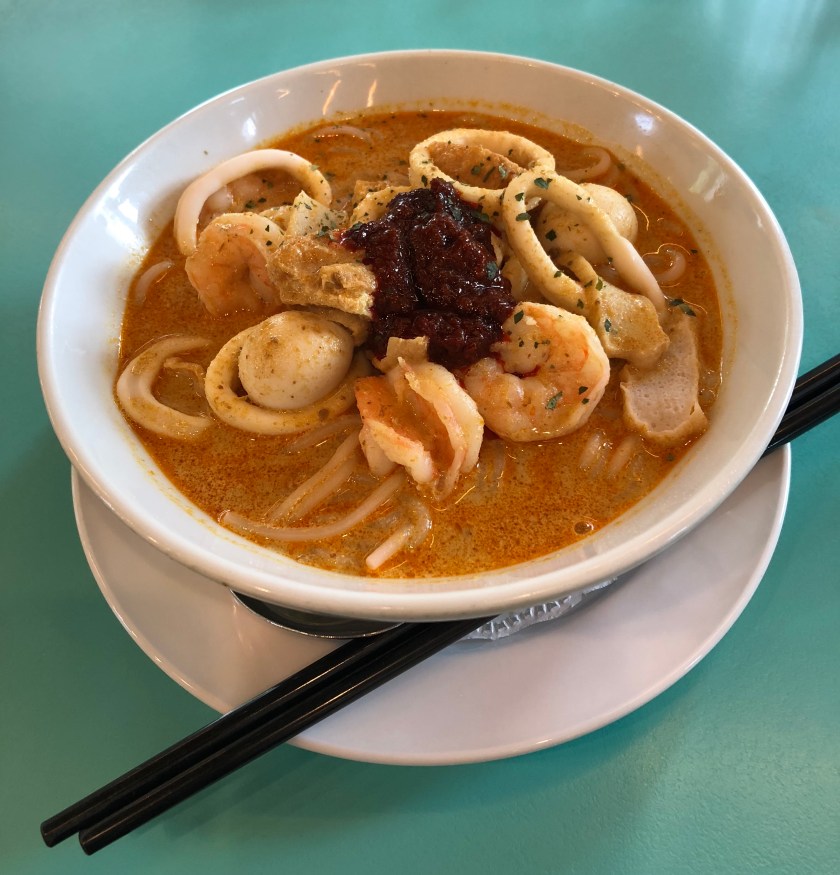
Having grown up in Australia I always had the opportunity to try food from different Asian countries. Singapore is such a great place because so many Asian cultures have a local presence here because of its rich history as a center of a [southern] sea trade route going from China to the Middle East. This trade route rivalled that of the Silk Road to the north. I was also able to catch up with my favorite cuisines – Malaysian & Thai – something that is not readily available in its authentic form where I live in the USA. Was able to tuck into my comfort food – a curry laksa. This is a coconut curry soup that has an udon noodle base with deep fried tofu & lots of chilli paste [the dark blob resting on top of the soup in the image below] – leaving you with a nice post-chilli pepper euphoria. It will also have veggies, that will vary from restaurant to restaurant. Typically, it comes in chicken or seafood varieties. The seafood laksa I had in Singapore also had quail eggs, in addition to calamari rings & shrimp. Sometimes fishcakes are used in some recipes. It was absolutely delicious!!!
If you have read some of my previous posts, you know that I am seriously missing my cats. I look forward to bonding with them when I get back to the USA in mid-July. To make things a bit bearable I took myself to the Singapore Cat Cafe – a haven for cats & humans alike. The cats are all rescue animals. You can sit & hang out & pat & play with the little creatures [see http://thecatcafe.sg/cat-cafes-cat/]. They have a pretty good life – they all look very healthy & are very chilled. If you sit down at a table & don’t chase after them they will come to you. I had a beautiful black short-haired tom come to chat & hang out with me. He clearly had had a hard life earlier – he had lost his tail – but now he was living a very comfortable lifestyle. Good food. Pats. Toys. Cat trees & cat scratchers. Not to mention other furry companions to hang out with. The animals all seemed to tolerate one another very well. So if any of you are in Singapore & need a cat fix – this is the place to go!
Overall, the trip to Singapore was wonderful! Lots of wonderful memories from another memorable OHBM & some great chill out time as well. Life is always good when it is in balance…
In large cities where high-density apartment living is common, there needs to be enough green space for people to escape from their dwellings. This is especially the case in Paris when the weather gets hot, as most apartments do not have air-conditioning [mine included]. Paris has no shortage of greenspaces. Ones known to everyone living outside of Paris include the Tuileries, Jardin de Plantes & Jardin de Luxembourg, to name a few. These public gardens attract people all year round. In winter the trees may be bare, but this can highlight their pruned shapes – as the image below from the Jardin de Luxembourg shows.
There are many smaller parks & gardens that dot each arrondisement. There is also a ‘greenway’ – a 4.5 km walking/running/cycling trail called La Coulée verte René Dumont based on an old railway line that was closed in 1969. The trail crosses the 12th arrondisement – from the environs of the Place de la Bastille to La Porte de Vincennes[for a map see https://www.francedigitale.com/randonnee/information/58 ]. The trail is really cool because it runs ~7 metres above street level, giving the observer a very different perspective to the streets & buildings of Paris. Different parts were opened at different times – from the 1980s to 1993 – as it was renovated & built up in different stages.
There are lots of roses & other flowers in bloom right now – so it is a beautiful place to take a stroll & literally take some time to smell the flowers…
The trail also crosses the Parc de Reuilly – a lovely public park with a public ‘fountain’ where people can drink & also fill containers of both still & sparkling water – something unique in the city. There are park benches where people can sit & read or contemplate life. The grass provides a comfortable spot as well.
From the Coulée verte some really whimsical buildings can be seen. This one [see images below] is the quirkiest one that I have seen in Paris so far. It was designed by Spanish-French architect/urbanist Manolo Nuñez-Yanowsky & channels Michaelangelo’s sculpture ‘The Slave‘. The human motif repeats 15 times across the top of this corner building! The building project was completed in 1988 & it actually a police station – believe it or not… [http://www.nunez-yanowsky.com/works/project/police_station].
Fortunately the Coulée verte does not look ugly from street level. Part of the reason for this is the Viaduc des arts – a stretch of 60 artists & artisans studios, that were renovated & established in the 1980s [see http://www.leviaducdesarts.com/].
Street level view showing La Coulee Verte running above
Le Viaduc des arts
The parks & greenways provide a wonderful way for Parisians to de-stress & relax, to keep fit & to spend quality time with their families in a beautiful outdoor setting. I have taken to going to the park closest to me & sitting for a while to read as well as well as taking strolls to look at the trees & flowers. I also have access to spring water: there is a source in our neighborhood that has been tapped down to ~ 600 metres! The water is cold & has a subtle taste – not as minerally as I expected. Rumor has it that a local boulangerie [winner of last year’s best baguette in Paris award] uses this water for its baguettes. The baker purportedly gets on his bicycle to fetch the water at some ungodly hour of the night. [Baguettes take ~5 hours to make from start to finish.]
Formal green spaces are a real form of art in France – historically formal gardens have been appreciated by nobles & kings for centuries. Places like the Tuileries in Paris were originally constructed so that members of the Royal Court could take a stroll when they got too cooped up in the palace. Similarly, the gardens of palaces such as Versailles and Fontainebleu were probably constructed for the same purpose. Woods or forests nearby were sometimes set aside for the exclusive use of the king for the pursuit of hunting activities, for example Le Bois du Roi near Fontainebleu. There are many others throughout France.
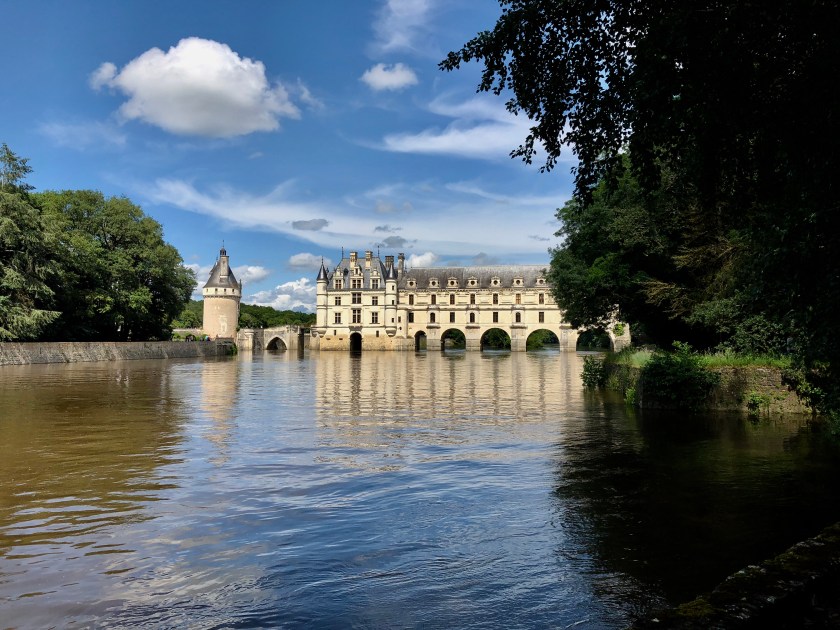
In the Loire valley some of the many Chateaux there also have beautiful gardens. Chenonceau is one of those, also with a neighboring forest. It is a very unusual chateau, in that it is built to straddle the river Cher.
I was fortunate enough to visit friends last weekend who live in the area. We were able to enjoy those woods, which border the chateau & the river Cher. Remarkably, there were very few people walking along the river & in the woods that weekend. The place was quiet, but for the beautiful bird chorus that could be heard in the trees. Delightful!
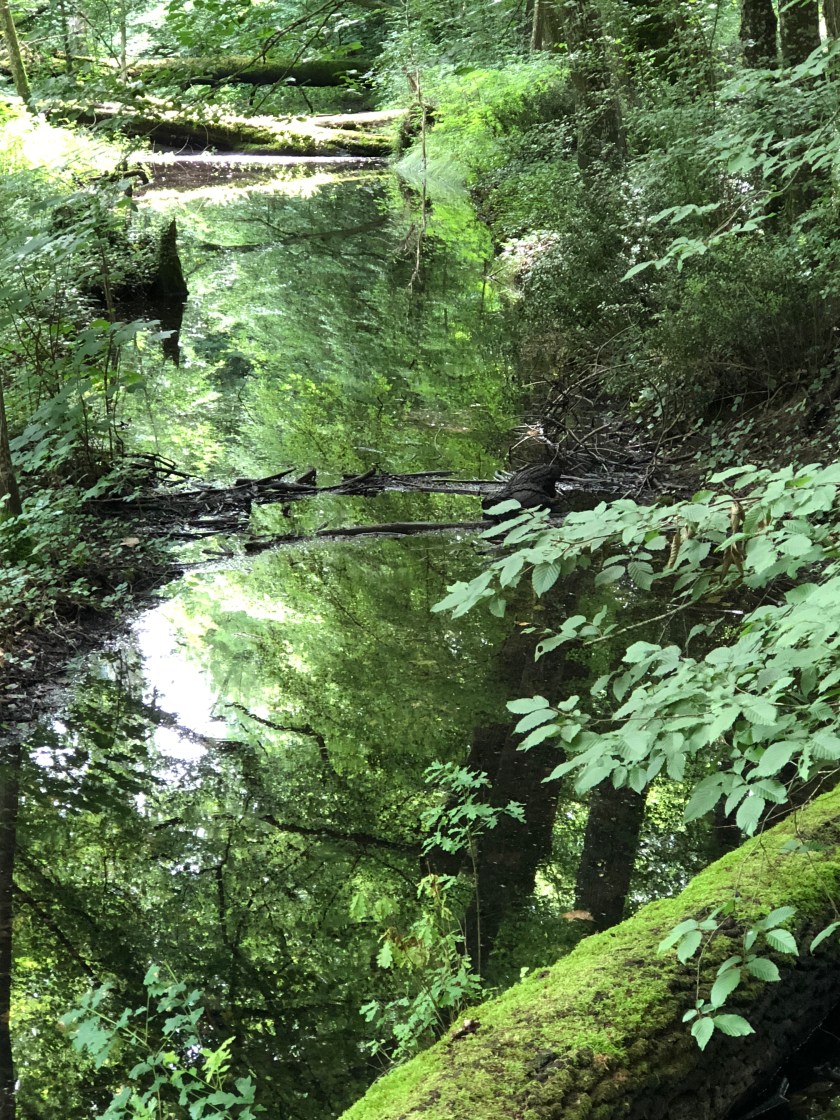
The image below show a small little rivulet where the water is almost completely still – as evidenced by the almost perfect reflection of the forest canopy in the water…
The woods also house the tomb of Madame Dupin [1706 – 1799] – a previous owner of the castle [https://fr.wikipedia.org/wiki/Madame_Dupin]. Her claim to fame? It is a long & convoluted story, but in a nutshell she was an illegitimate child who grew up in a very well-to-do household in Paris who married into money. This reported beauty supported the arts & the humanities – having had a salon in the chateau at Chenonceau. At the start of the French revolution she left Paris for the chateau – moving there permanently in 1792. She chose her own burial place & it is located in a beautiful spot in the woods – to be reached via a side drawbridge [an entrance/exit that is no longer used].
There are so many chateaux in this region that it is impossible to see them all. I have previously been to this region many years ago now & have visited some of them. This visit we went to the Domaine Chaumont because every year it hosts a festival where artists of various disciplines – not just horiculturists – participate in a competition where the garden exhibits are open to the public for a large part of the year. One can catch glimpses of the chateau from these gardens:
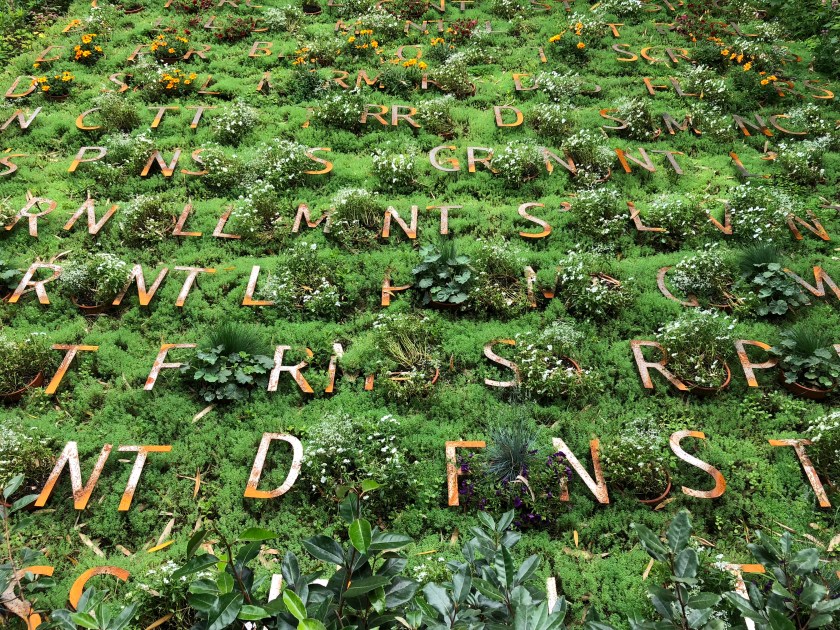
The exhibits were very creative & interesting, as I hope that the images below show. Some of my favorites were ‘Le Jardin des Voyelles‘ [‘Garden of vowels’] where a poem was represented by the consonants only – the vowels consisted of plants. By June the plants are getting larger & are partly beginning to hide some of the consonants too – so reading it was becoming a challenge! The exhibit was the brainchild of a French group called OULIPO [OUvroir de LIttérature POtentielle] formed in 1960 to develop new literary forms by delving into mathematics & science among other things.
There was the ‘Avantgarden‘ where a trees trunk & roots had been transmuted into a something like a set of blood vessels – presented in bright red, which provided an interesting contrast to the green vegetation around… A path of bright red mulch completed the picture & captured everyone’s attention. This Russian exhibit came from Olga Podolskaya [an industrial designer], Margarita Syrtsova [founder & director of the Arteco Casa agency] & Olga Cherdantseva [landscape architect & chief curator of the gardens of the Russian Museum].
A post-apocolyptic theme was evoked in ‘(R)évolution‘ – where vegetation prevails over the man-made stuff… with the misting devices making a surreal ambience. The designers of this French exhibit were Camille Lacroix [scenographer], Christine Monlezun [director] & Philippe Bertrand [landscaper & teacher].
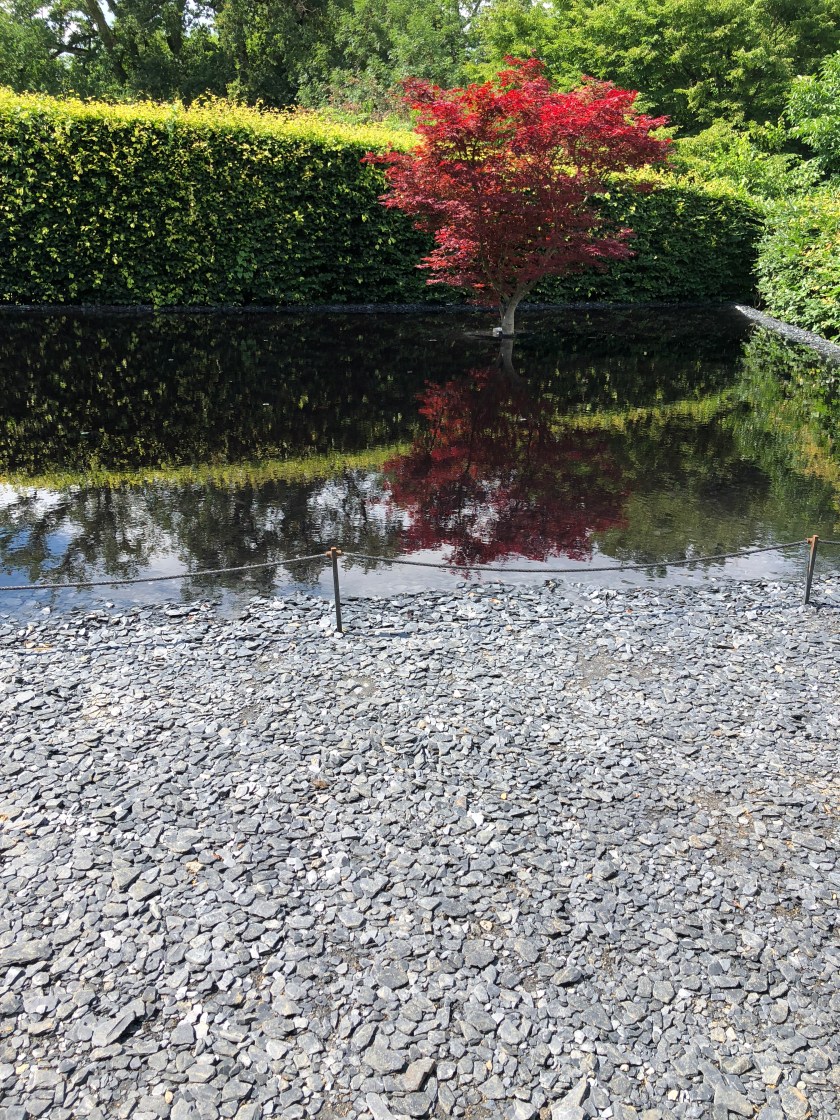
A striking minimalist exhibit was that of ‘La Possibilité d’une île‘ [‘The possibility of an island’] where German architect Ulli Heckmann asks the question: can a tree grow in a body of water? This is timely given the increase in extreme weather events & flooding in so many places in the world. In this exhibit a solitary Japanese maple sits in a pool of water surrounded by chips of shale. The photo I took does not do this exhibit justice…
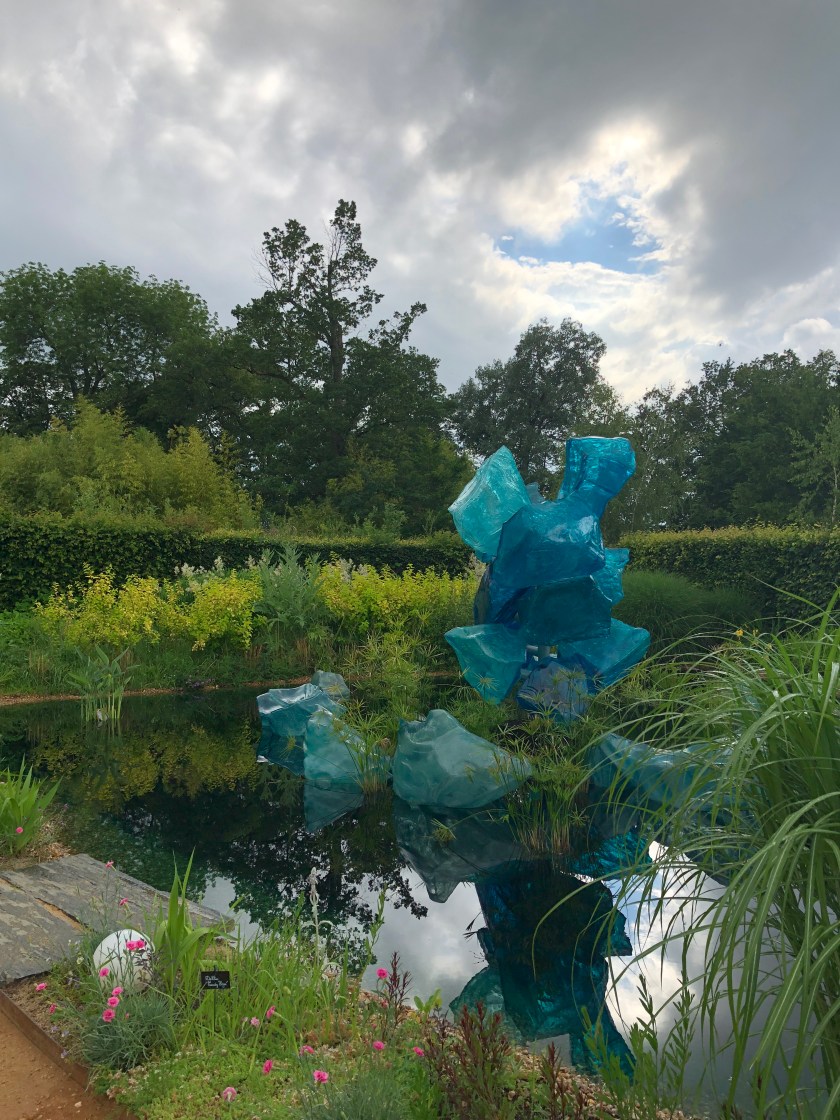
Finally, no garden art exhibit would be complete [in my opinion] without a work from Dale Chihuly, a Seattle-based glass artist. I have seen a lot of his work previously – one particularly memorable exhibit at the Phipps Conservatory in Pittsburgh comes to mind… This time it was a blue glass sculpture that is 3 metres high. Apparently this work was originally created for an exhibition for the Missouri Botanical Garden in 2006 & was also shown in Denver [2014] & New York [2017].
Overall, we had a wonderful afternoon looking at the almost 30 exhibits. The weather was threatening – there were some strong thunderstorms all around us & we could hear the thunder. By some incredible stroke of luck the storms missed us – we just got some rain instead. There was so much more to see in the gardens themselves, including a valley of mist [‘La Vallée de Brumes‘] where, if you are lucky, sunbeams will come through the mist… There are also lots of ponds of waterlilies in all sorts of colors…
So do you have a favorite green space near where you live? I have to say that my overall favorite is my own garden – something that I have sorely missed while living here. That said, I have tried to make up for it by spending lots of time outside in the lovely green spaces that mean so much to French people.
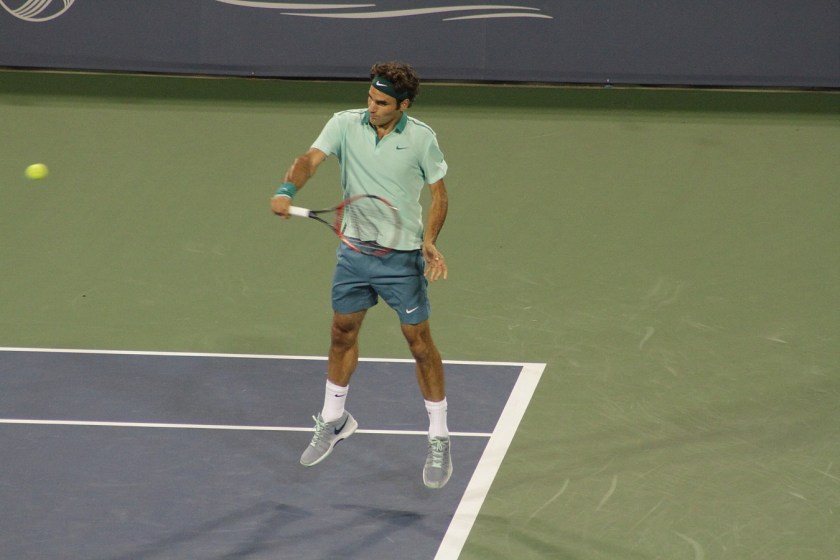
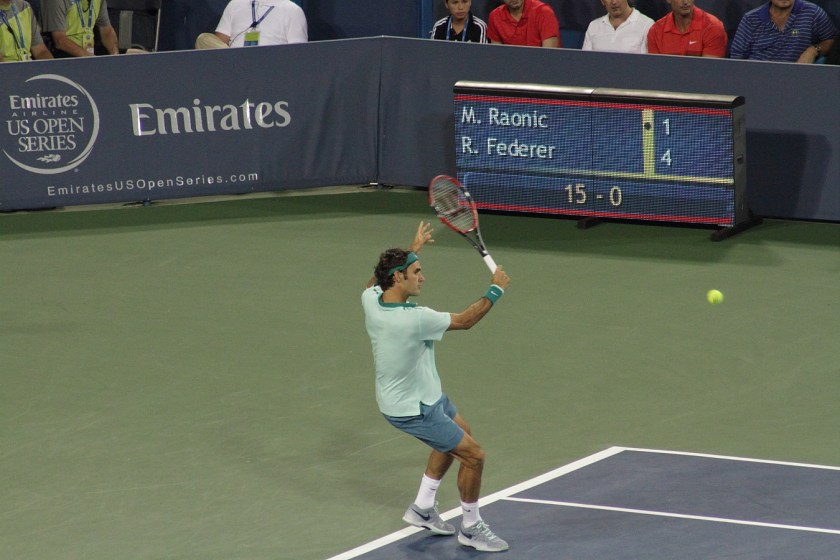
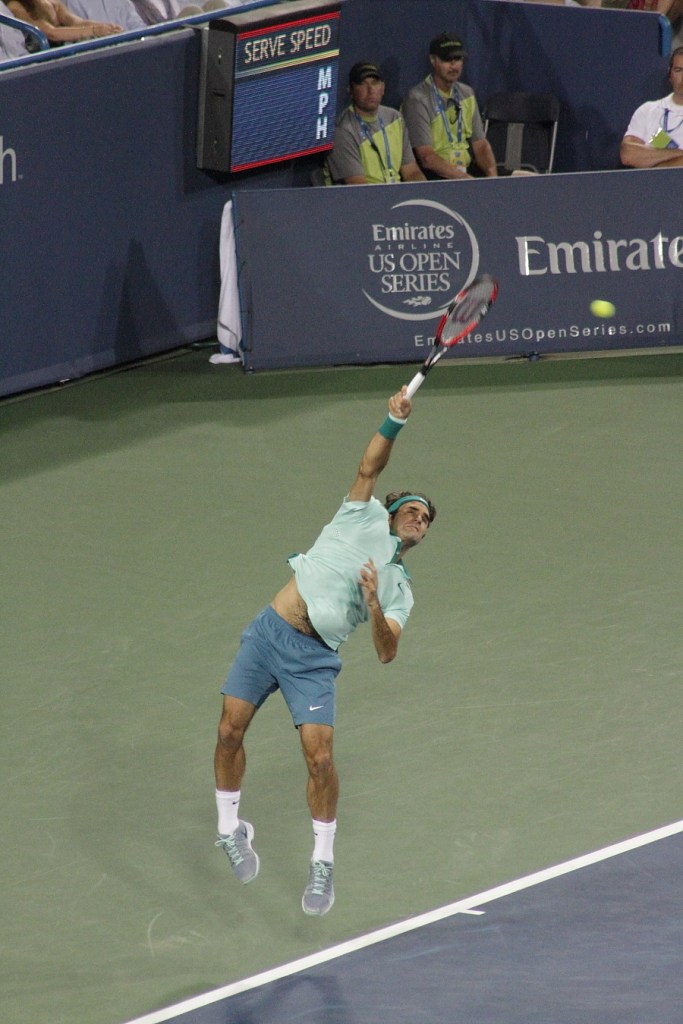
As an Aussie, I have always been a keen tennis fan. When I lived in Australia, I regularly went to watch the Australian Open – as a grand slam tournament it always attracted the world’s top players. I have been fortunate to see many of them play in Melbourne over the years. I tried to also play the game – albeit very badly. The move to the USA certainly made it harder to appreciate this sport. When I lived in Connecticut I discovered that tickets to the US Open were very expensive & the event was also very corporate. Over the years we ended up going to various lead up tournaments to the US Open instead. This was great in some ways – matches are played in a more intimate setting & you can really see the players up close [instead of sitting in the nosebleed section of a large stadium]. The Western & Southern Open in Cincinnati is a good example – we have been to this one on numerous occasions now. Here are some pics [as is out of the camera] of Roger Federer – one of my fave players of all time – from 2014 when I lugged my camera gear with me to Cincy:
This year, of course, it is ‘when in Rome, do as Romans do’ ! In a mad moment of spontaneity I decided to get tickets to the French Open – as a surprise belated birthday present for my other half, who was coming over again to visit. Cost me an arm & a leg, but I figured this was a once in a lifetime opportunity. This time I experimented taking pictures with my iPhone & a small, portable Nikon Coolpix camera – both of which do not compare to a camera with decent lenses when it comes to sports photography.
This is a very special year at the French Open, held regularly at the Roland Garros tennis facility. Roland Garros was a pioneer in French aviation, who was the first to fly across the Mediterranean [between Saint-Raphaël & Tunis] in 1913. This was an amazing achievement in its day! The then famous Garros signed up as a fighter pilot for the First World War & his plane was shot down in October 1918 – on the eve of his 30th birthday. So exactly a 100 years have passed now in 2018. [For more info, see https://www.rolandgarros.com/en-us/video/who-is-roland-garros] When France needed a place to play the USA in Davis Cup finals in 1928, a new stadium was built at Porte D’Auteuil – the site of the present day Roland Garros tennis facility which today houses 17 courts & 3 stadium size courts.
In 1928 the new stadium was named after Roland Garros, because of of lobbying by his friend Émile Lesieur. [Lesieur was also a fighter pilot during the war & was a fellow student with Garros at the famous Paris business school [HEC]. Lesieur himself was a celebrated rugby player & was President of the Stade français – an organization formed in 1883 devoted to the promotion of athletics & sports in schools & at the elite level.] The tournament this year commemorates the 100th anniversary of Garros’s death – but actually it is a celebration of his life.
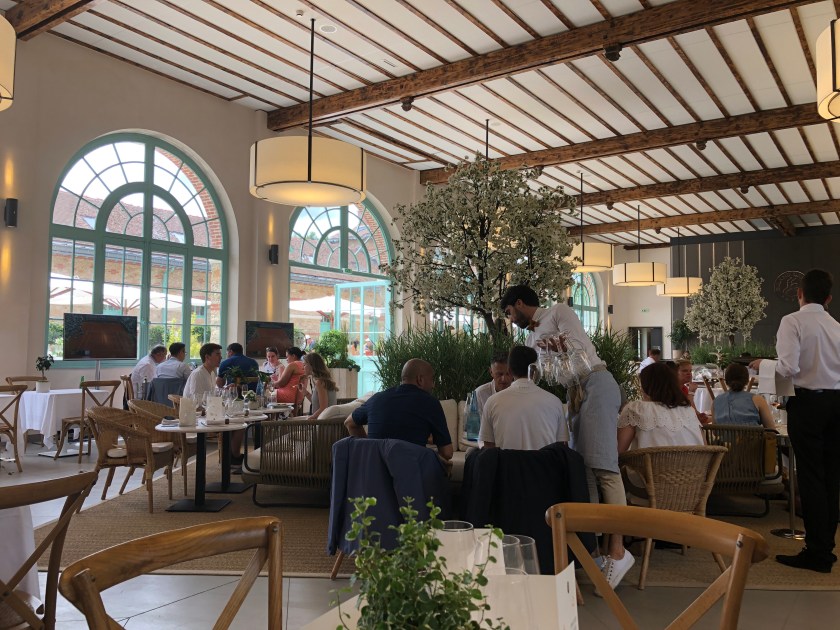
The tennis complex is very nicely laid out & is next to a botanical garden, some of which is gradually being absorbed by the tennis facility. One of the catering areas, called the Orangerie, abuts it & our tickets gave us access to it where we got a quick & light breakfast before heading to check out the matches.
Lunch was also served there – quite a fancy affair – white starched tablecloths & wine glasses arranged in the standard diagonal line. The priorities were well set – there were TV screens all around the place so you could not miss the tennis while you tucked into your nice 3 course lunch in a leisurely manner!
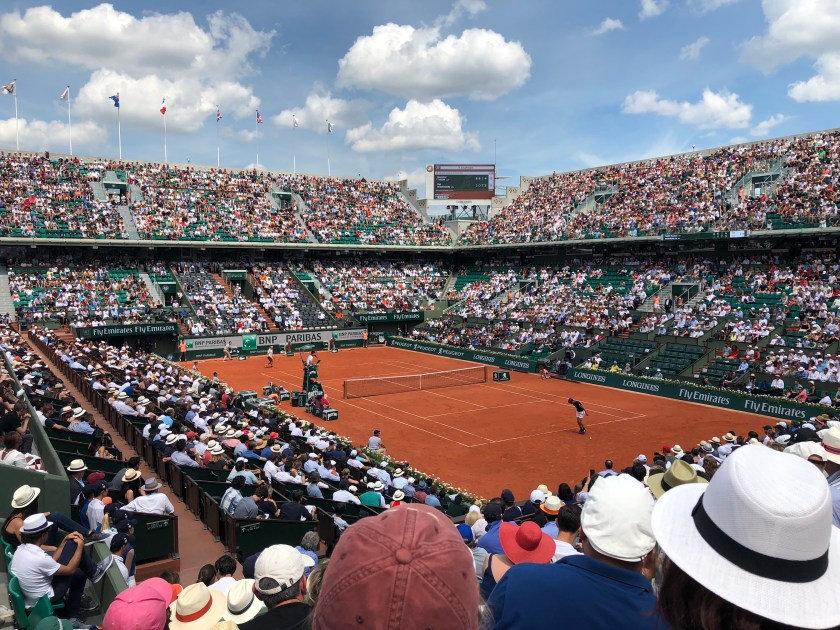
Our tennis tickets for the Round of 16 were for the main stadium court – named after Philippe Chatrier – a famous French tennis player & journalist. This court has ~15,000 seats – a great atmosphere for spectators because everyone is fairly close to the play. The image below is straight out of the iPhone – no zoom…
There has been criticism of the limited seating at the French Open & as I understand it plans are underway to expand the facility – moving it further into the botanical garden.
On this gorgeous Sunday on center court there were 4 scheduled singles matches – 2 women’s & 2 men’s – .
Madison Keys (images above) defeated her Rumanian opponent Mihaela Buszarnescu & Madison’s close friend Sloan Stephens defeated Estonian player Anett Kontaveit (images below).
This set Keys & Stephens up to meet in the semi-final – similar to last year’s US Open women’s final, where they met & Stephens won. [This time, Stephens won again & she is to play Simon Halep in the final on Sunday 10th of June.]
We also saw Austrian Dominic Thiem [images below] take out Japanese star Kei Nishikori – somewhat of a surprise. [Thiem himself went on to be beaten by Nadal in the quarter-final.]
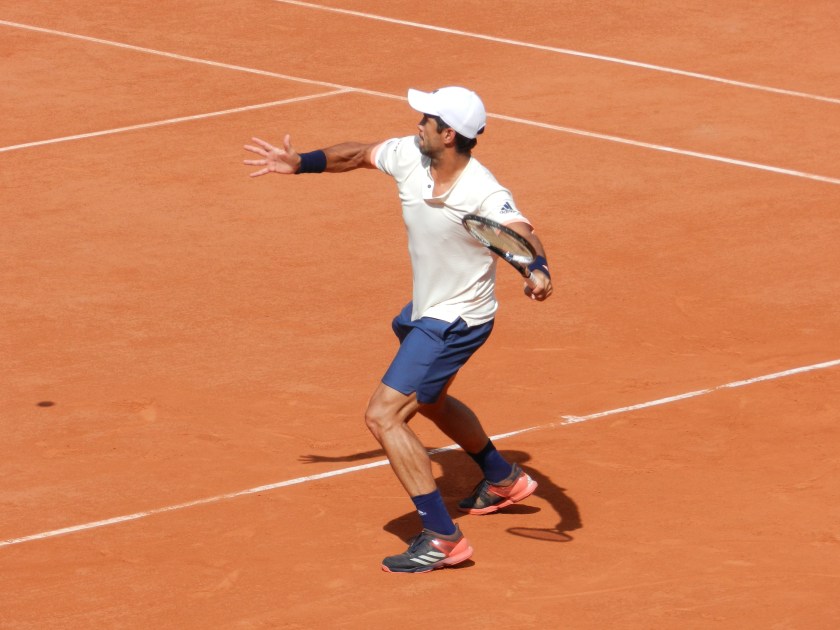
FInally, Novak Djokovic defeated the Spaniard Fernando Verdasco in 3 sets [images below]. Sounds like an easy match, but it was not because many games went to deuce & were quite prolonged. Overall, Djokovic did not play well at all – he made lots of unforced errors – surprising for someone playing at that level. [He was subsequently bundled out of the Open in the semi-final in a shock defeat by the Italian player Marco Cecchinato – who made history by becoming the first Italian man make the French Open semi-final in 40 years!]
Clay courts are a tough surface to maintain – the courts need to be ‘bagged’ regularly i.e. run over with a brush & hosed. I remember doing this at high-school as the chore that everyone hated to do. This was the last thing to do when finishing up for the day. As I watched them bag the courts at the Open I thought about those old days… But they really had the bagging down to a very fine art at the Open…
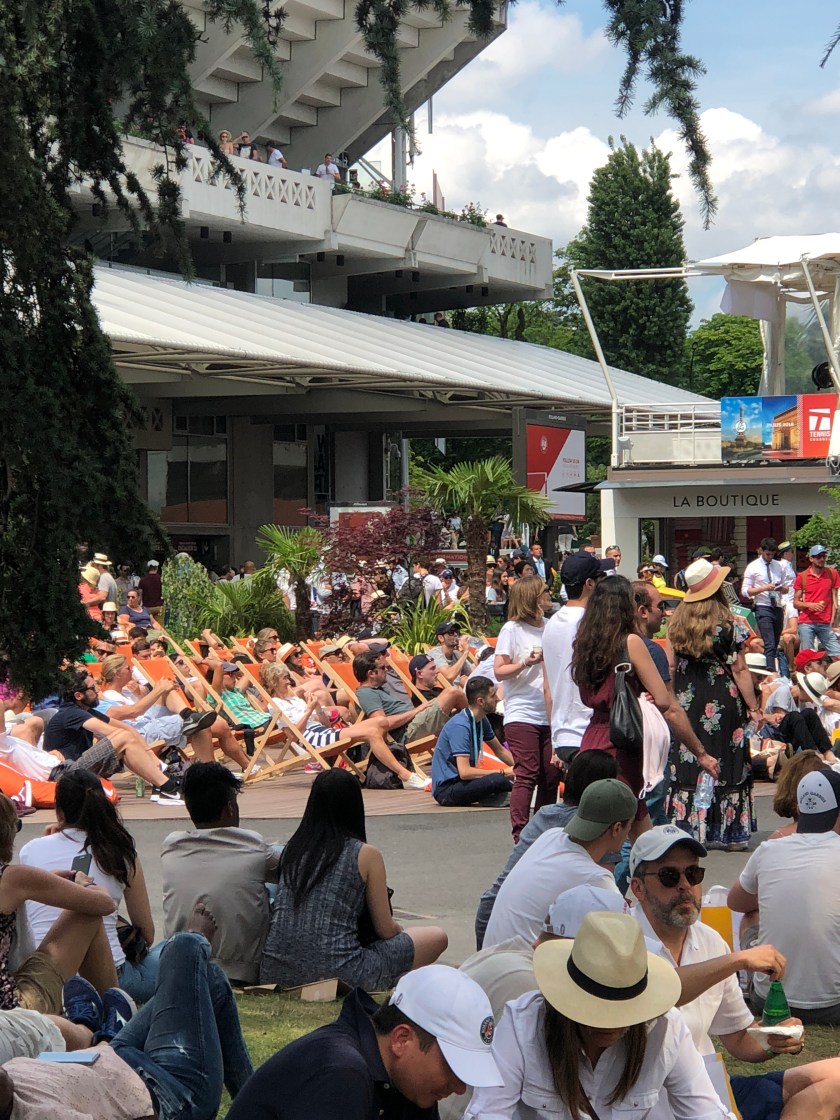
As I mentioned earlier, there are a lot of great spaces for spectators to hang out. One open area had deck chairs in front of a large screen – so that people can lounge around with a bit more comfort…
Overall, we had a terrific day at the tennis! It was a day that I will never forget, both for the game itself as well as the wonderful lunch we were served. Getting there & back was super easy & quick with the Metro. That is one of the great things about living in a big city with an excellent public transport system. And that is something to really celebrate, isn’t it?
It is funny how life is full of interesting coincidences. In the last 2 posts I described my experiences on various trips to northeast Europe – to Finland – as seen through the eyes of someone whose own family comes from the Baltic region. On arriving back in Paris, I visited the Musée d’Orsay again [which I have posted on previously…] to see a new temporary exhibition that I was particularly excited about. It was called Âmes sauvages: Le symbolisme dans les pays baltes. Translated this corresponds to Wild Souls: Symbolism in the Baltic countries [http://m.musee-orsay.fr/fr/expositions/article/ames-sauvages-46485.html]. So here I found myself in back in Paris, revisiting some of the very same themes I ran into when I was checking out the art in Finland a few weeks ago! The exhibit’s advertising material depicts a striking painting by a celebrated Latvian artist, Johann Walter [1862-1932] entitled Jeune Paysanne, which was painted in 1904.
The art exhibit has been organized to celebrate & commemorate the 100th anniversary of the declarations of independence of the 3 Baltic republics – Estonia, Latvia & Lithuania – in 1918. This period of freedom was shortlived – the 3 Republics were annexed by the Soviet Union during its imperialistic expansion. Fortunately, today the 3 countries have their independence once more.
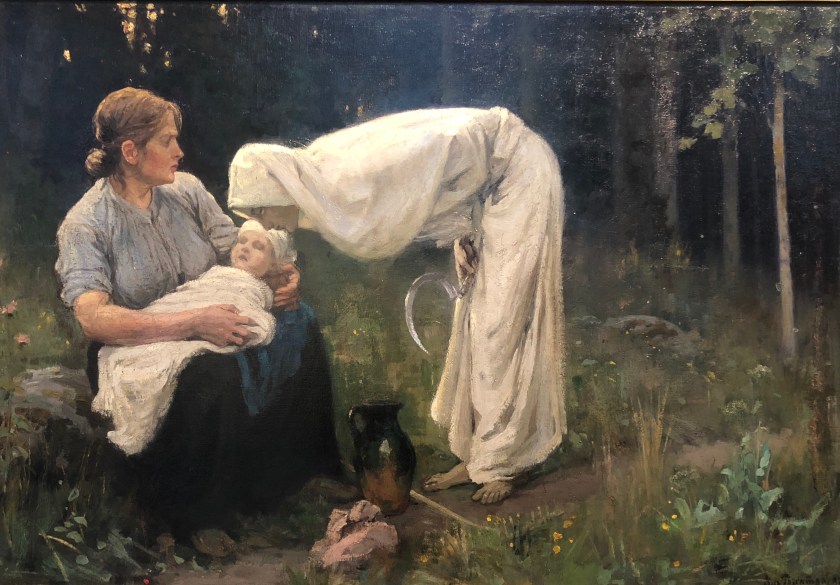
As I already mentioned, the artworks featured in the Paris exhibit had themes common to those that I described in the Helsinki Art Museum exhibit of Finnish Art from around the same period in an earlier post. In the late 19th century, there was a cultural revival & a focus on ethnography & national identity in Europe, so many nations there were experiencing similar bursts of cultural activity. In images from the Baltic countries – including Finland – there is always the presence of the supernatural, including death in quite a few works. In one of the works from the Paris exhibit shown below, the moment that Death comes to visit & take an infant from it’s mother is depicted.
This is a striking image on multiple levels. First, Death is depicted in white & as a woman – but her identity is unmistakable as she carries a sickle – a definitive cutting tool. Second, the look on the Mother’s face is depicted with incredible skill. I stood in front of this image for a long, long time contemplating it. There is the Mother’s look of incredulity as she looks directly upon Death & seems to not know how to deal with the situation. Yet, paradoxically at the same time there is an amazing gentleness to the scene. Death herself appears to be a compassionate being – the face depicts a calm, gentle demeanor & the white clothing does not have the negative association that typical images of the Grim Reaper dressed in black & traditionally carrying a scythe elicit. This is a classic painting created by the Latvian painter, Janis Rozentāls [1866-1916].
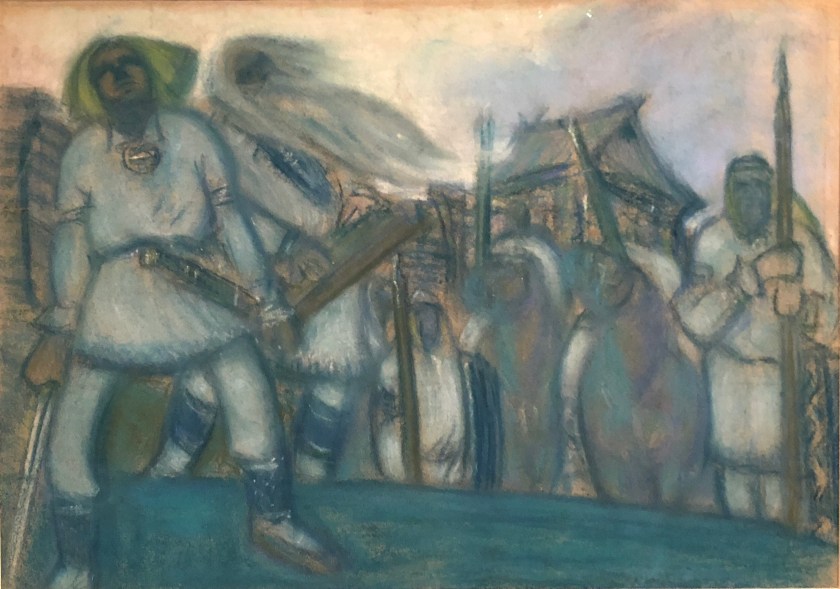
The exhibit depicts paintings & drawings showing scenes from real life, as well as from myths & legends – hence the symbolism label in the exhibit’s name. Here we come into contact with heros from epic poems, such as the Estonian Kalvipoeg.
The above image by Estonian artist Välko Tuul [1894-1918] depicts him in a battle [Kalevipoeg et Les Guerriers] & was painted between 1915-17. Despite being a hero, he does die [unlike heros in other epic sagas of other countries] – with the event being depicted by Estonian artist Kristjan Raud [1865-1943], entitled La Mort de Kalevipoeg . He suffers an awful death from having both feet cut off by his own sword in a strange twist of fate. The image below depicts the hero with a distorted & emaciated torso & of course, sans pieds – a very dramatic image to say the least.
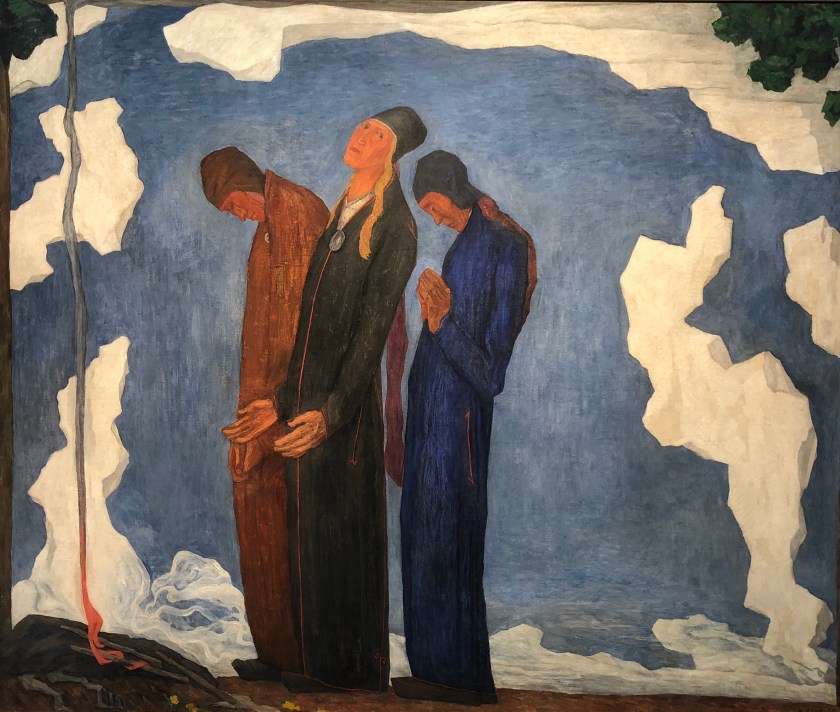
There is a certain simplicity to the images & this makes them so much more impactful. For example, this painting from 1935 by Kristjan Raud entitled Sacrifice embodies this simplicity. From my interpretation, the image depicts a pagan ritual & the bowed heads, positions of the hands & poses struck by the bodies depict a respectful act of worship.
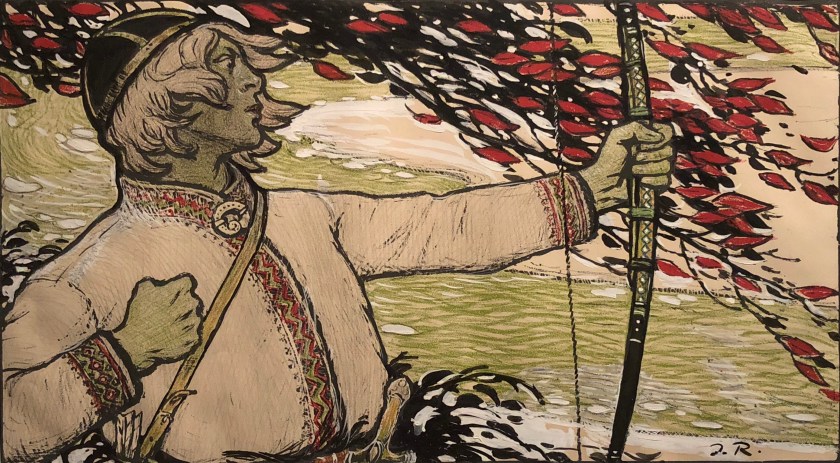
The images can also capture a dynamic instant in time, such as the moment an archer lets an arrow fly on a breezy day in a painting by Rozentāls entitled L’Archer.
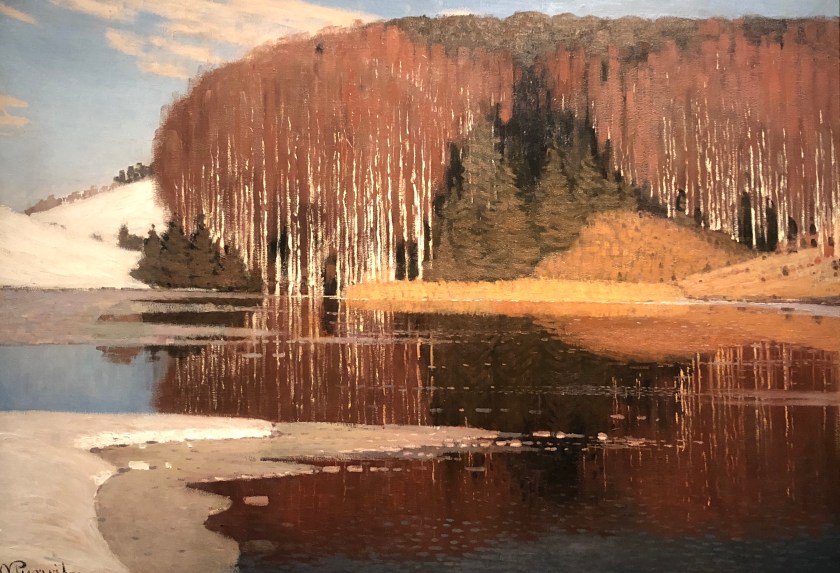
As in the Finnish art exhibit I described in the previous post, the images in the Baltic countries exhibit in Paris also explored nature & landscapes. One of my favorites was an early spring landscape by Latvian artist Vilhelms Purvītis [1872-1945] entitled Les Eaux printanières, which was painted around 1910. It is a beautiful & gentle scene – in some ways minimalistically rendered – the verticalness of the birch & fir trees is a nice contrast to the horizontalness of the water with it’s melting ice & the surrounding land with retreating snow.
In another part of the museum there was a temporary exhibit of Estonian photography depicting scenes from life on the Estonian island of Kihnu – located in the Baltic Sea not far from the Estonian coast. I was able to enjoy those images as well on my visit.
Fortunately for me, these temporary exhibits did not seem to attract the tourists. They were busy on the museum’s upper floors checking out the impressionist classics that the Musée d’Orsay is so famous for (as the photos below indicate). Glad to say that I have spent considerable time in these permanent collections on previous trips to Paris, when there did not seem to be as many tourists… Tourist season is definitely here in Paris now that it is May. Note to self: I need to whip around to some other sites that will gets lots of tourist traffic before they get too crowded…
Despite my recent posts lauding late 19th century art, my favorite period & styles of art actually are early 20th century expressionism, futurism & surrealism. The Centre Pompidou here in Paris has a permanent collection where you can check out some works from this period & the D’Orsay has some works as well.
What period of art & style do you feel most passionate about?
This post continues on from the previous one – about a recent visit to Helsinki & some thoughts about 2 previous trips there also, as seen from the perspective of someone whose own family came from the Baltic region.
Because Finland has always had such long winters, I imagine that this has allowed cultural activities to flourish. The performing arts, literature, as well as arts & crafts are much cherished in the country. Most people seem to play an instrument [or sing]. A traditional instrument is the ‘kantele‘, originally a 5-6 string instrument that is strummed [by matchstick] or plucked.
The above image shows a replica of an instrument that was used in the 1830s by a famous Finnish singer. This replica can be found in the Ateneum in Helsinki. Chords are formed by muting or stopping the strings [https://en.wikipedia.org/wiki/Kantele]. Modern kanteles are more elaborate, of course – they have many more strings, enabling a larger repertoire. The all girl Finnish group Kardemimmit are good exponents of this instrument [http://www.kardemimmit.fi/]. I have been fortunate to have heard them at our Lotus World Music Festival in Bloomington in the USA – they have visited now on a couple of occasions. Interestingly, variants of these stringed instruments appear all around the Baltic. In Estonia the equivalent is the ‘kannel‘, in Lithuania there is the ‘kankle‘ & Latvia has the ‘kokle‘. I have a kokle, which is back in the USA & I used to be reasonably proficient at playing it.
During my winter visit to Helsinki a couple of years ago, I was invited for Sunday lunch at a friend’s apartment. All the guests came bearing either musical instruments or other material – perfect for a set of impromptu performances after lunch was eaten. As a guest I too was expected to make a cultural contribution – I chose to recite some poetry by one of my favorite Latvian poets [Aleksandrs Čaks] – in Latvian, of course. This was an interesting exercise, as it showed us all the large contrast between Finnish & Latvian – two very different language groups [Finno-Ugric vs Baltic] despite the two countries being near neighbors on the Baltic. Yet, despite the language differences between the two countries, there are many commonalities in culture etc. I say this because when I visit Finland things feel both strange & eerily familiar. Things feel strange because this is a novel language & country. Yet, things feel familiar as some aspects of the culture make me think of me of my elderly Latvian relatives [unfortunately now no longer of this world] & stories that they have told me.
This springtime visit to Helsinki was great because the Ateneum Art Museum had a special temporary exhibit devoted to showcasing Finnish Artists Society art from the late 19th century to the present day. Some of the works were really poignant – here I share with you some of the classic paintings that had the greatest effect on me.
The image above by Albert Edelfelt [1854-1905] is entitled ‘Conveying the Child’s Coffin‘ & was painted in 1879. It depicts the heart-wrenching scene of a family taking a funereal boat journey for the purposes of bringing their young family member to their permanent new place of rest. I stood for a long time in front of this image. It is so skillfully rendered, the light is beautiful & the visible emotion, while understated, visually nevertheless jumps out of the canvas & grabs your heartstrings.
The above image entitled ‘Lemminkäinen’s Mother‘ was painted by Akseli Gallen-Kallela [1865-1933] & depicts a scene from the Finnish epic poem Kalevala by Elias Lönnrot, which was first published in 1835 [https://en.wikipedia.org/wiki/Kalevala]. A more recent version was published in 1849 & consists of 22,795 verses, divided into 50 songs! [These epic poems were not unique in the Baltic region: Estonia has Kalevipoeg & Latvia has Lāčplēsis (Bearslayer). In the latter Kalevipoeg also appears. These are just the ones I know of – there may well be others in the surrounding countries.] The Finnish Kalevala has many stories & characters. Lemminkäinen features in a number of them, but the story depicted in the above painting is that of Lemminkäinen’s Mother’s efforts to ‘remake’ his body. He has drowned in the river of Tuonela [in the underworld] while hunting the black swan that lives there. His Mother looks for him everywhere. Finally, she learns of his fate & asks Ilmarinen [a blacksmithing God] to create a copper rake [also seen in the painting]. In the underworld, she rakes up every piece of Lemminkäinen’s body & clothing from the river Tuonela. She sews the parts together & implores the Gods to bring him back to life. The painting depicts this scene.
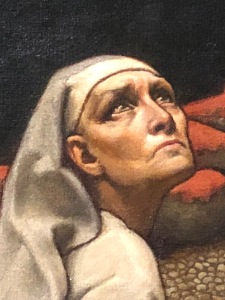
I was really struck by the emotion on the face of the Mother – it is very intense study in emotion [see close-up at left]. There is a deeply imploring look & at the same time there is also determination & desperation as well. An amazing painting, to put it mildly, on so many levels!
To continue the story of Lemminkäinen: Finally, in desperation, his Mother convinces a bee [also seen in the painting, below the rake] to fly to the Halls of the ‘Ubergod’ Ukko for a drop of honey. This enchanted honey ends up bringing Lemminkäinen back to life.
In the exhibition there were many other artworks that were very beautiful & inspiring – portraits, landscapes depicting the various seasons & some snapshots of ephemeral moments in human interactions. The painting below by Hugo Simberg [1873-1917] depicts a beautiful moment where a grandparent strolls along a lake with his grandchild, showing that special bond that these two generations share.
Apparently, Simberg painted his own father & young son in this image. I also like the light here – as a photographer this is my favorite time of the day…
There were so many other interesting & notable works of art to see. Anyone visiting Helsinki should stop in to the Ateneum. The exhibition I saw was a temporary one, but the museum always has works by Finnish artists on display in their galleries. Some of the other classics [that I did not include in this post] I have seen on a previous visit there.
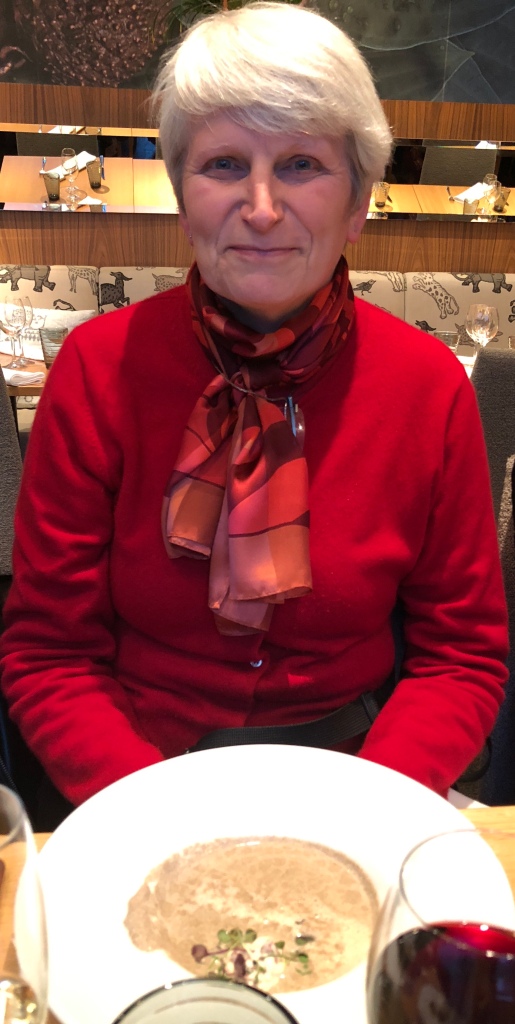
And now to turn to the culinary side of things. Different climatic regions have their own special produce. The northern European countries are no exception in that regard – the relatively mild summers & harsh, cold winters mean that only very hardy plants survive. Lingonberries, bilberries [native to Europe & related to blueberries], gooseberries & red currants are common fruits here. Reindeer steaks are very popular, as are fish such as Baltic herring & salmon [particularly smoked or served in a traditional soup]. The emphasis is very much on seasonal produce. This spring while I was there Baltic herring, morels, false morels, asparagus & rhubarb were in season, so I was able to enjoy these wonderful foods – some on more than one occasion. What are ‘false morels’, I hear you cry? Apparently they are a type of poisonous mushroom that can only be eaten when prepared properly through parboiling when the toxins are reduced & the mushrooms become edible – under no circumstances can they be eaten raw. As I said, the toxins are reduced, but not entirely eliminated even with cooking. Supposedly, the toxins can build up cumulatively in the body, so it is said that it is best to not consume these on a regular basis [for more information seehttps://en.wikipedia.org/wiki/Gyromitra_esculenta]. I have to say, I had ’em in a soup with some reindeer meat mousse on the side & the dish was delicious! The image below shows the soup – a nice mushroomy color.
Thankfully for us all the very capable Chef at Ravintola Töölönranta [http://www.toolonranta.fi/en/front-page/] knew what he/she was doing. Many of us chose to eat the false morel soup & everyone was accounted for at the conference the next day ;). The restaurant is also in a very scenic location on Töölönlahti Bay, although it was a blustery & rainy evening when we went there.
Another excellent place to enjoy Finnish cuisine is the Michelin starred Ravintola Ateljé Finne. The place gets it’s name from the famous Finnish sculptor Gunnar Finne. He designed his working studio & this is where the restaurant is located today. Some of his works still adorn the walls & counters of the place [they can be seen on the restaurant’s website: http://www.ateljefinne.fi/en/].
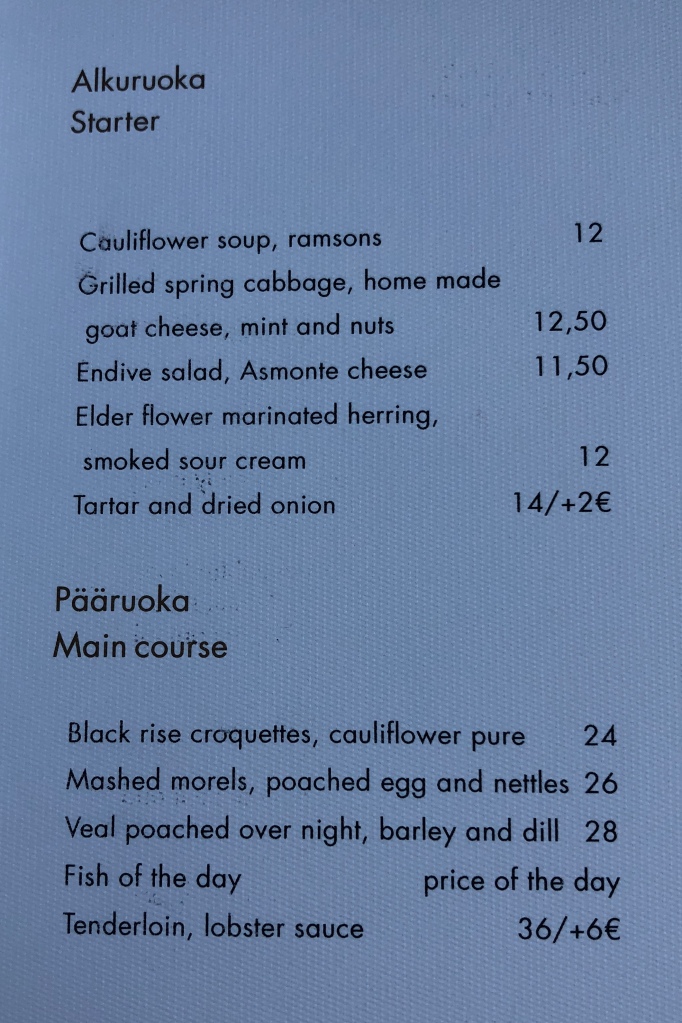
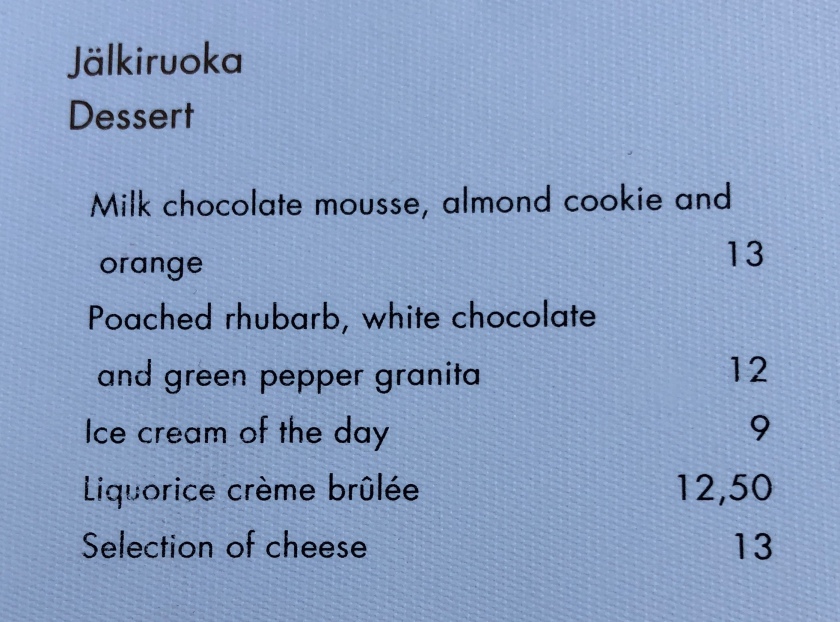
The restaurant is centrally located in Helsinki. The menu is, of course, seasonal – here is a sample of what was on offer when I visited:
I had the herring starter, the morel/egg/nettle main & the poached rhubarb for dessert. Delicious! The Finns are also extremely fond of liquorice – as indicated by the dessert on offer. My Finnish friend had the crème brûlée & I did get to try some of it. It was really good – but I have to say that I am a really big fan of liquorice…
But back to reality now in Paris… that said I came across lightly smoked Baltic herrings in the local supermarket the other day. What a pleasant surprise that was! Could not resist buying some…

















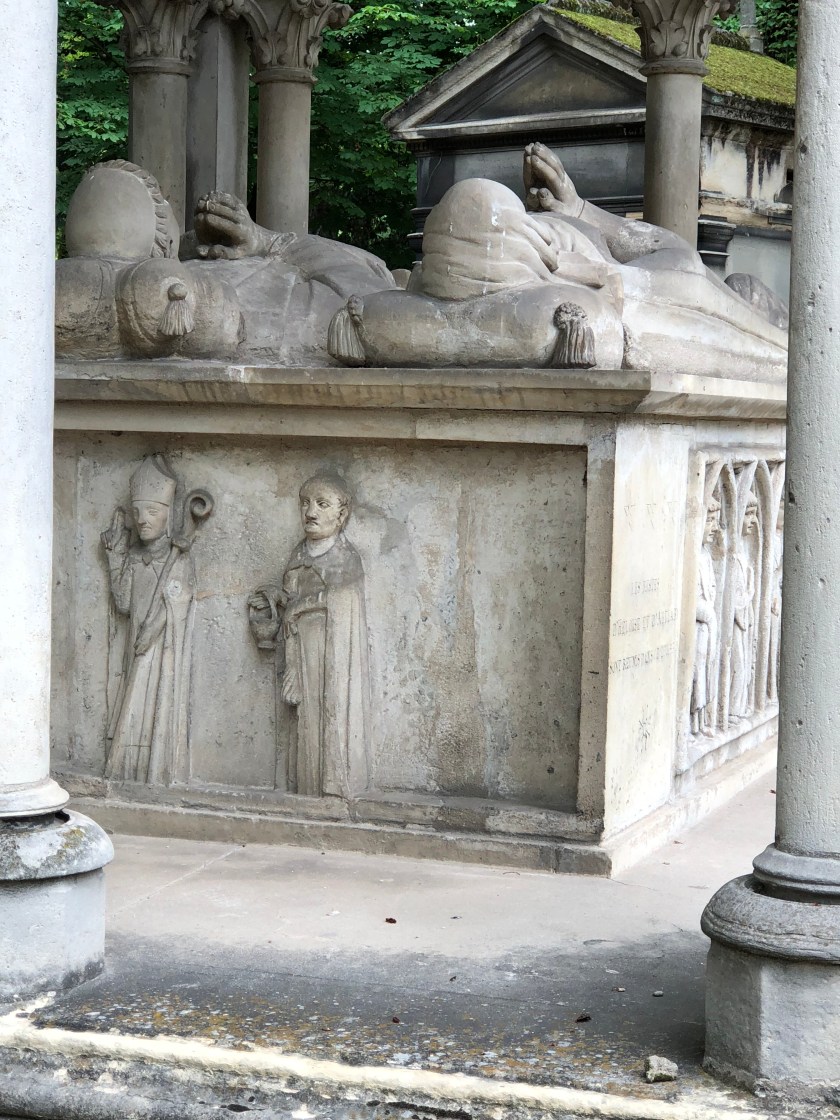 The image above shows the combined tomb of Héloïse & Abélard. This 12th century story of these two lovers & scholars is a long & complicated one, but is famous for an enduring love despite a separation of many years. Apparently they were eventually interred together at Père Lachaise centuries later as a result of an action by Marie Antoinette [




































 neurowanderer.blog