
It’s been AEONS since I posted on this blog! COVID really nixed things for travel for a couple of years, and since I always write about my science-related travels, there had to be some radio silence. I thought that while I got over a minor medical issue this summer, I would catch up a bit with my posts, since people actually do seem to read them… That said, things got away from me [in a good way]. So now we are already at November – close to Thanksgiving & it is now or never to finish & post this one! :)))
In summer 2022 my other half & I travelled to Scotland – to first have a holiday & then go to the scientific meeting of Organization for Human Brain Mapping [OHBM] in Glasgow. It was super-exciting to travel again after the lockdowns & general ‘staying local’ thing of the previous couple of years! We typically opt to travel with Iceland Air through Rejkjavik – a convenient hub airport of manageable size – when we go to destinations in the northern parts of Europe. On a nice day, one can see the dramatic [treeless] landscapes of Iceland [image below], which we were fortunate to enjoy on a 2 week trip there ~10 years ago now… The image below that one shows a bird’s eye view of the rugged coastline of Scotland – around the Southwest Highlands which are just a wee bit northwest of Glasgow.
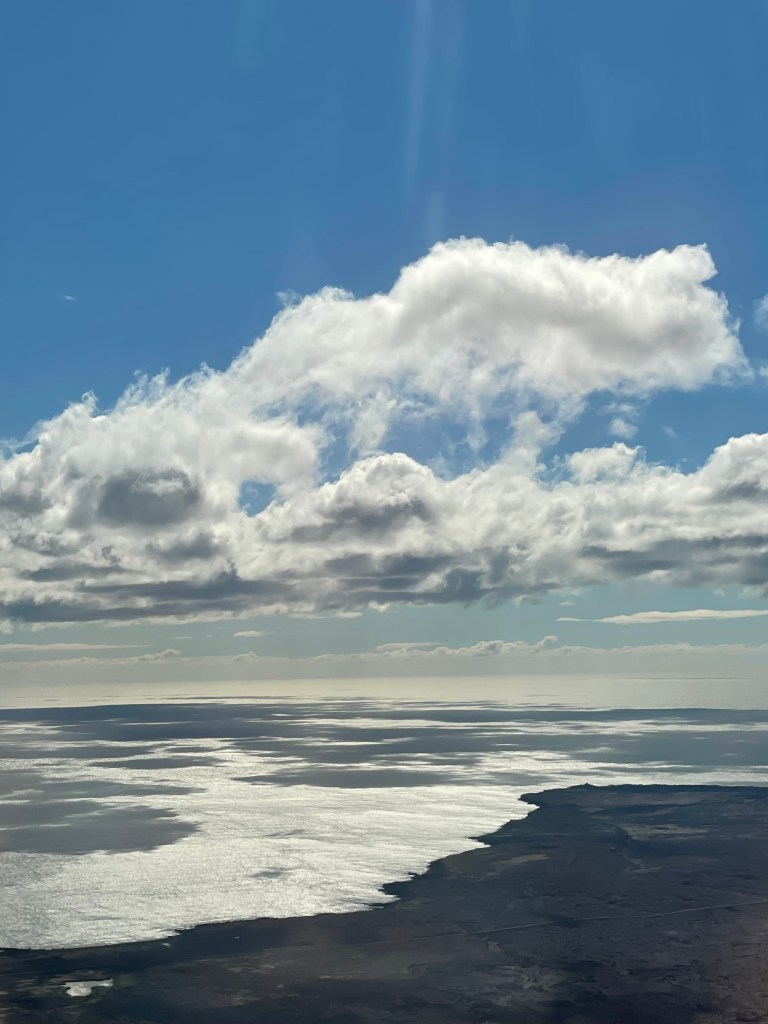
Icelandic coastline from the air
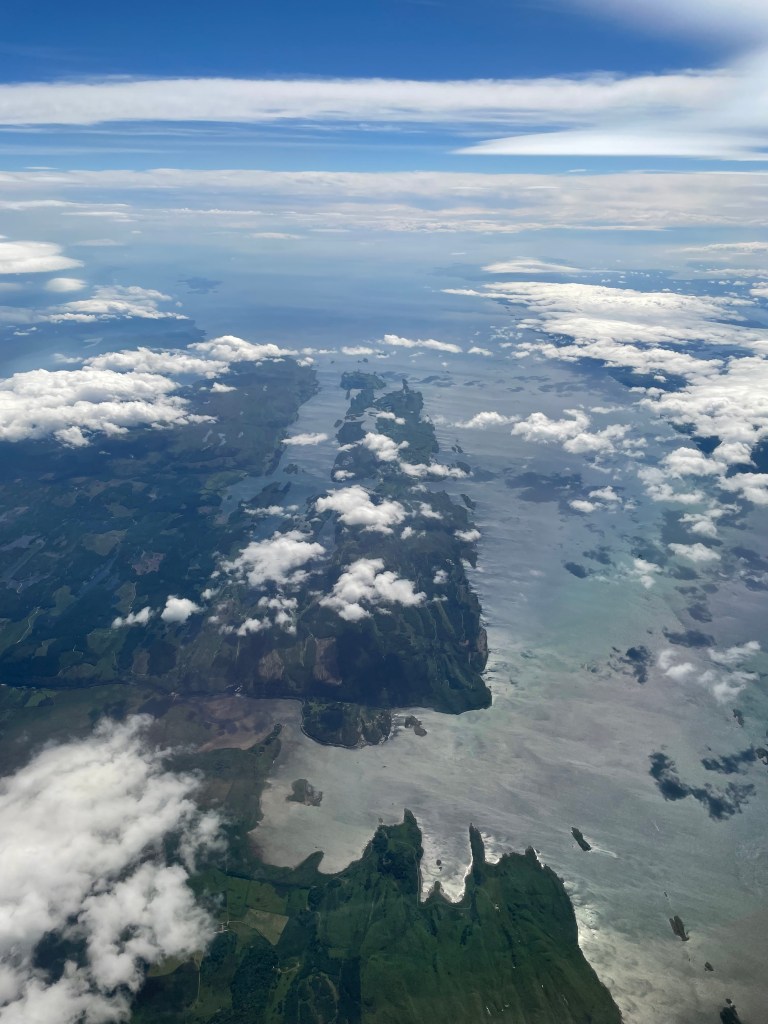
Scottish Southwest Highlands from the air
We did not know it at the time, but Scotland was in the middle of a COVID surge during OHBM 2022. Despite our mandates for all OHBM registrants to show proof of COVID vaccine & also wear masks at the meeting at all times while in the Convention Center, we estimate that possibly around 15% of our folks may have contracted COVID – due mainly to the highly-infectious new variant that spread through Scotland like wildfire & then onto Europe. By some miracle, I did not get COVID & neither did my other half…
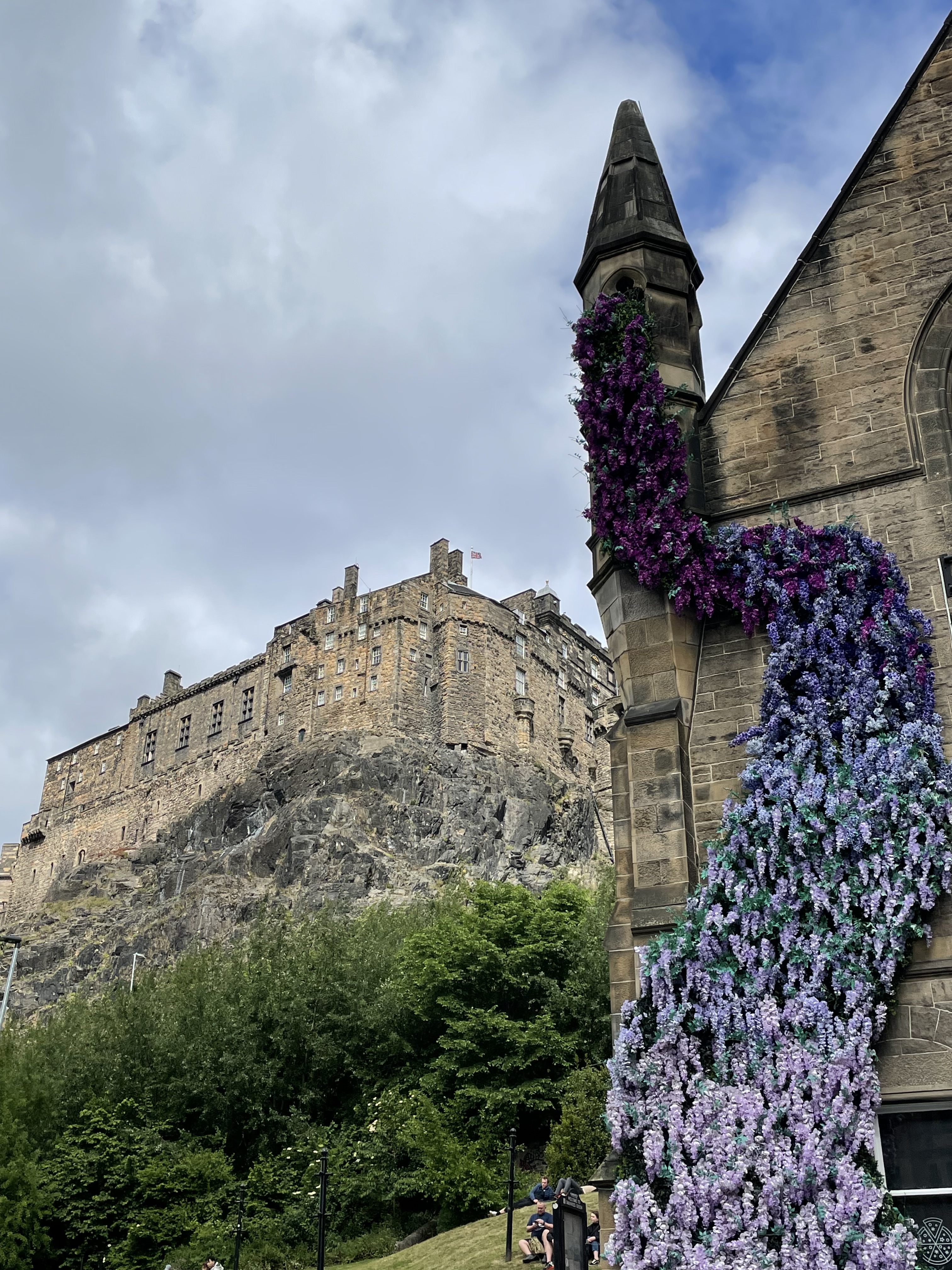
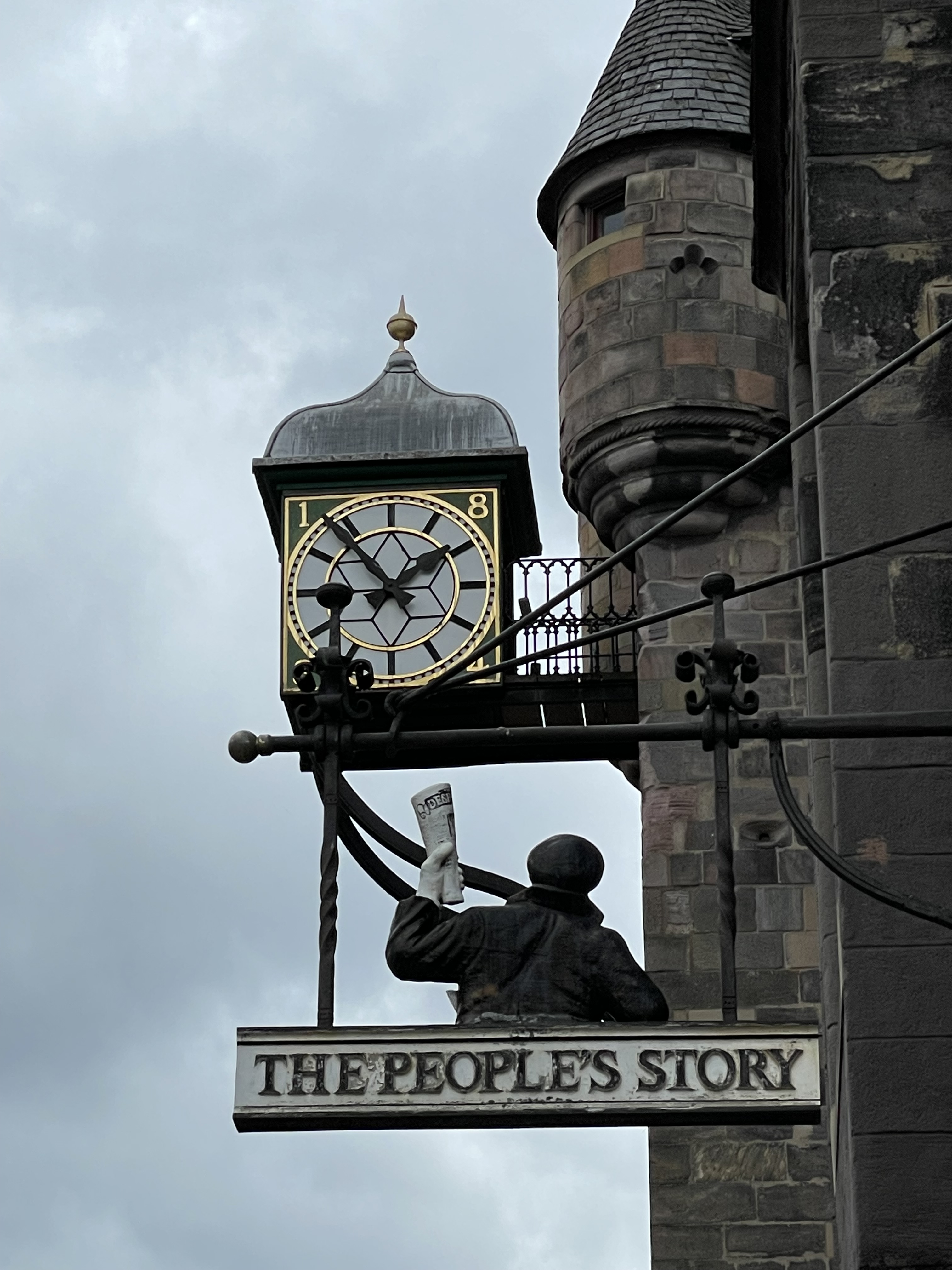
We arrived in Scotland about a week before the OHBM meeting & travelled first to Edinburgh, then back to west to the southwest highlands before returning to Glasgow. Edinburgh is a beautiful, old & stately city, rich with history & set in a hilly environment – as exemplified by Edinburgh Castle literally on the top of the hill. It houses the Stone of Destiny, as well as the ‘Honours of the Kingdom’ [a.k.a. the Scottish Crown Jewels]. The surrounding streets are very picturesque & full of stories.


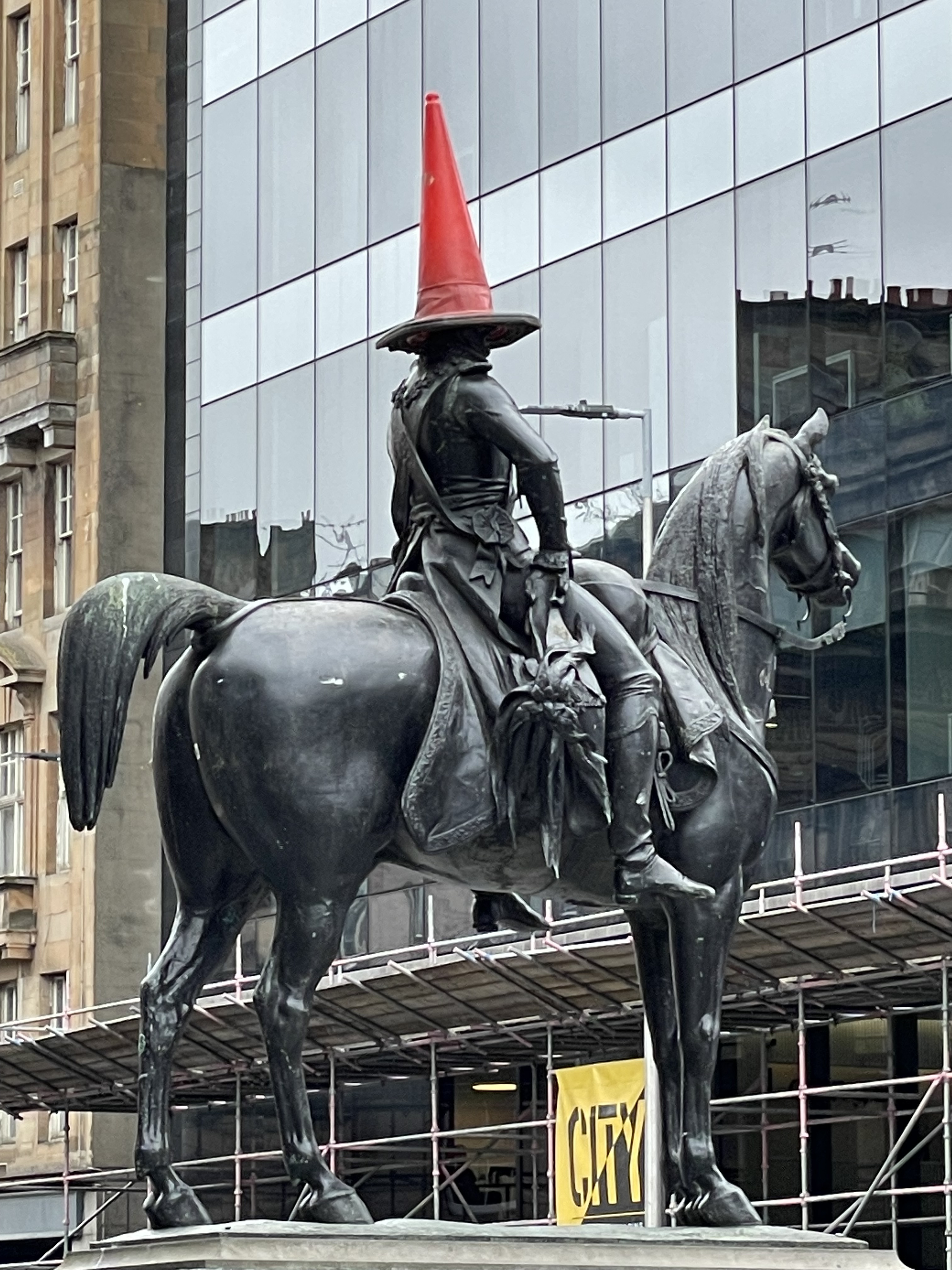
An interesting Scottish eccentricity we noticed is the propensity to put orange traffic cones on the heads of statues. We saw this in Glasgow too… The other thing? I was very happy was to see a blue police box – just like the Tardis in the Dr Who series – the cult BBC science fiction series of the 1960-70s! I felt like a kid again – but this time it was surreal: I had been transported in time from the Antipodes to Scotland!

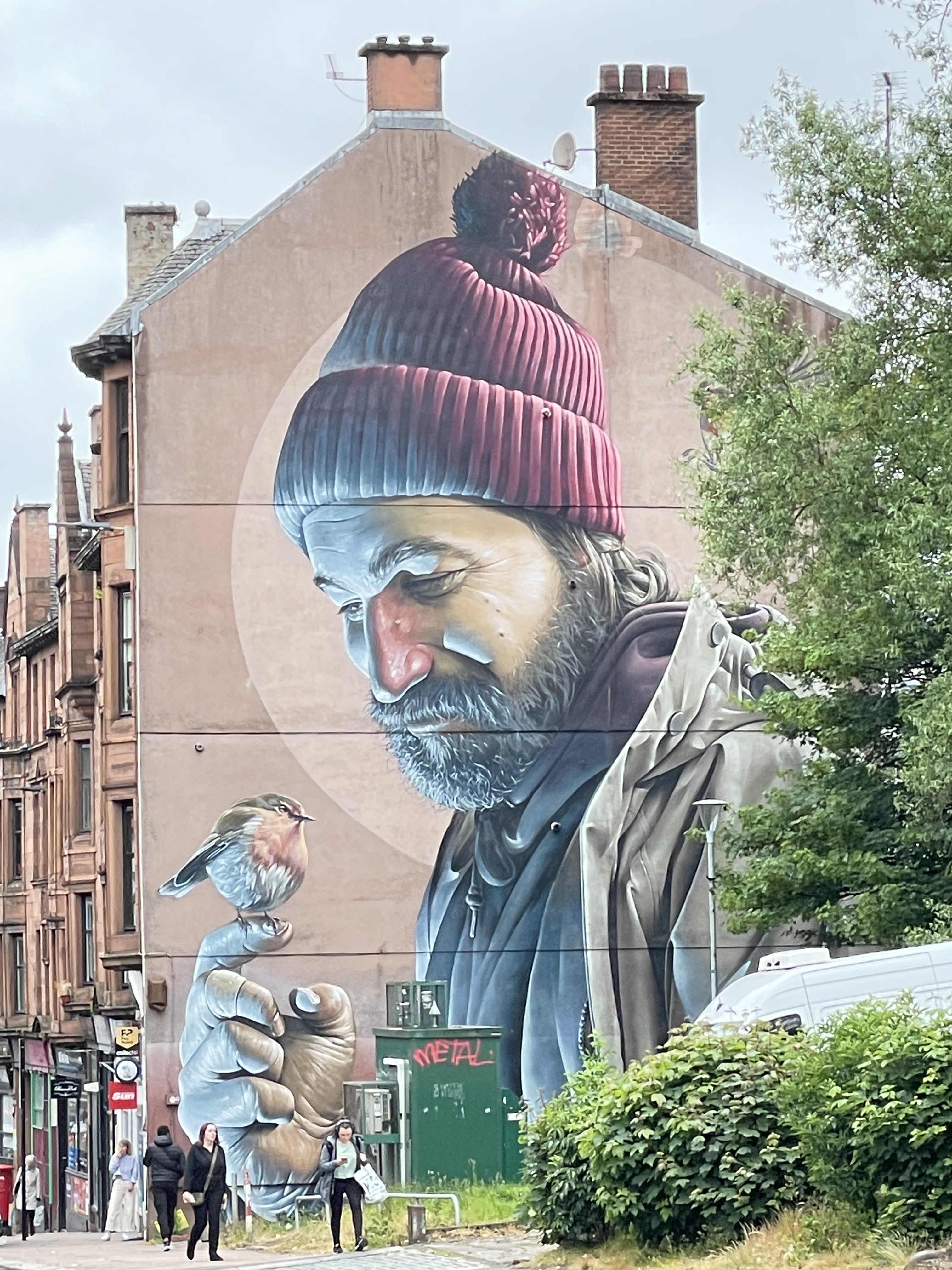
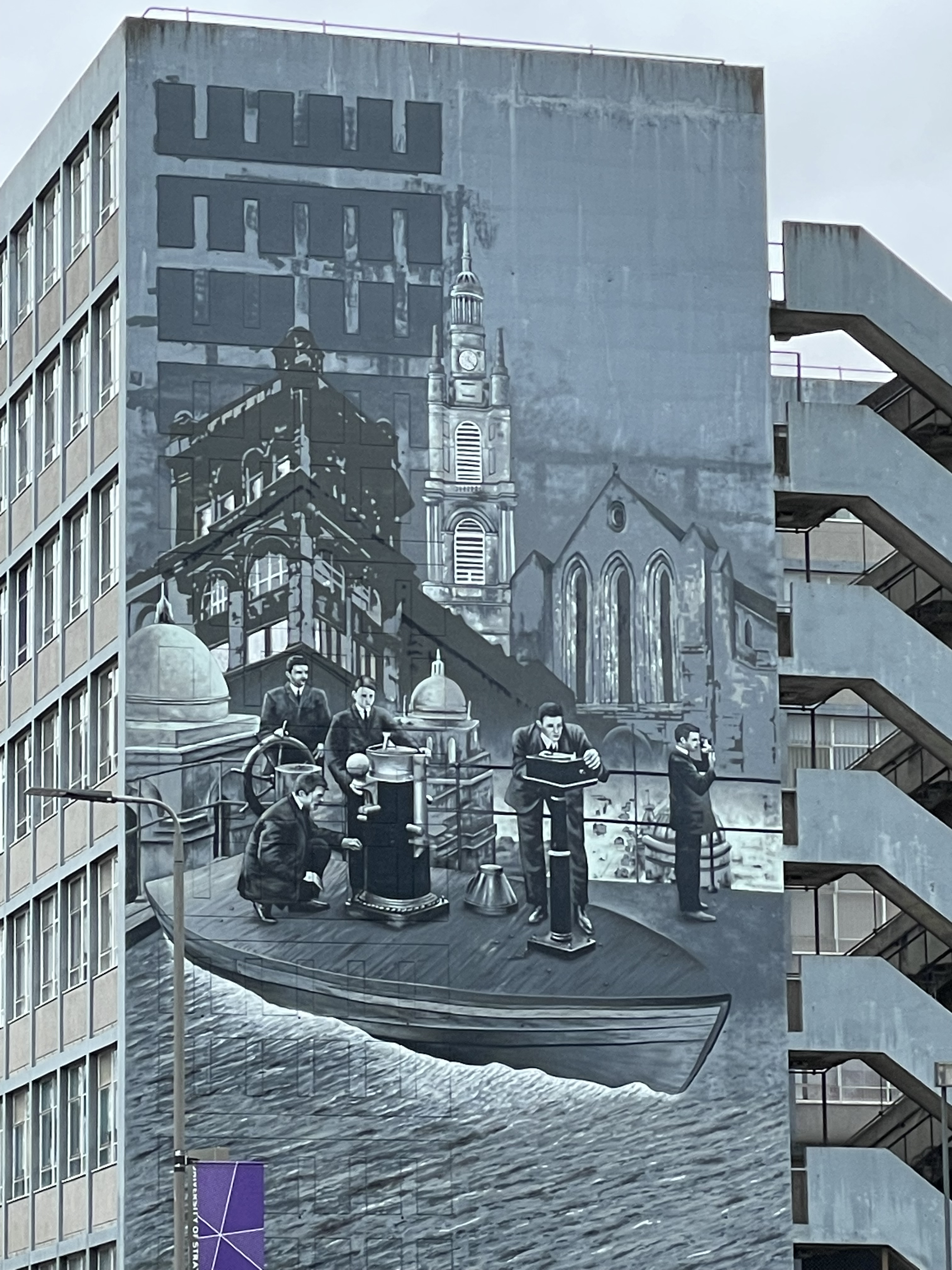
Not all of the architecture is old in Edinburgh. Modern architecture forms an ideal backdrop for street art – showcasing large murals by well-known artists. In the 2 examples below, the left image is a delightful contemporary rendition of St. Mungo, Glasgow’s patron saint – by the street artist ‘Smug’. [St. Mungo is buried in Glasgow’s Cathedral/ Necropolis, not far away from this art work.] The right image is on the University of Strathclyde campus – known for many striking murals on its campus buildings. This one is on George Street & is a depiction of a mock navigation bridge originally built on the roof of the School of Navigation in the Royal College. The mural was created from a 1913 photograph.
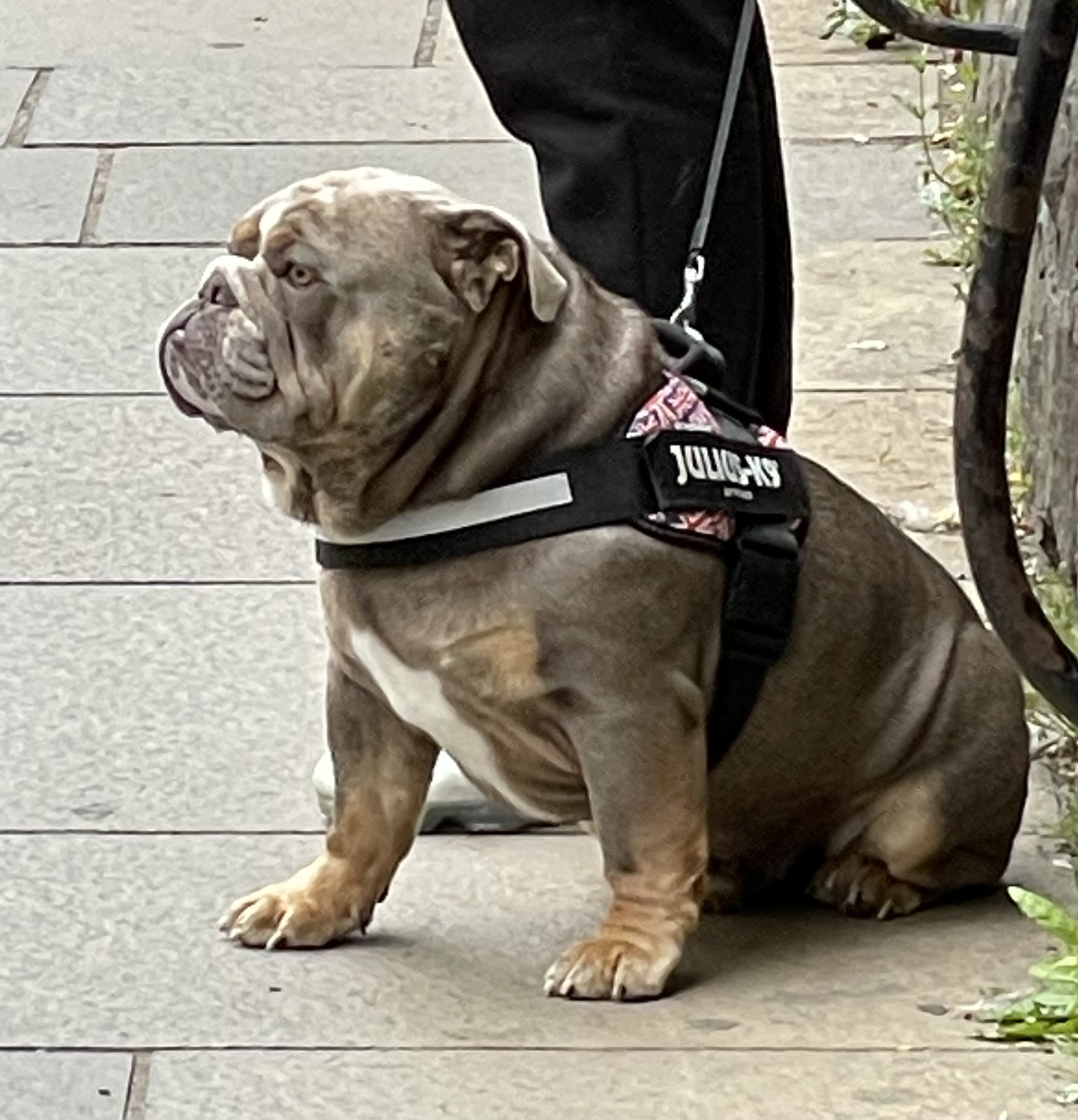
Edinburgh is an interesting city – it is of course the place in Scotland where the Monarch of the United Kingdom uses the Palace of Holyroodhouse to carry out official engagements when they are in Scotland. While we were there was a march by the Grand Orange Lodge of Scotland [supporters for a UK monarchy] through the streets of Edinburgh. Sentiments are extremely divided on this topic in the city, and also in the country. Many Scots chafe at the political control that England has traditionally exerted on Scotland & Ireland – indeed the flag of England tops the pattern formed on the Union Jack with those of Scotland & Ireland under it… Needless to say, the marchers parading peacefully in the street did show their colors [even the four legged ones…]
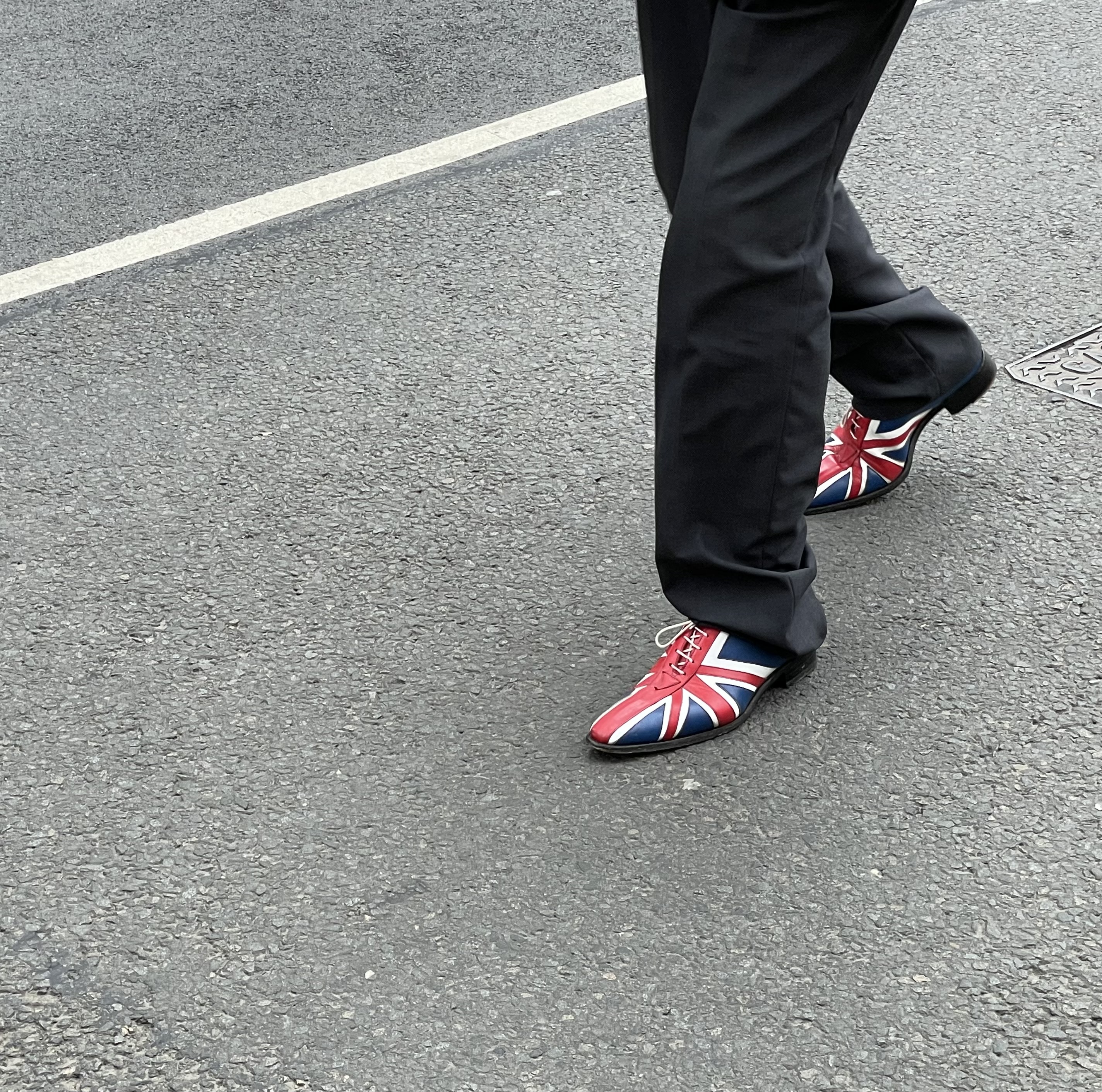
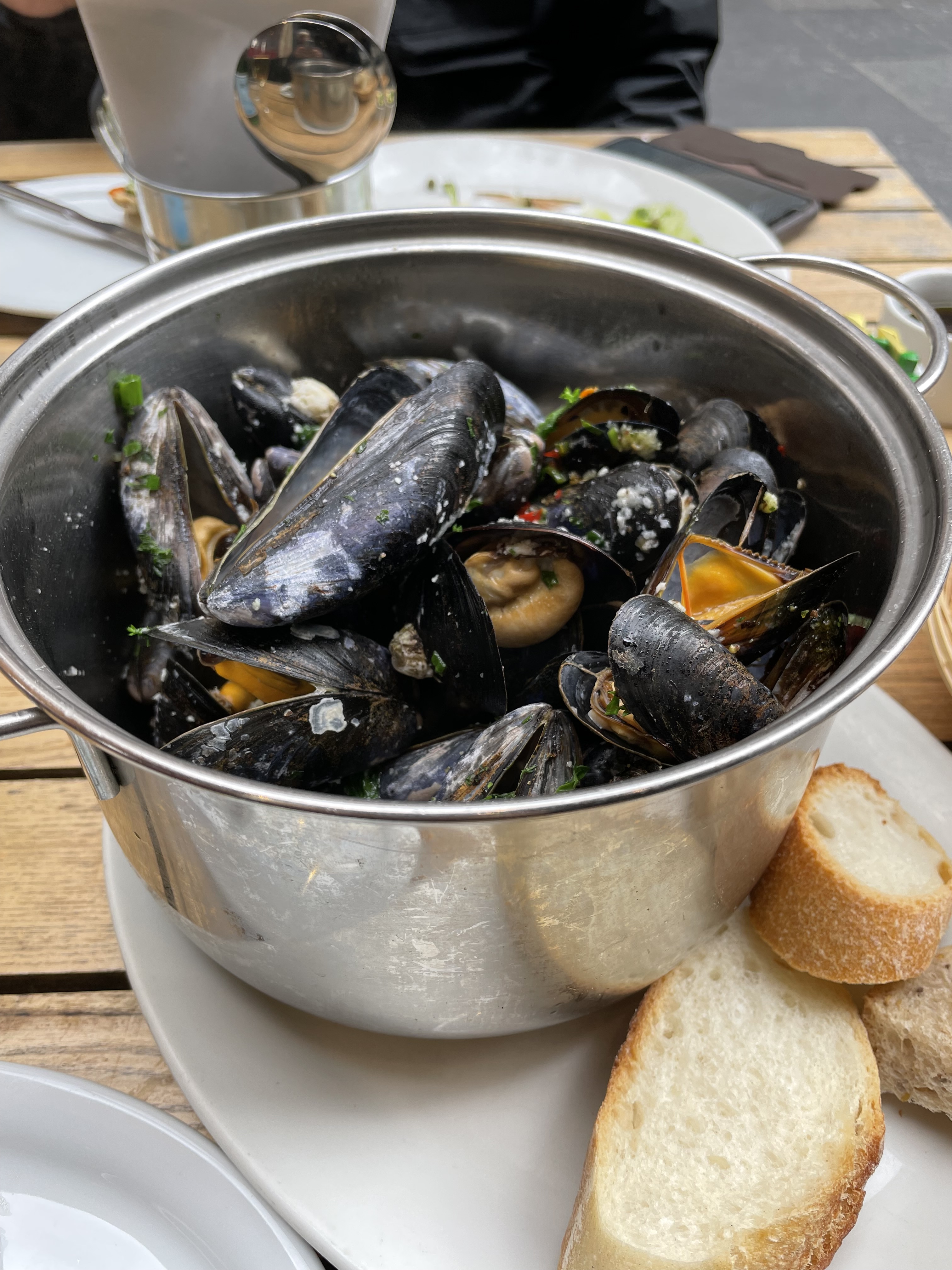
What to do? It was lunchtime, so nothing better than to tuck into a big pot of delectable Scottish mussels accompanied by a local ale & contemplate the complicated history of not only this country, but the United Kingdom too…
Scotland likes to honor its writers and artists & the memorial to Sir Walter Scott in the Princes Street Gardens is spectacular, not just because of its sheer size it is just over 200 feet tall!], but also because of the beauty of the Gothic-style stone carvings. The man himself sits within the base of the monument – standing out from the darker surrounding sandstone because he has been carved in light-colored Carrara marble [by Sir John Steel]. The monument was designed by George Meikle Kemp & he was given permission to construct it in 1838. [There was so much carving to do that many stonemasons had to work on it & it was only finished in 1844.] One night while we were out for a stroll I couldn’t resist taking a picture of the monumental during the early evening moonrise – but with traffic bearing down on me because I was in the middle of a 3-lane road…

Needless to say there are fabulous art museums in both Edinburgh & Glasgow [as part of a set of National Galleries of Scotland]. Because of my interest in art, I spent a lot of time in the galleries in both cities, trying to learn more about the characteristics of local artists throughout history – a subject that I was not an expert on. I learned a tremendous amount in my short time there!
We left Edinburgh to head over to the Southwest Highlands – which are located within an easy day trip from Glasgow. The countryside & coastline are incredibly scenic, but as you would expect the roads are narrow – pretty much one lane in many places. Given that both of us learned to drive a shift on the left side of the road in Australia many years ago, we were not too phased by driving in Scotland. People here did not seem to take as many risks on the roads as I experienced when I drove in Ireland…
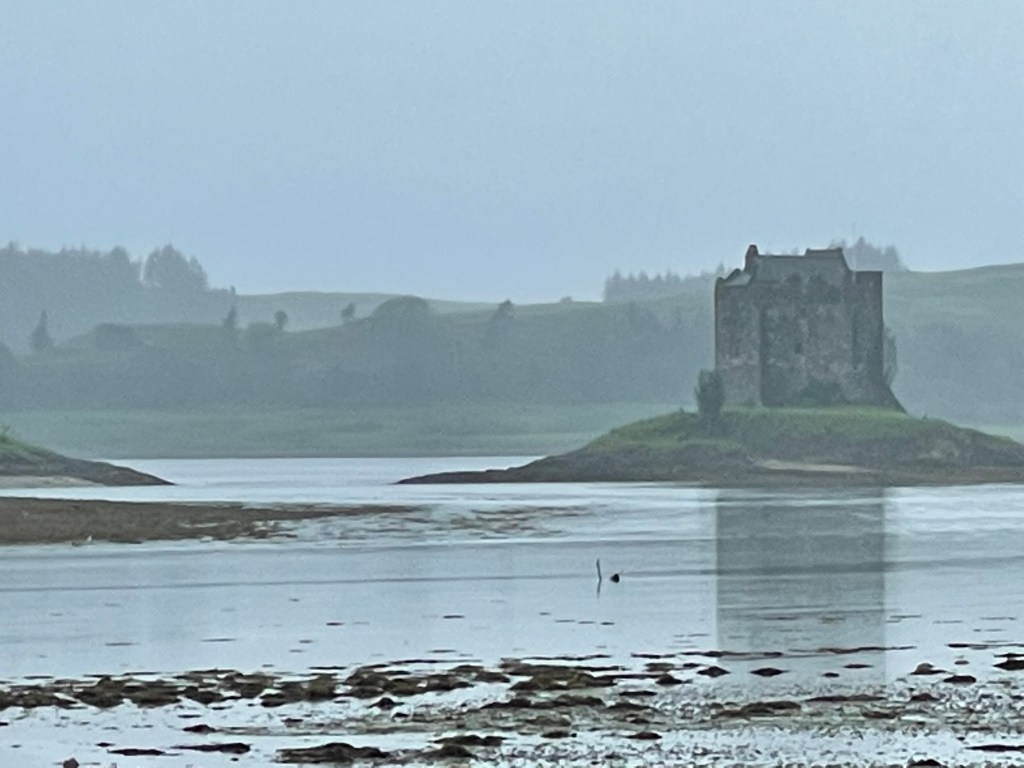
Since I was a teenager I have been a Monty Python fan, so imagine my delight at being able to view the infamous ‘Castle Aaaargh‘ from the movie ‘Monty Python and the Holy Grail‘. It is something that I have always wanted to do. Despite the low tide, the natural moat formed by the sea surrounding the small island was obvious. The Castle in real-life is known as Castle Stalker & is located on Loch Laich near Appin, Argyll. We appreciated it during a light drizzle because at that time there was a really fabulous light. I confess to having a smile on my face for the rest of that rainy afternoon…
We also stopped in at the Glencoe National Nature Reserve in the Lochaber area of the Southwest Highlands. This is a beautiful area, which now has only a handful of buildings, unlike in earlier times when sheep were farmed in the region where about 400-500 people lived in a fairly spread out fashion.
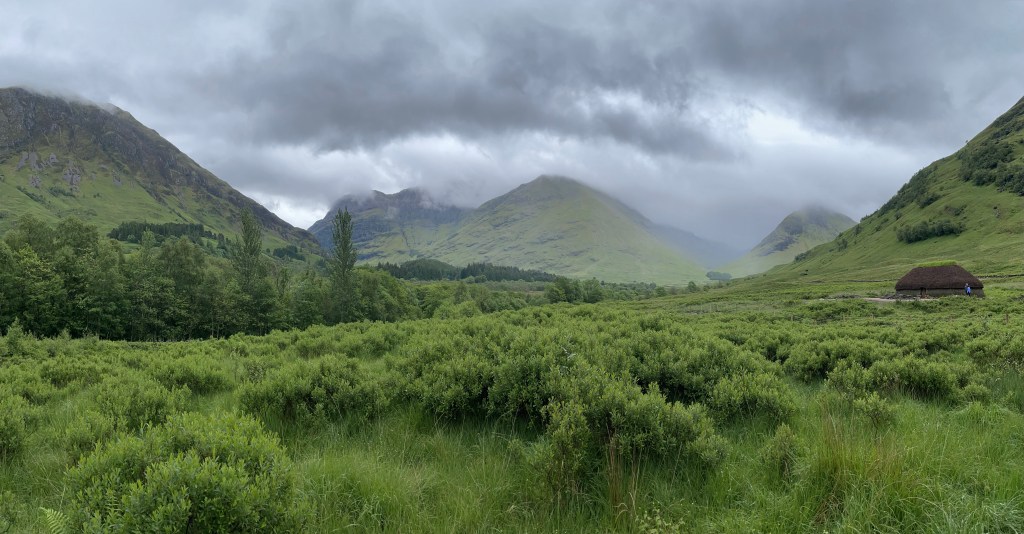
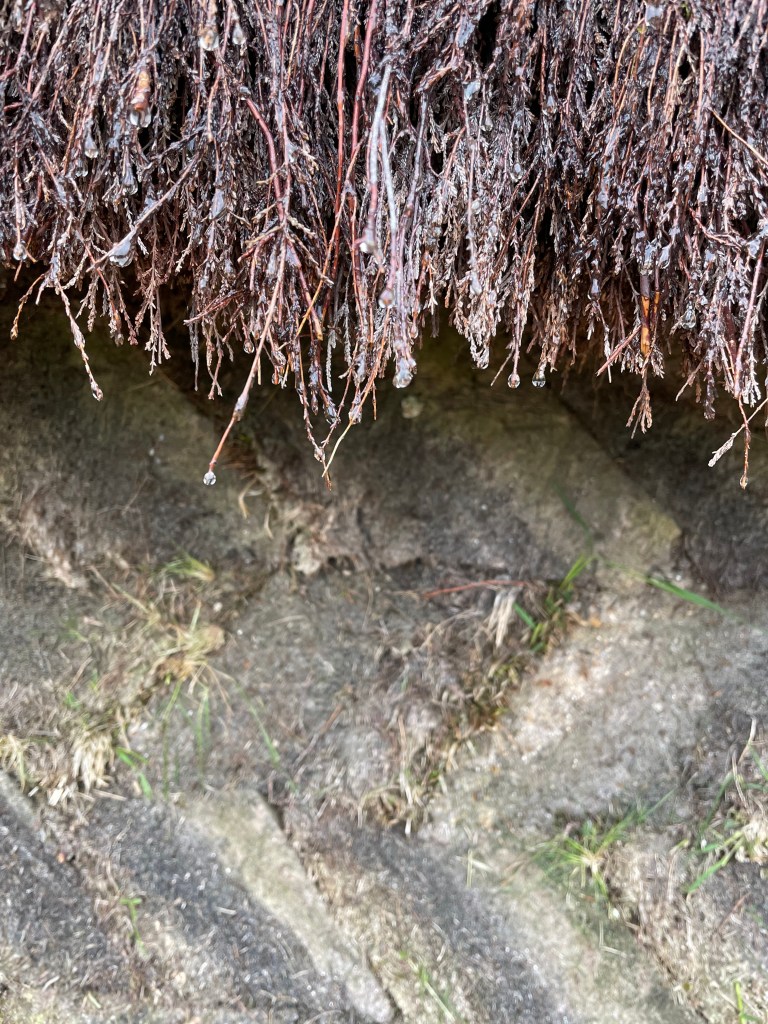
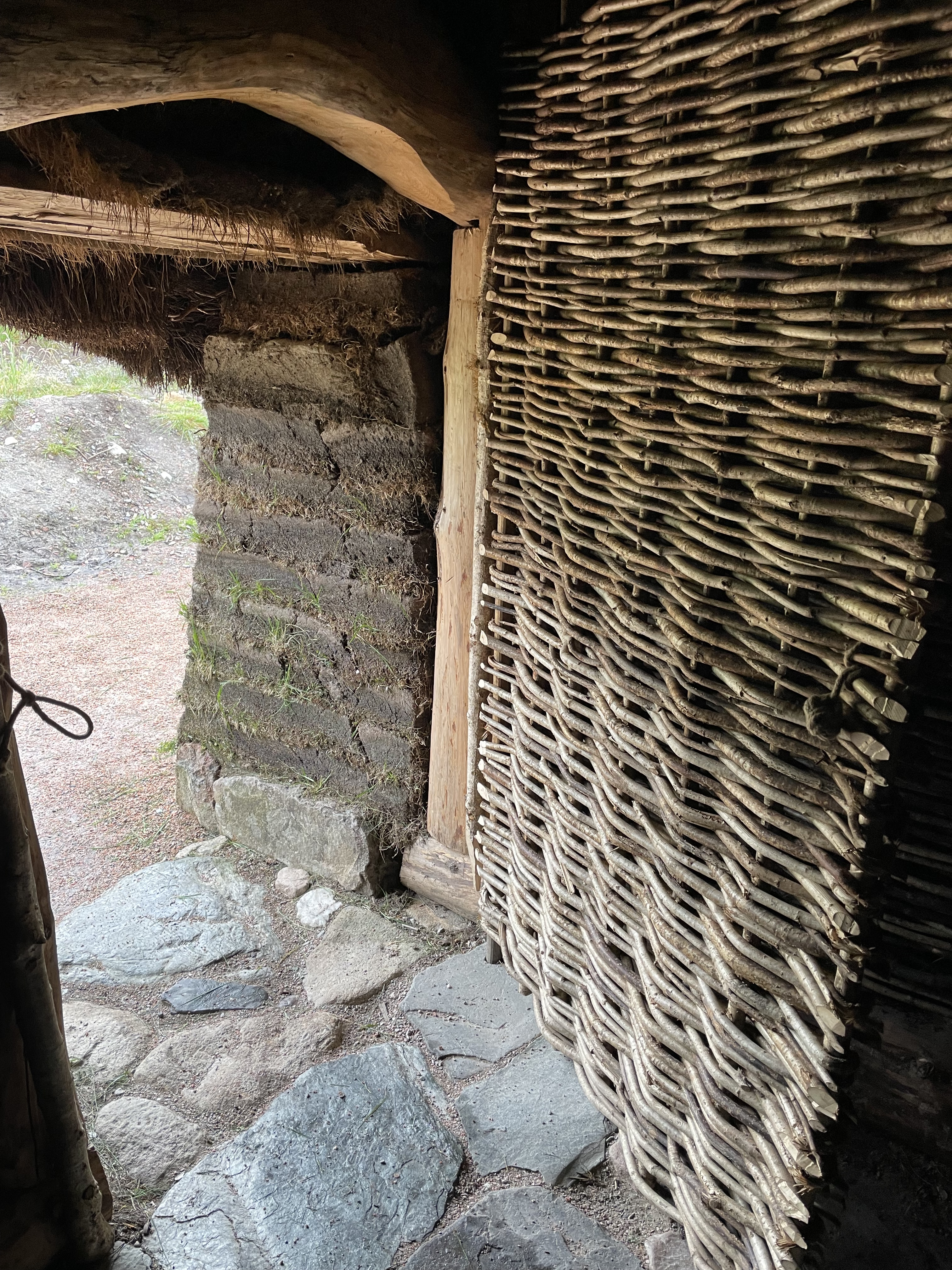
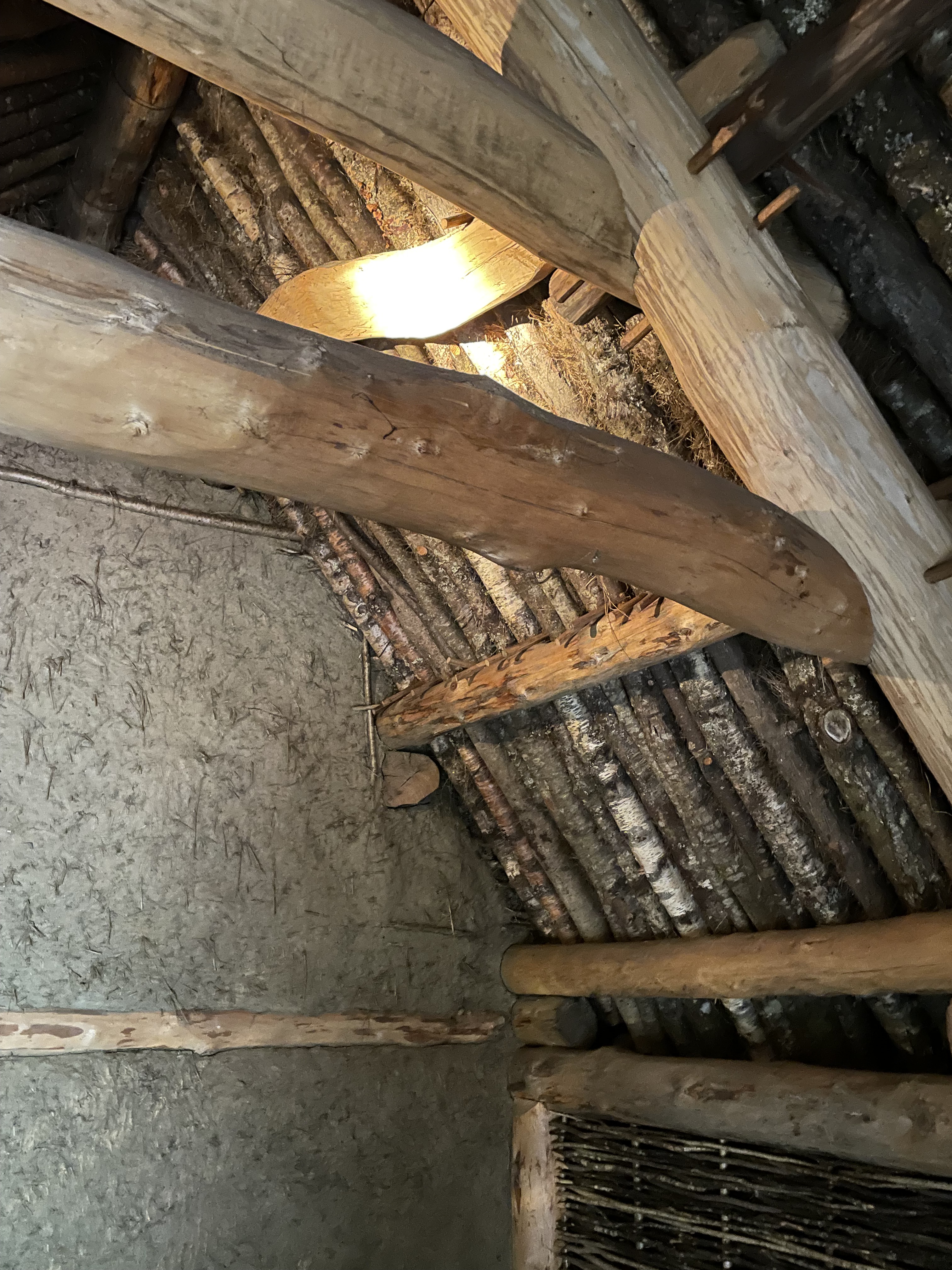
A fascinating feature here is a ‘turf & creel’ house – a dwelling that was fairly recently constructed in the traditional manner for the area, based on archaeo-logical finds. It has a timber frame, some stonework at its lower level & is effectively built from sticks & is covered by turf. The final roof covering is heather thatch, which is pretty much waterproof. You could see the water drops running down off it because it was raining when we were there [see below]:
The house is resistant to the strong winter winds & the inside is dark since there are no openings for windows, so some sort of lighting e.g., firelight, candles, would have always been needed.
Glencoe has a very dark & troubled history. In February 1692, 38 men, women and children of Clann Iain Abrach i.e., the MacDonalds of Glencoe, were killed by government soldiers from the Earl of Argyll’s Regiment of Foot. Many more people fled into the wintery hills & perished there due to exposure to the elements. The Glencoe Massacre, as it is known, occurred due to a awful breach of trust. With traditional Highland hospitality, the people fed & housed the government soldiers for 12 days & nights, after which the soldiers were ordered to kill the inhabitants of this settlement. More information on this tragic story can be obtained here: https://en.wikipedia.org/wiki/Massacre_of_Glencoe
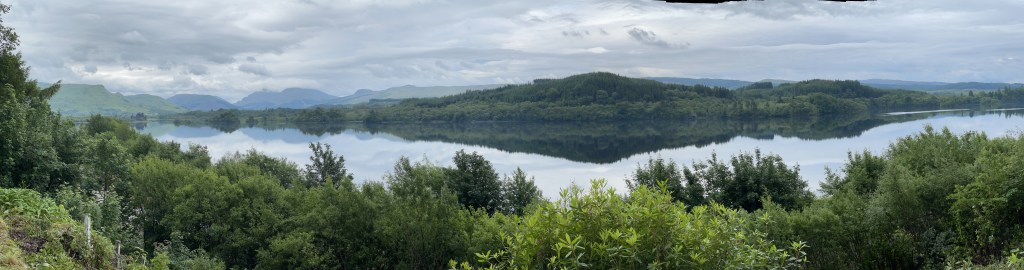
The shores of Loch Awe [or Lochawe] have a village of the same name. [It is located in the Argyll & Bute region.] We were fortunate to stay there for a couple of days in an AirB&B, up on the hill above the Loch. This was such a scenic spot! On a still day the Loch was like glass – no elusive monsters lurking in this one…
The AirB&B we stayed at had a bird feeder, so we were able to see the local birdlife. As everywhere, there will always be interlocutors, and in our case we were tremendously lucky! A Pine Marten – a rare sight, since they were apparently only reintroduced into these areas in the 1980s. In the images below he is not only posing for the camera, but also is really doing a number on the birdfeeder! I initially crawled along the floor of the room looking out to the balcony to photograph him, but he was so brazen I could actually stand up right next to the window to take these shots!
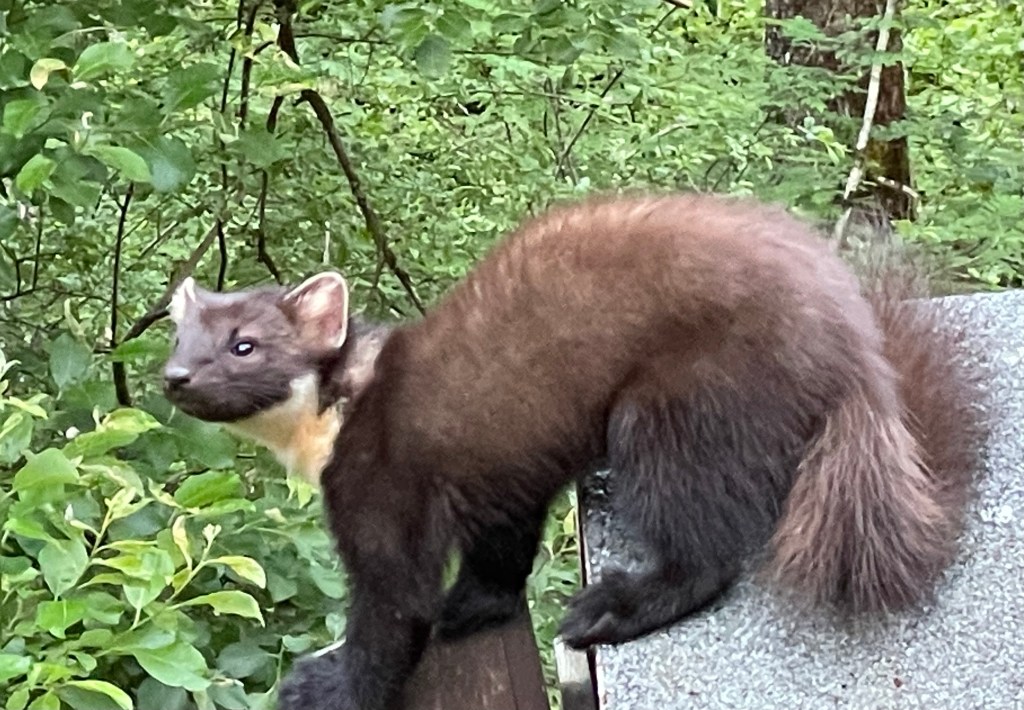
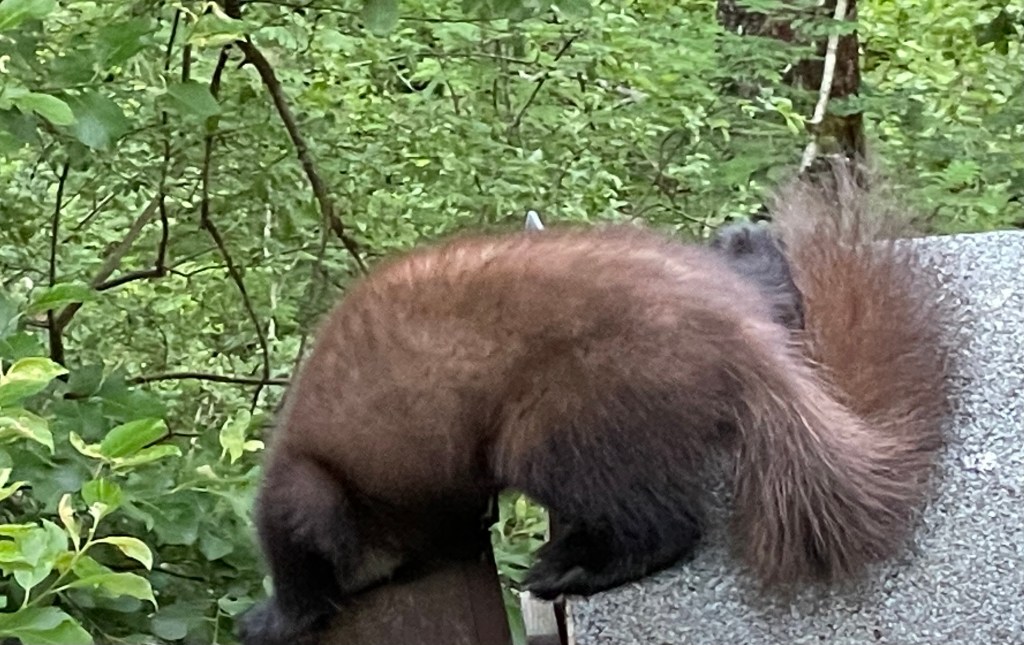
They are beautiful creatures, but can be vicious – they have strong teeth & claws to defend themselves [think of wolverines…]. More on them here, if you are interested: https://en.wikipedia.org/wiki/European_pine_marten
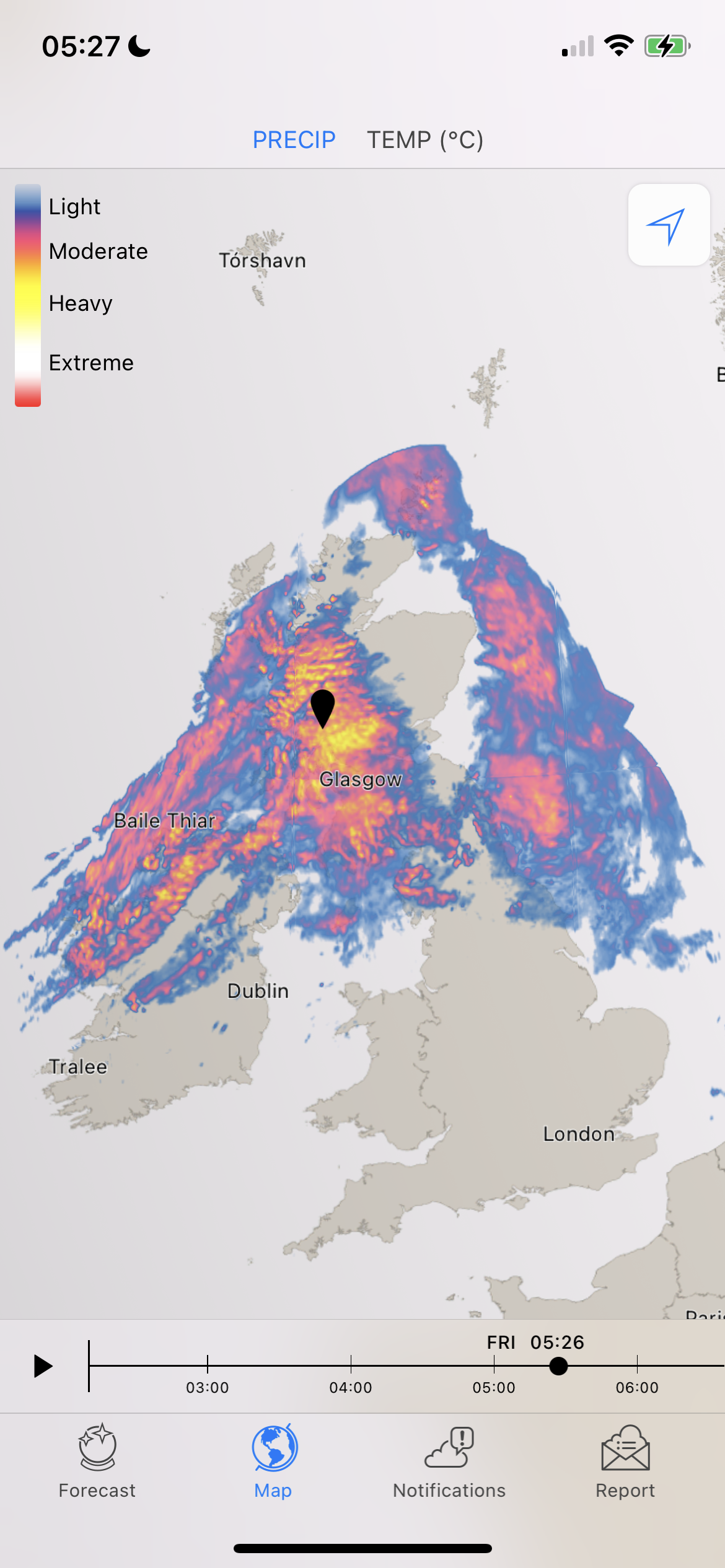
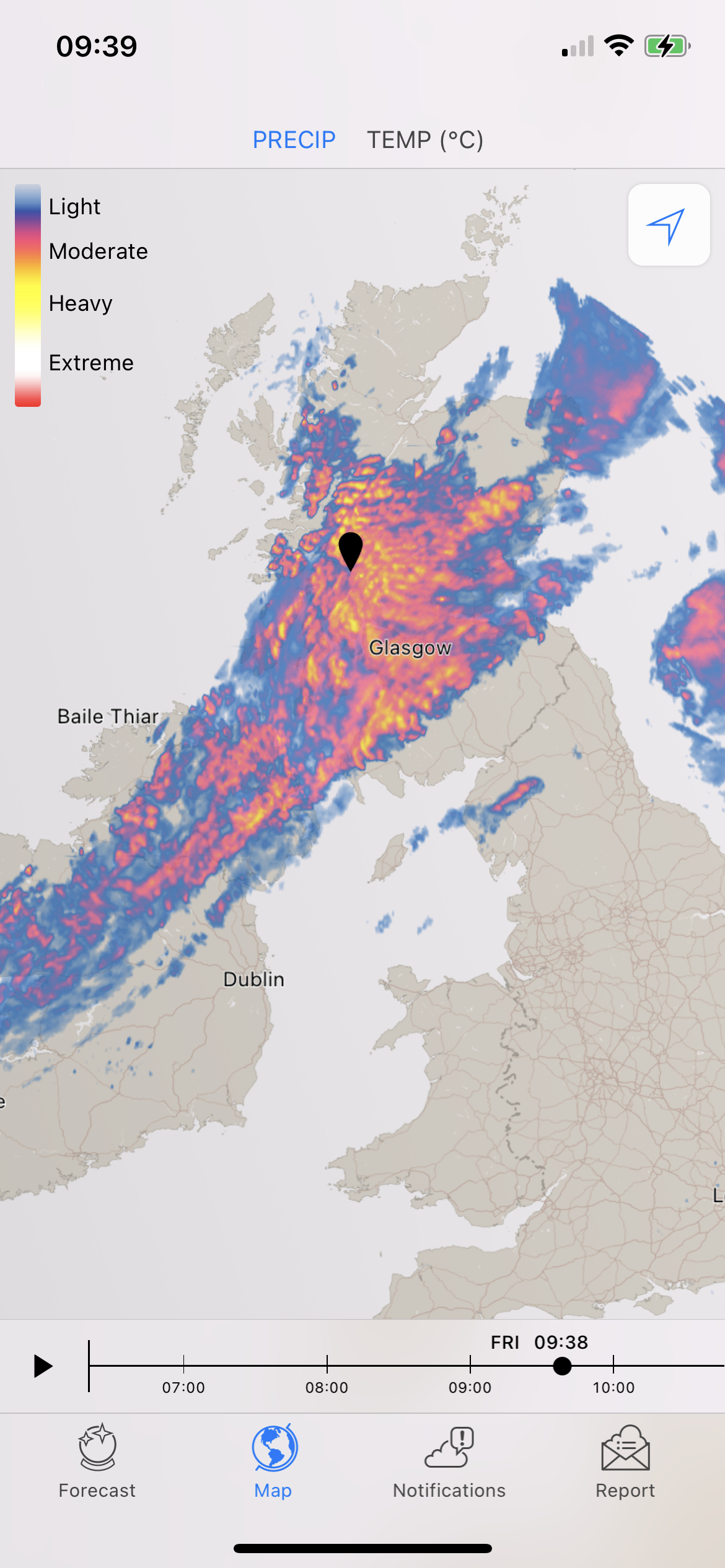
The weather in Scotland? Well, yes it was definitely weather… we were prepared with our wet weather gear. I had my camera gear with plastic bags etc. with holes for lenses – it is not unusual for the rain to come ‘down’ sideways there. 🙂 [I have fond memories of experiencing this on the Irish coast in County Clare also.]
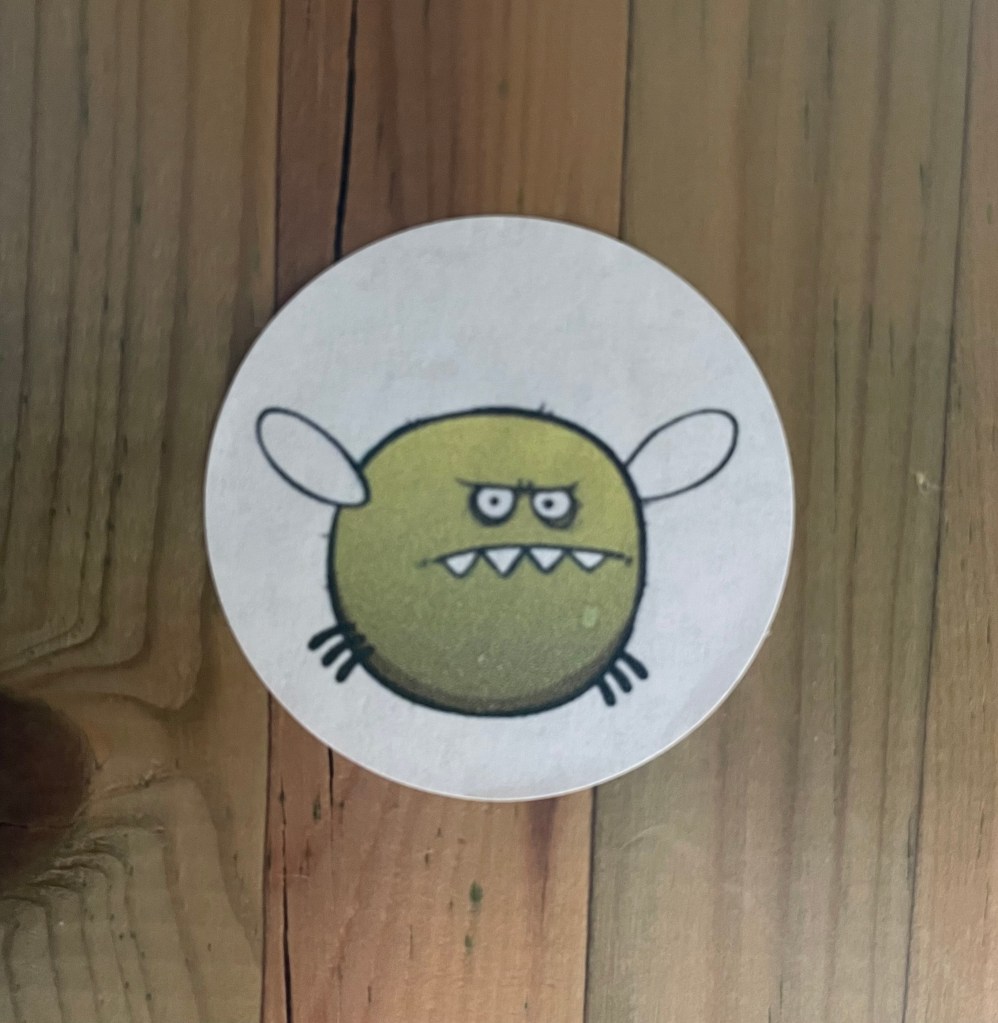
And then it was just at the end of midge season. Wow! They really descend on you in a cloud… I really learned to appreciate the windy [& also wet] days, because then the little buggers do not fly around & bite you. I had a lovely row of red bites around my sock line – like precision needlework. Apparently, if the wind is stronger than 10 km/h or so, they are grounded. He, he, he… And you absolutely do not want to get them inside. Signs all over our AirB&B about keeping windows [without flyscreens] closed at all times – the sticker below does not need words…
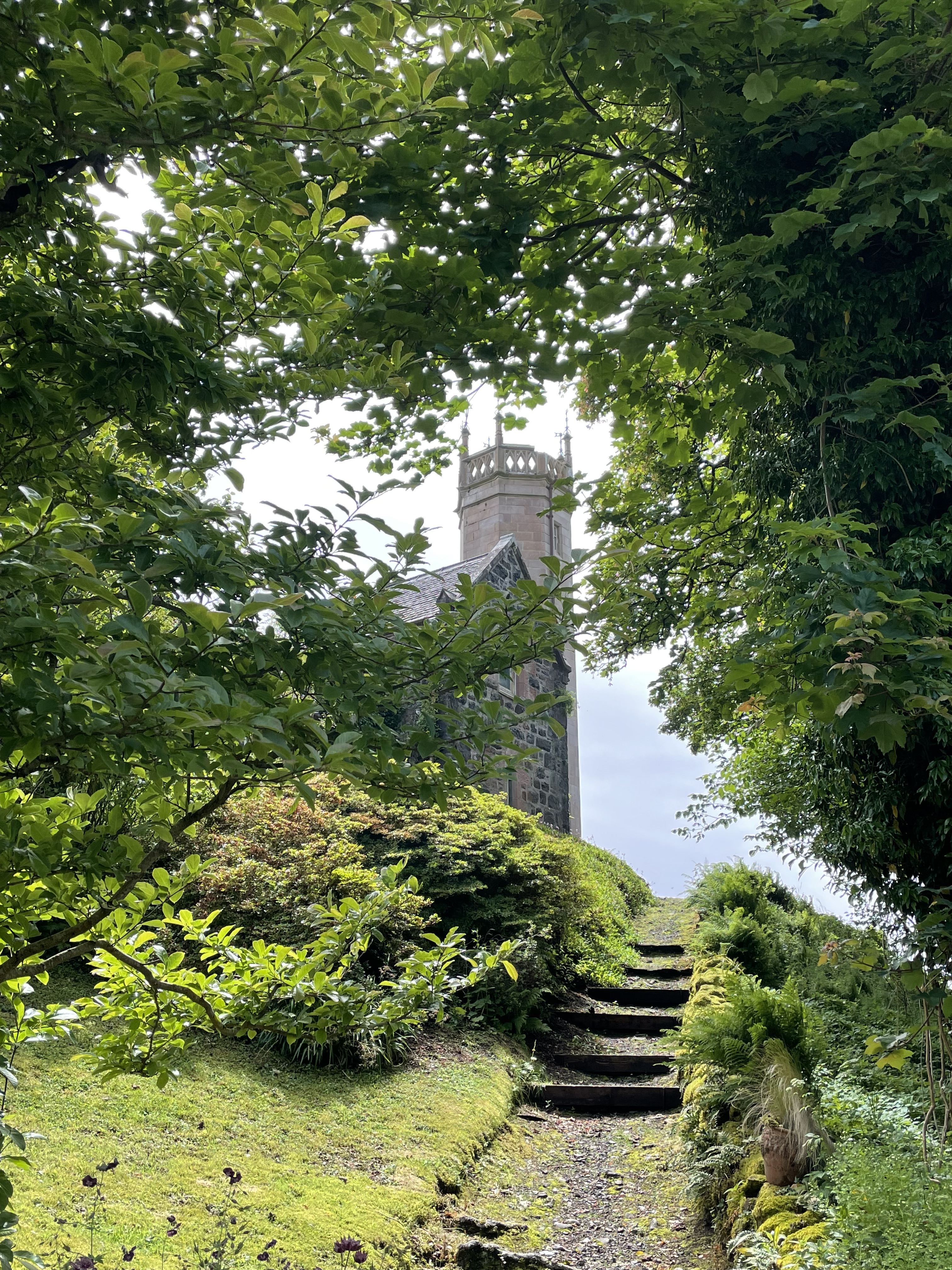
We spent a bit of time traveling around the area – a trip to nearby Ambady Castle was really nice – the place is owned by an English aristocrat who is a passionate gardener. The gardens were opened up to a public as part of a local garden expo, so we went exploring.

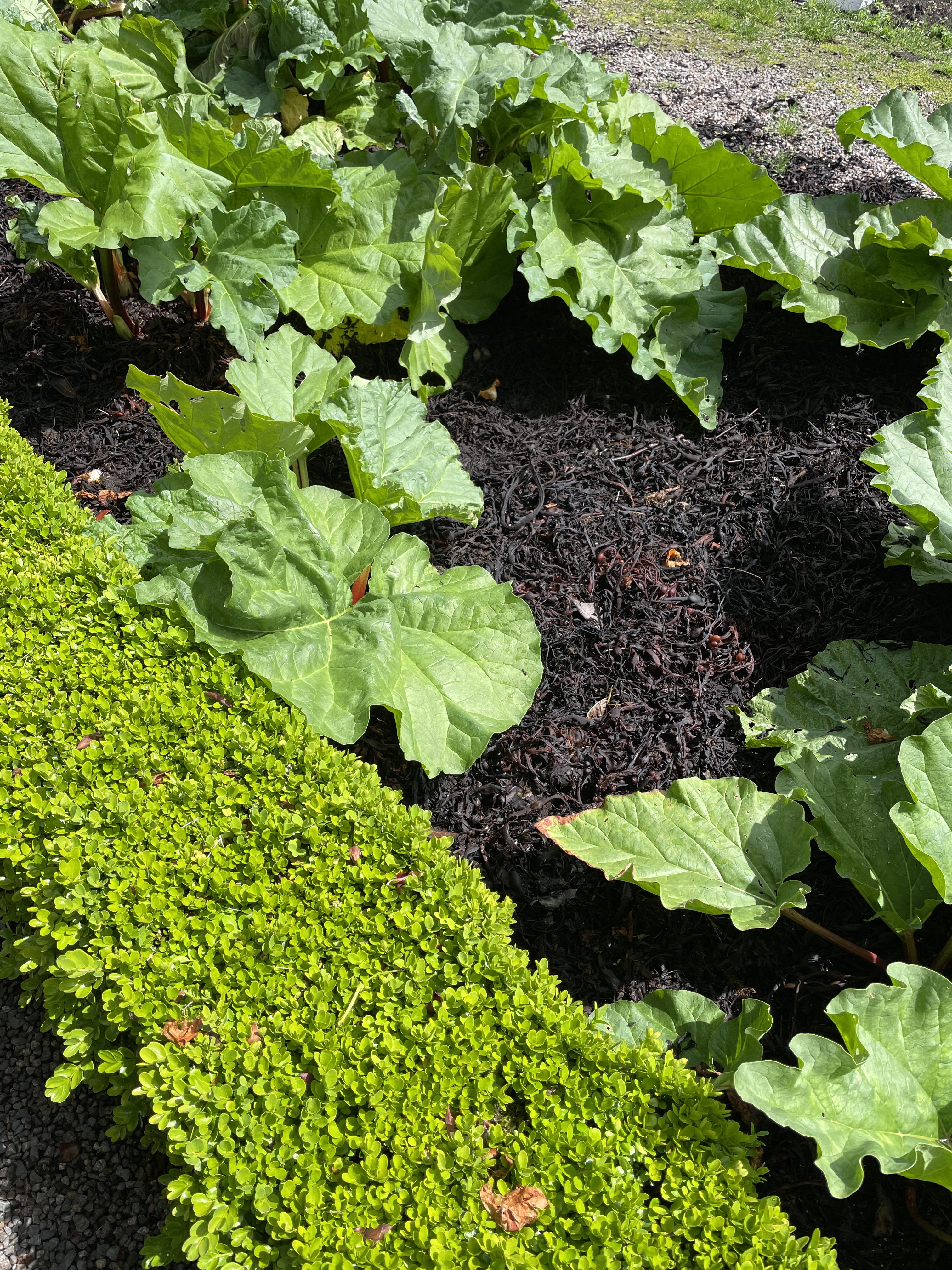
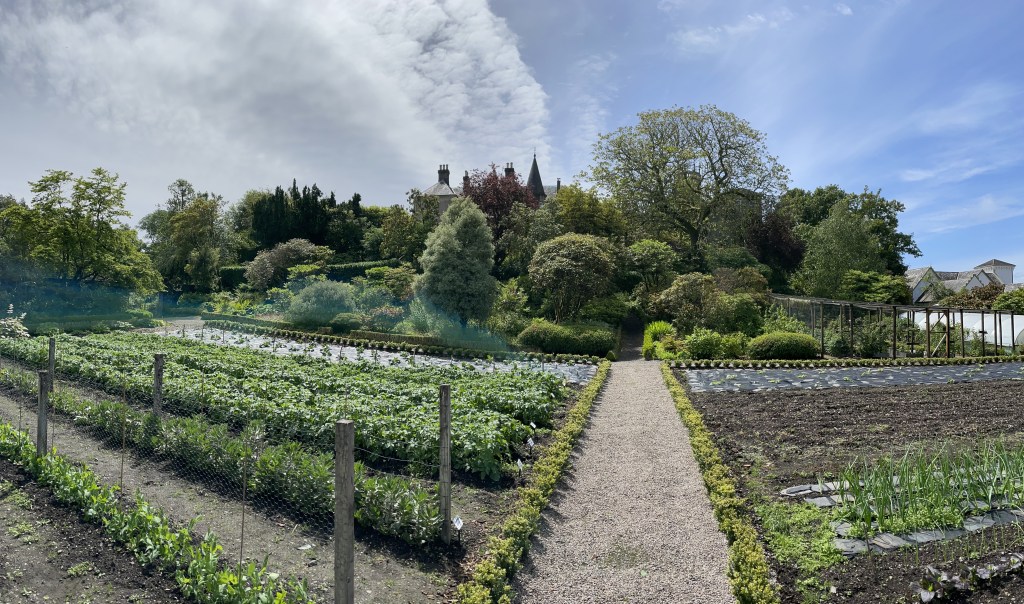
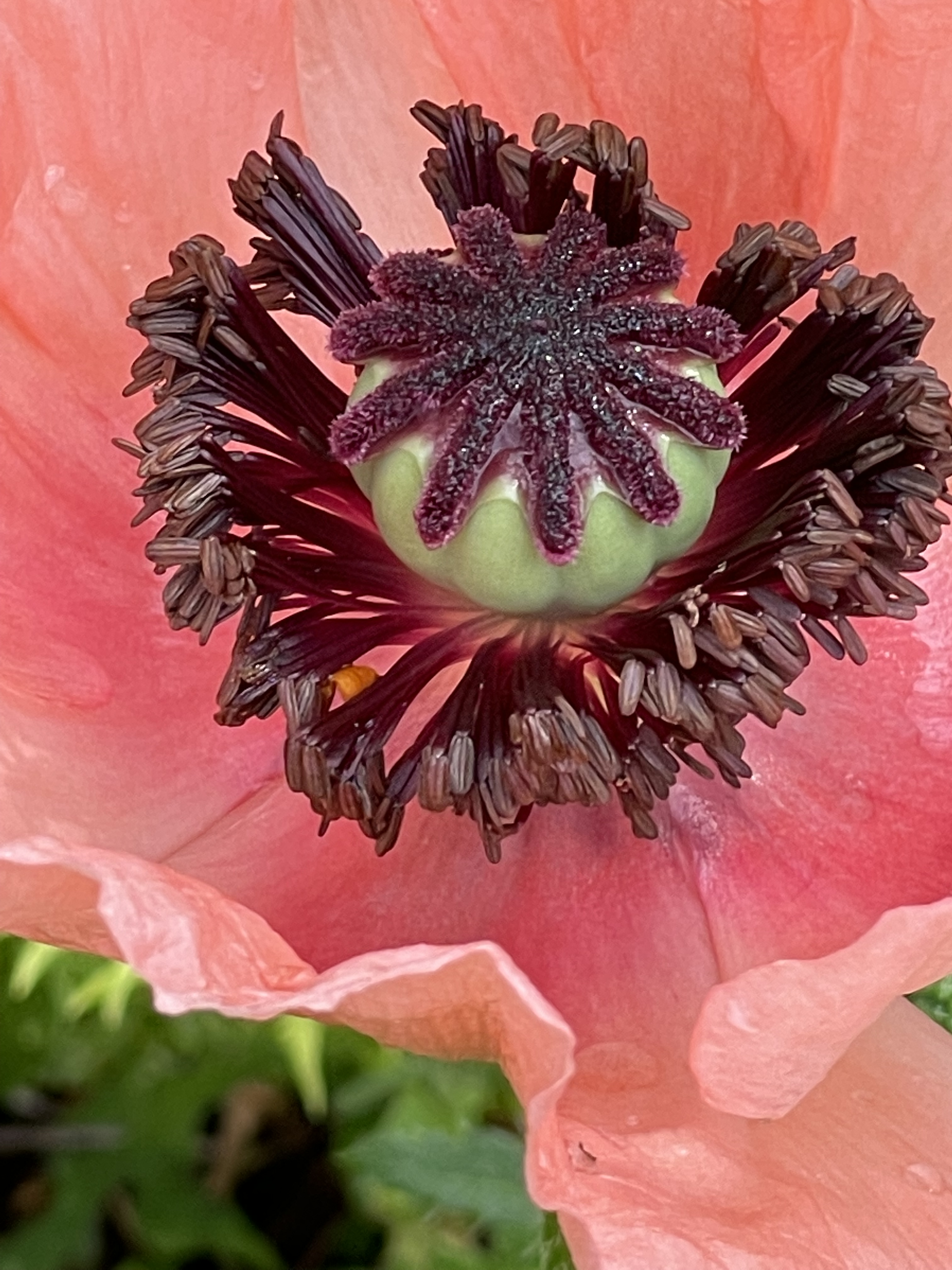
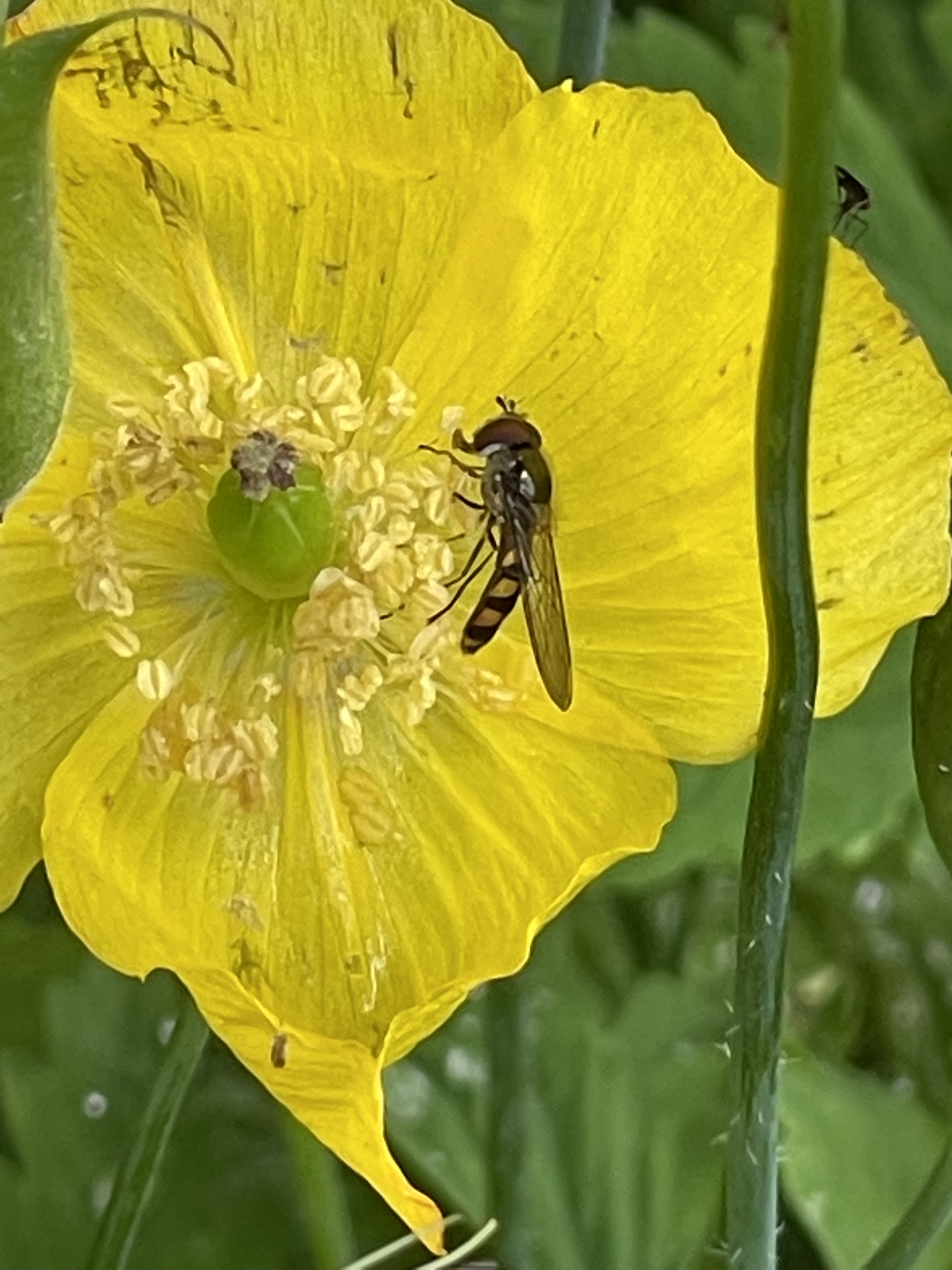
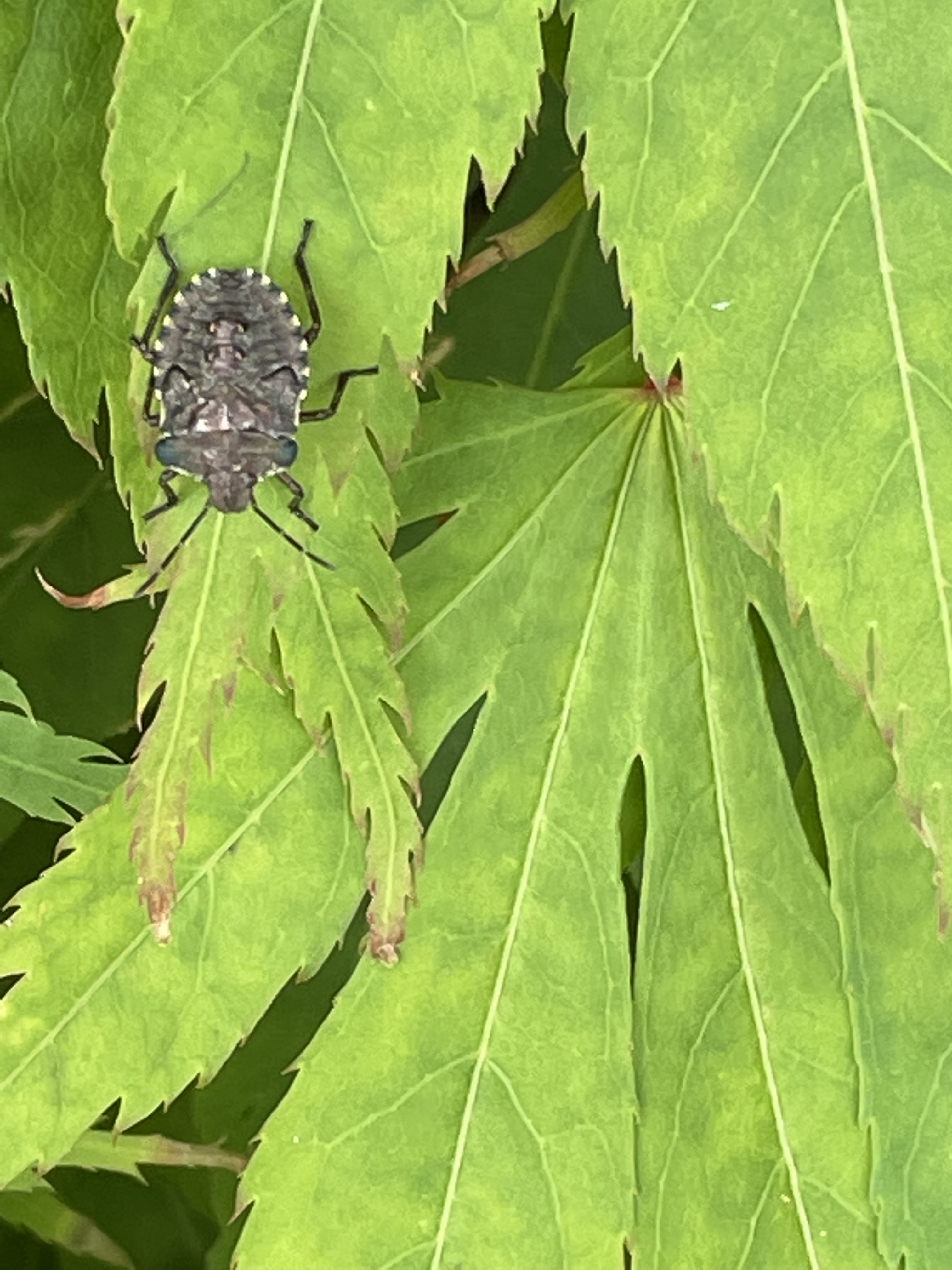
Lots of trees, veggies and flowers were out too, growing beautifully with the freshly laid local seaweed mulch on all the beds. The garden was full of insects – a sign of a well-balanced ecosystem – we even stumbled on a rogue pheasant, but it was too quick to snap a picture of!
Driving back from the Castle to Loch Awe, we took a detour to stop to see the local ‘Bridge across the Atlantic‘. This is a place where the mighty Atlantic Ocean is quite wimpy – particularly when the tide is out! Beautiful old stone bridge one lane bridge – but a bit dangerous because as you go up it, you cannot see what is coming up the other side…
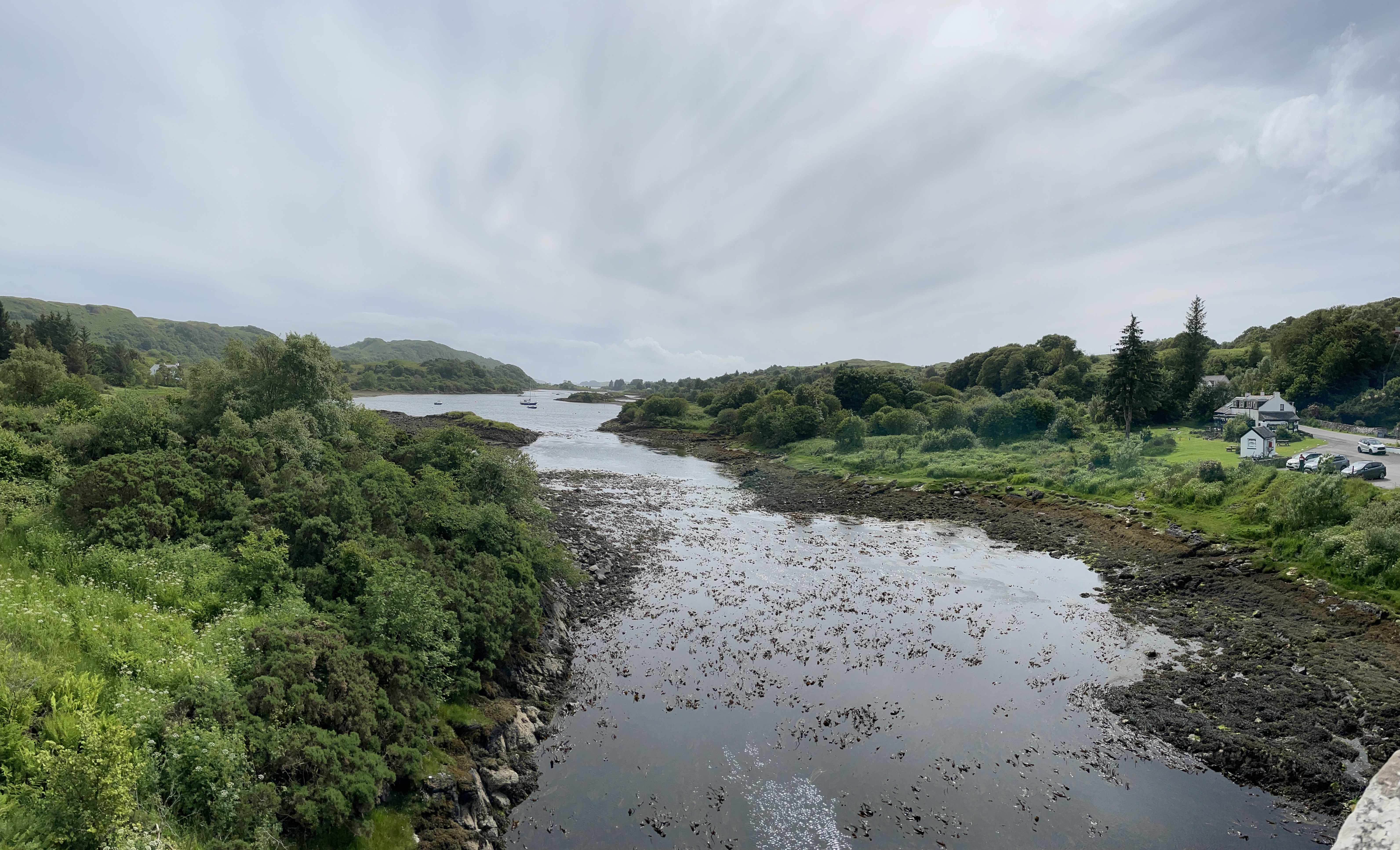
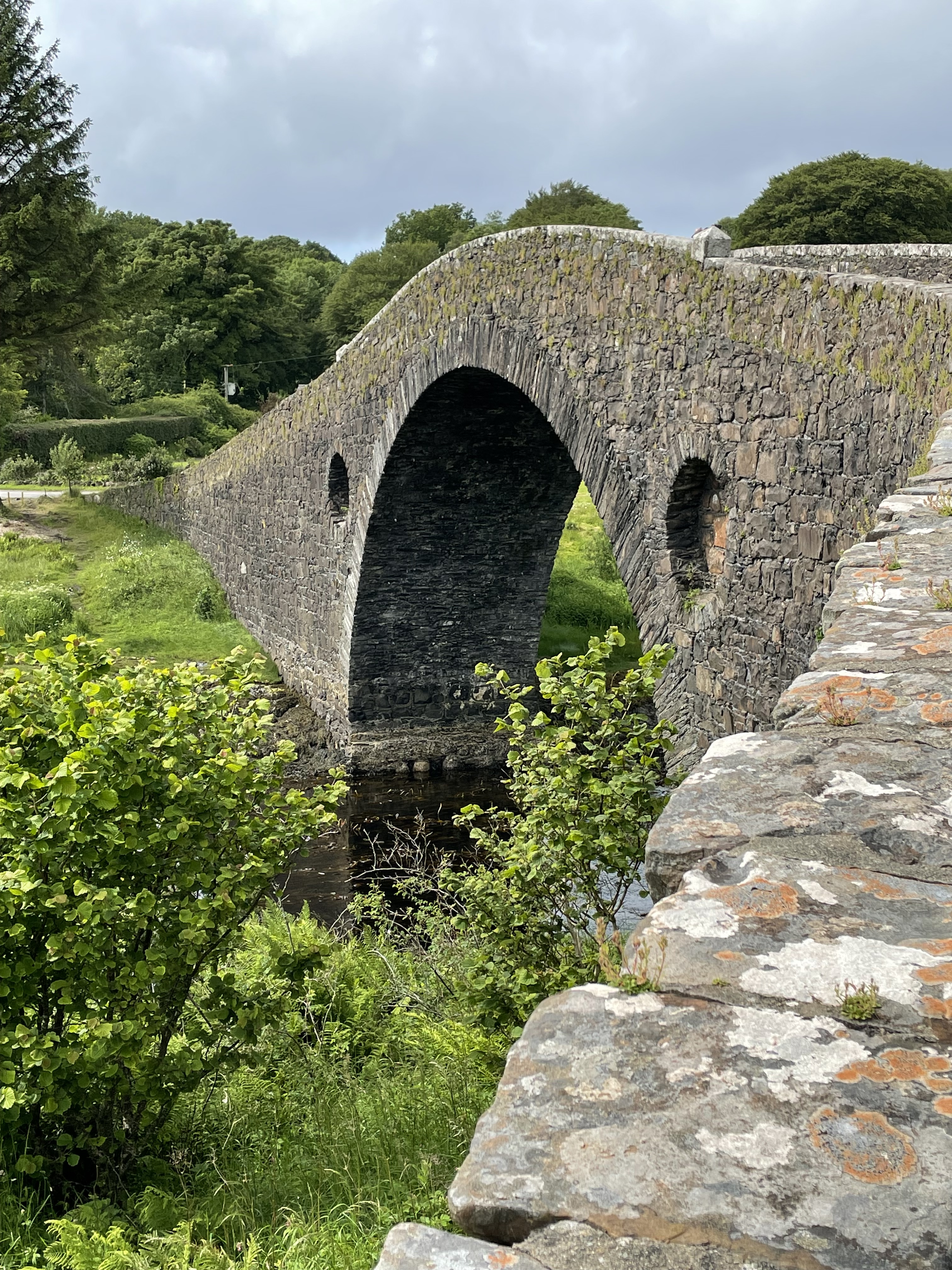
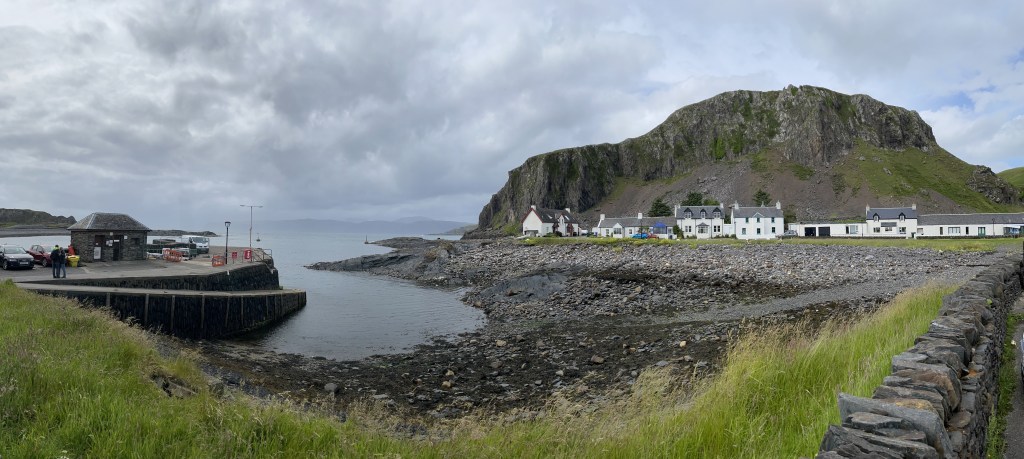
Not far away was a fishing village on very rugged coastline – you can really appreciate it when the tide is out!
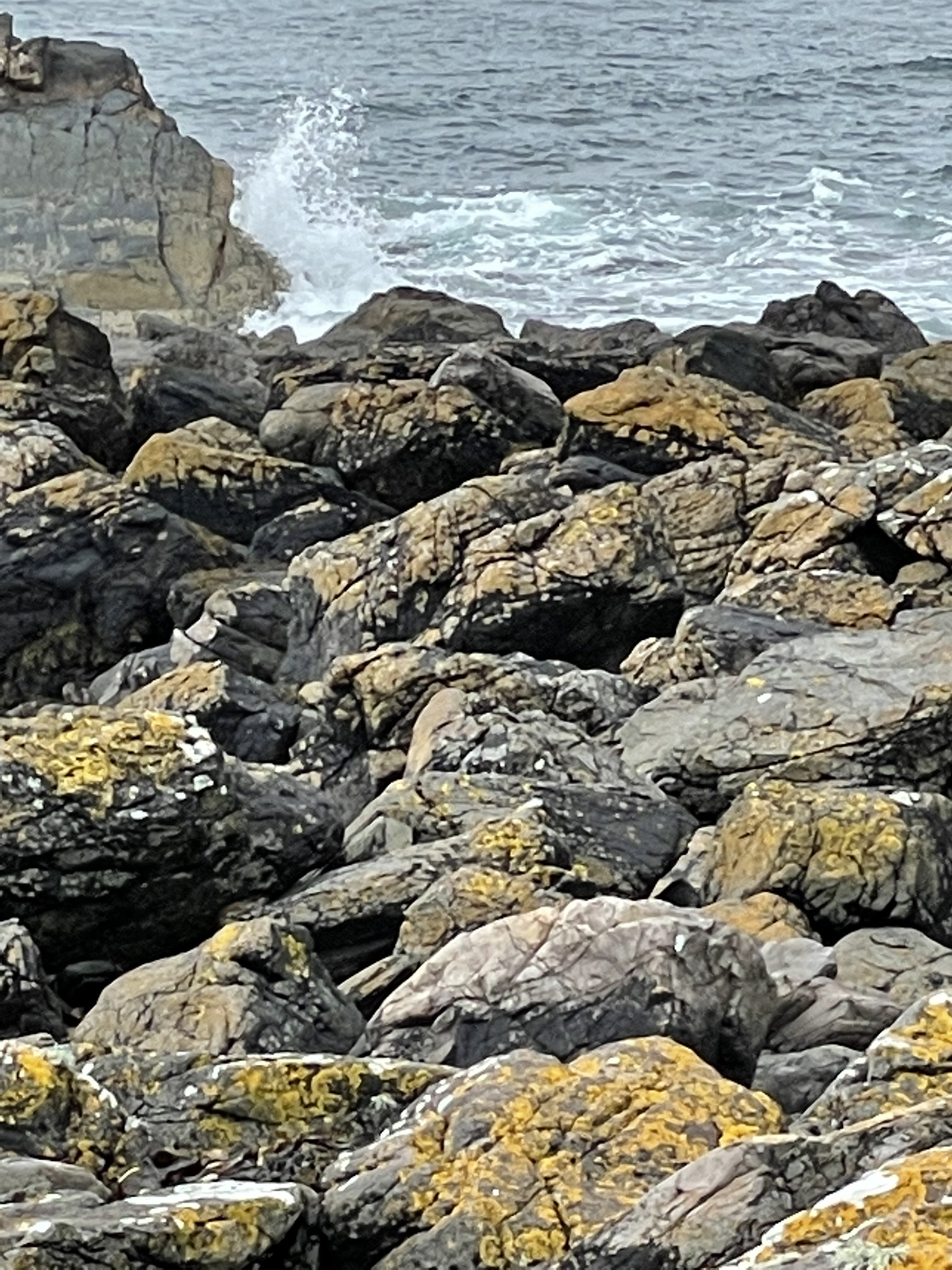
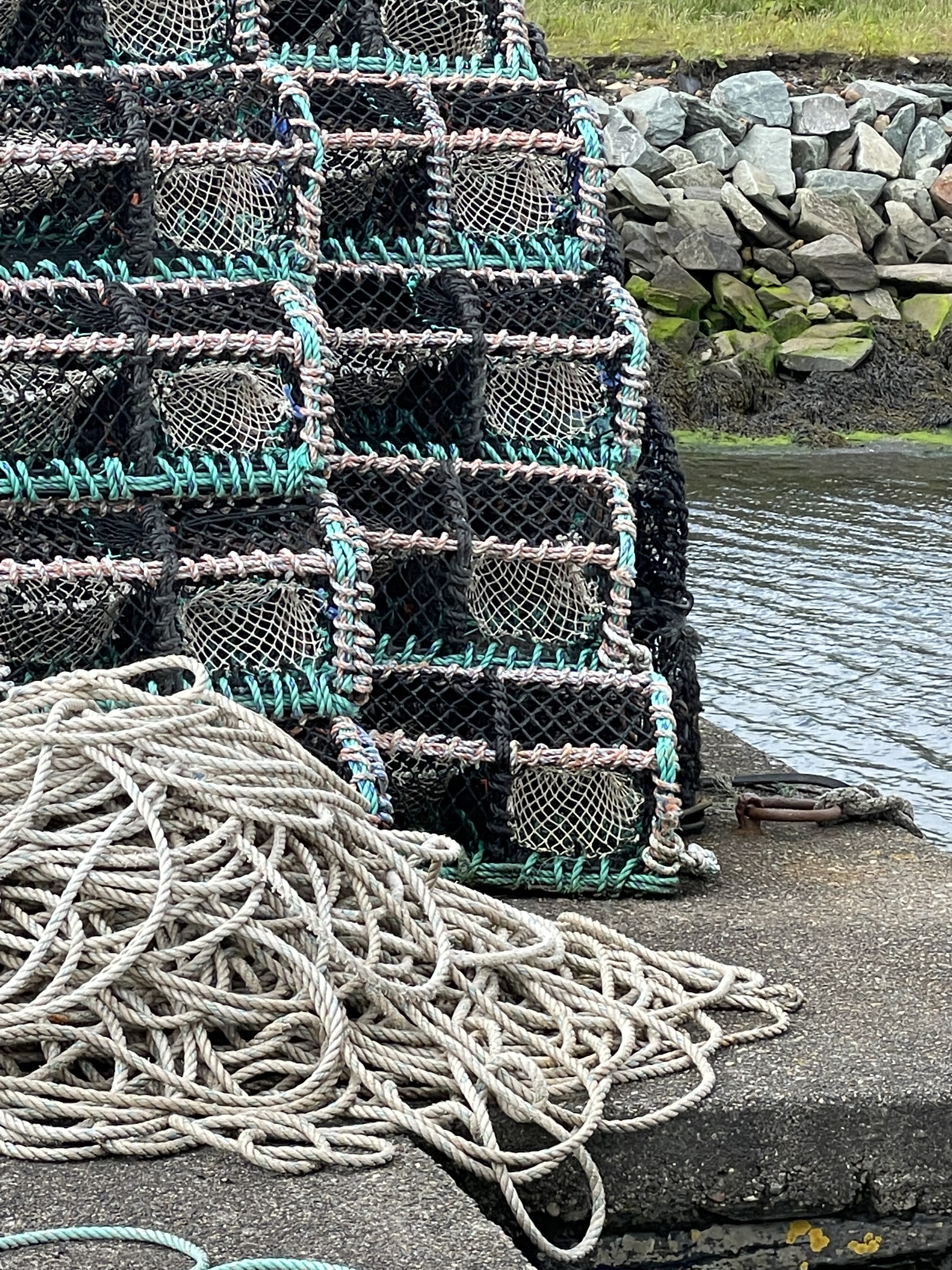
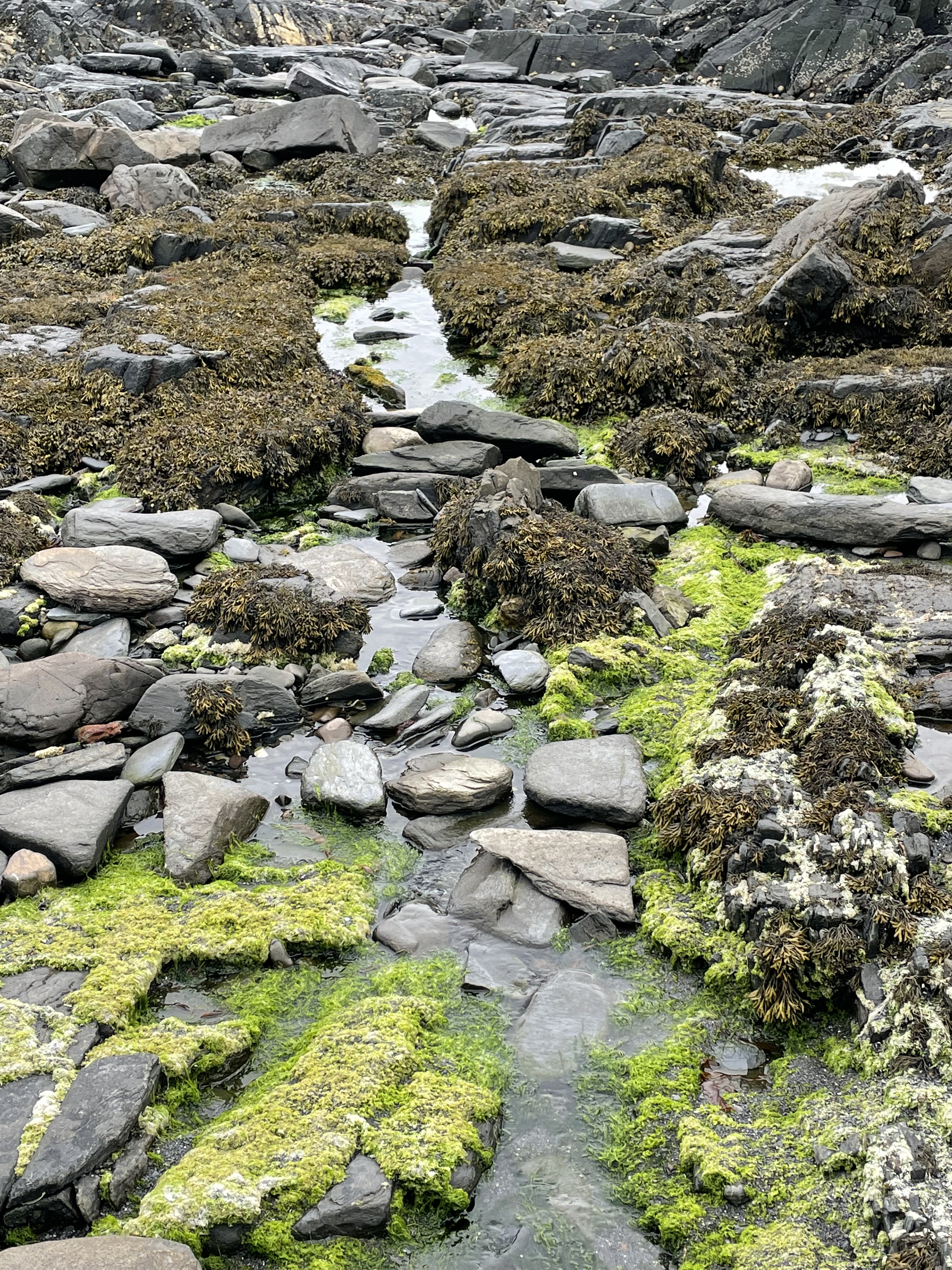
I cannot imagine how hard it would be to live here in winter – when one has to bear the brunt of those punishing gales coming straight off the Atlantic!
Everyone has to keep warm in those cold winds & Scottish cows, or ‘hairy coos’ as they are affectionately known, are no exception. These gentle creatures have very thick long fur/hair to keep their bodies warm in this harsh climate. That said, they do have horns that look impressive… would not want to get on the wrong side of those…

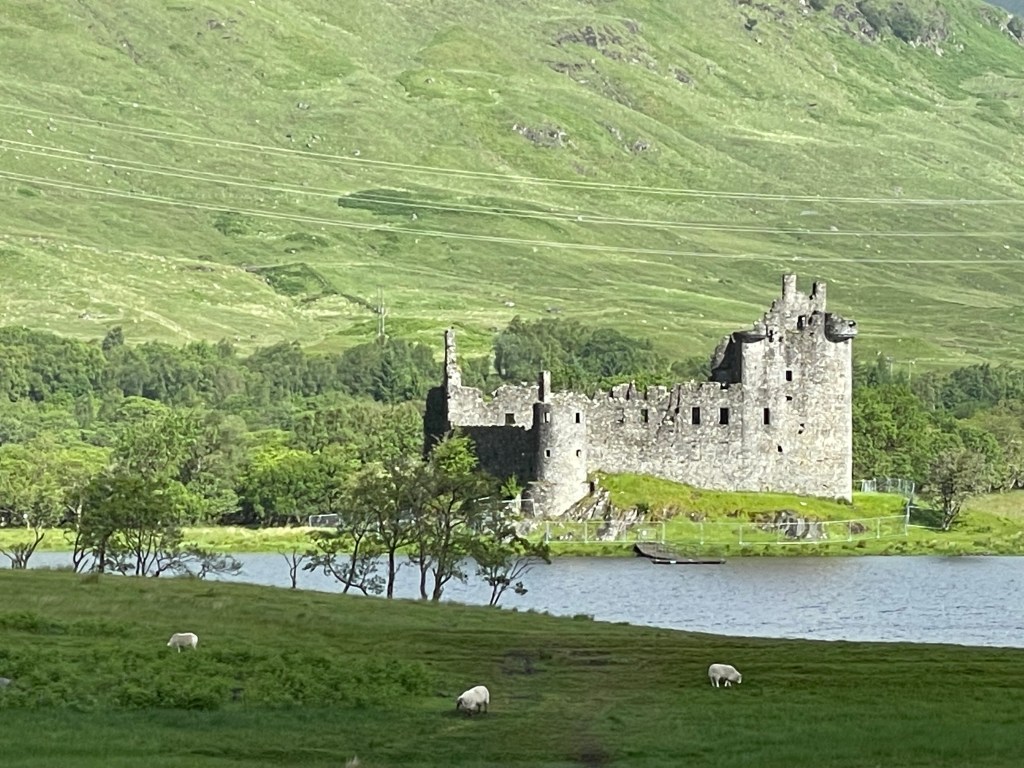
Back in Loch Awe we were able to look around the area – it has a very interesting history. There are the ruins of a castle – Kilchurn Castle, which was a base for the Campbell clan of Glenorchy for 150 years. It was built in the mid-1400s, but was abandoned in the 1700s. It has had quite a checkered history – of also being a garrison & fort.
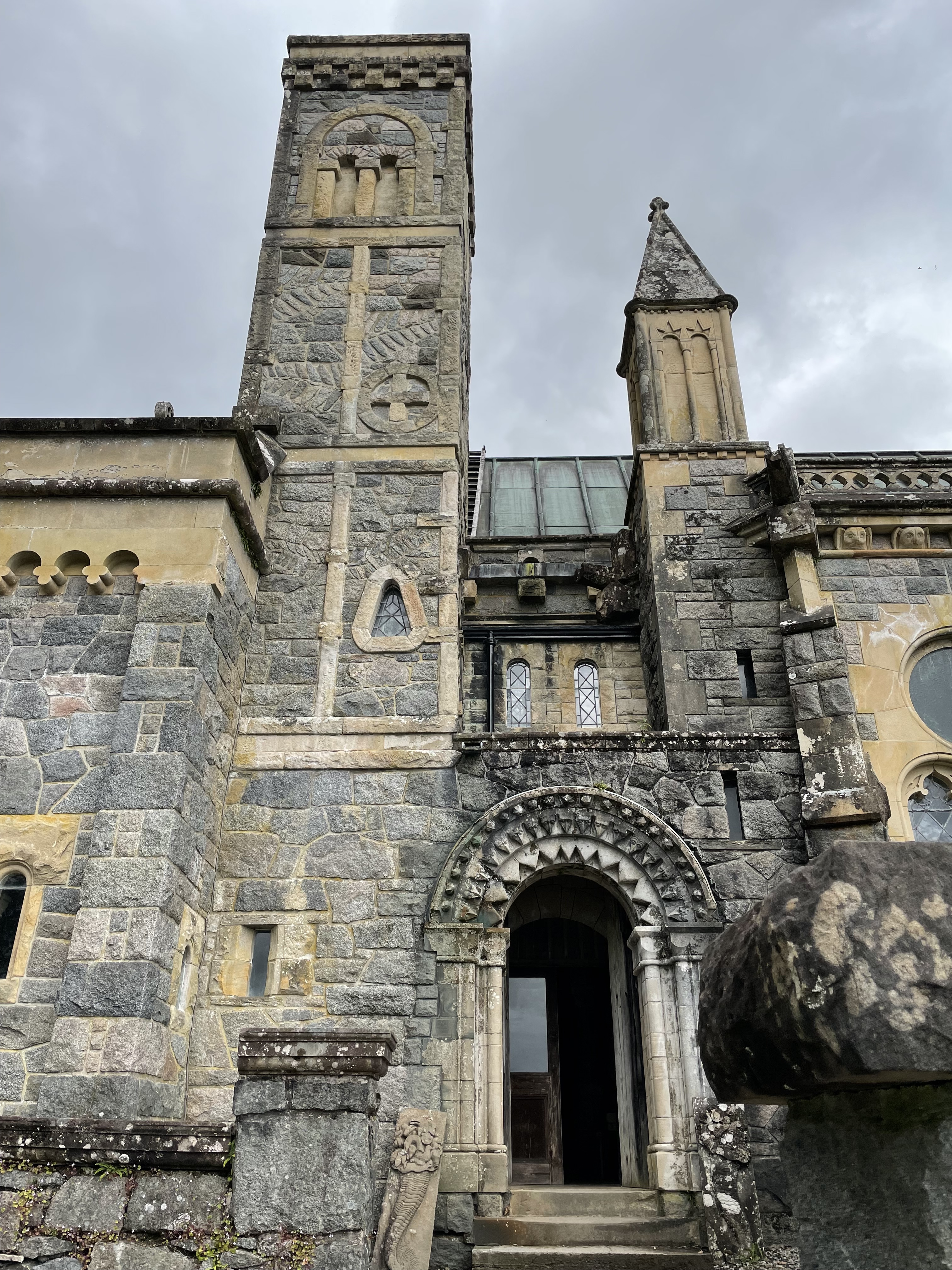
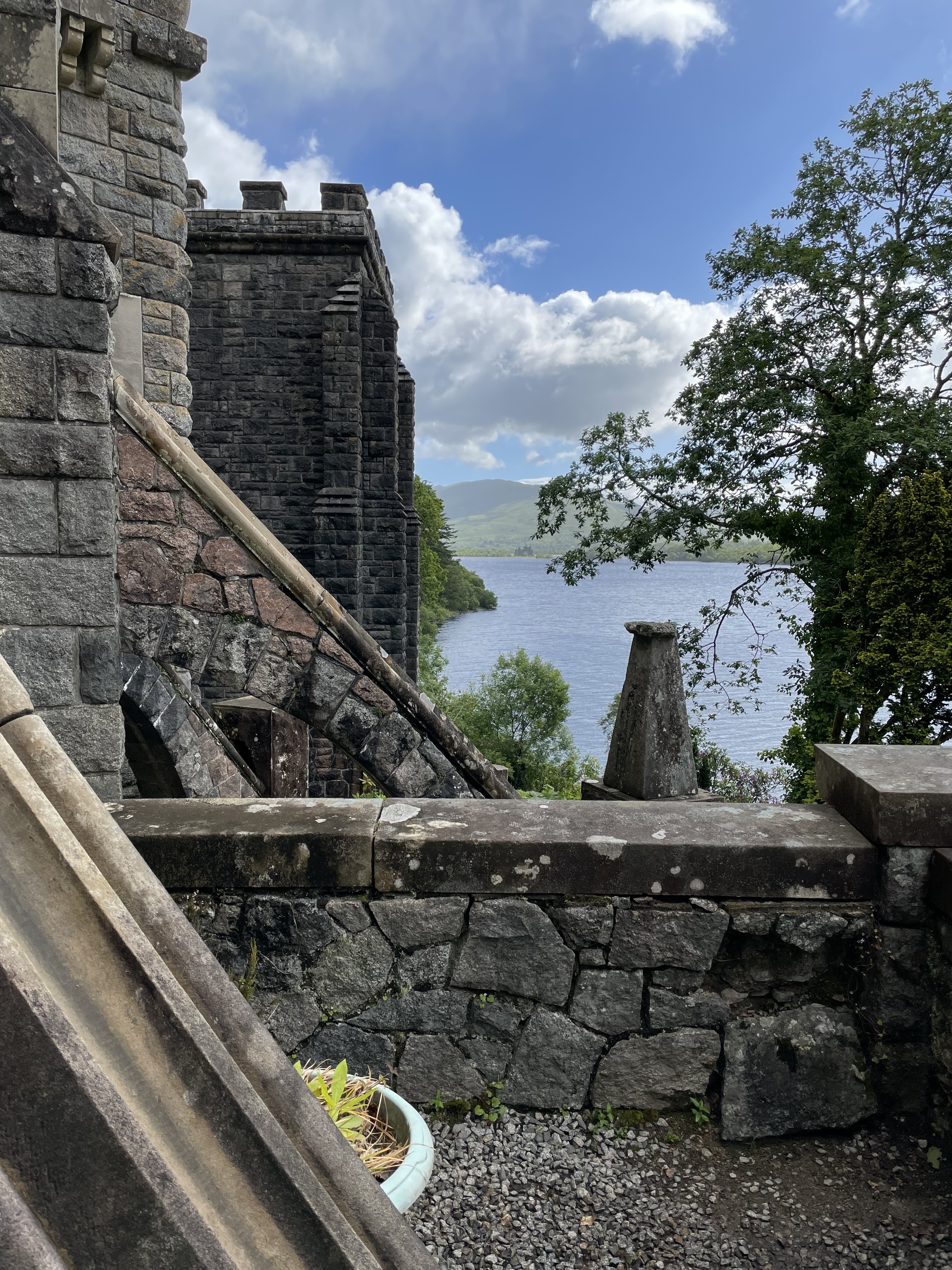
There is also a local church, known as St Conan’s Kirk, that has served the local community for some time now. It designed by a member of the Campbell clan – an architect named Walter Douglas Campbell. It was built in 1881-1886 and then expanded/extended from 1904-1916 after his death. He had also designed the family home for his mother, his sister and himself on the island of Innis Chonain – a small island on Loch Awe. The church is on the ‘mainland’ – on the shores of Loch Awe & was originally built as a place of worship for the family. The place is an interesting mixture of styles – even having some flying buttresses on the side of the Loch! More information on this remarkable building & its history is available here: https://en.wikipedia.org/wiki/St_Conan%27s_Kirk
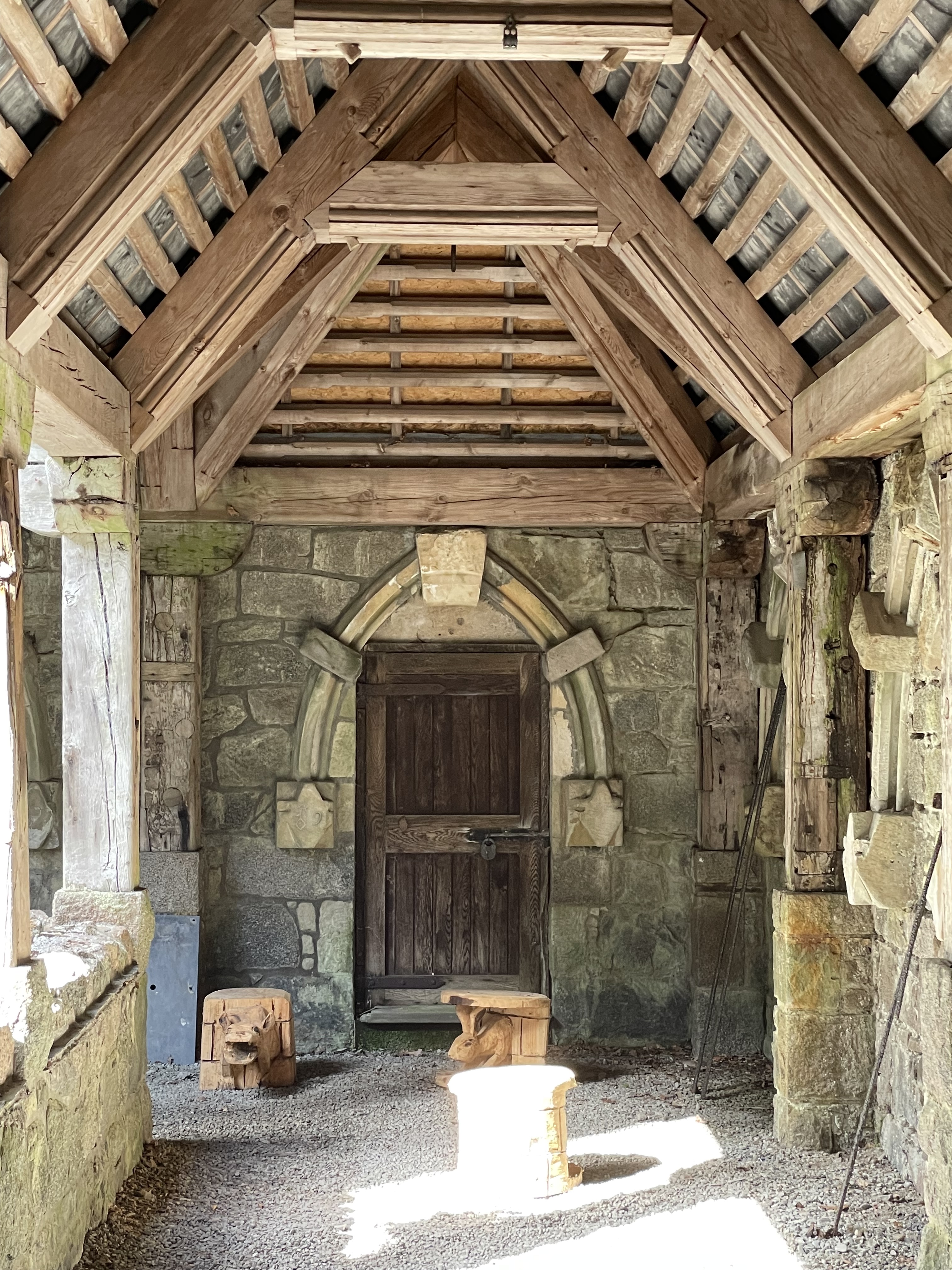
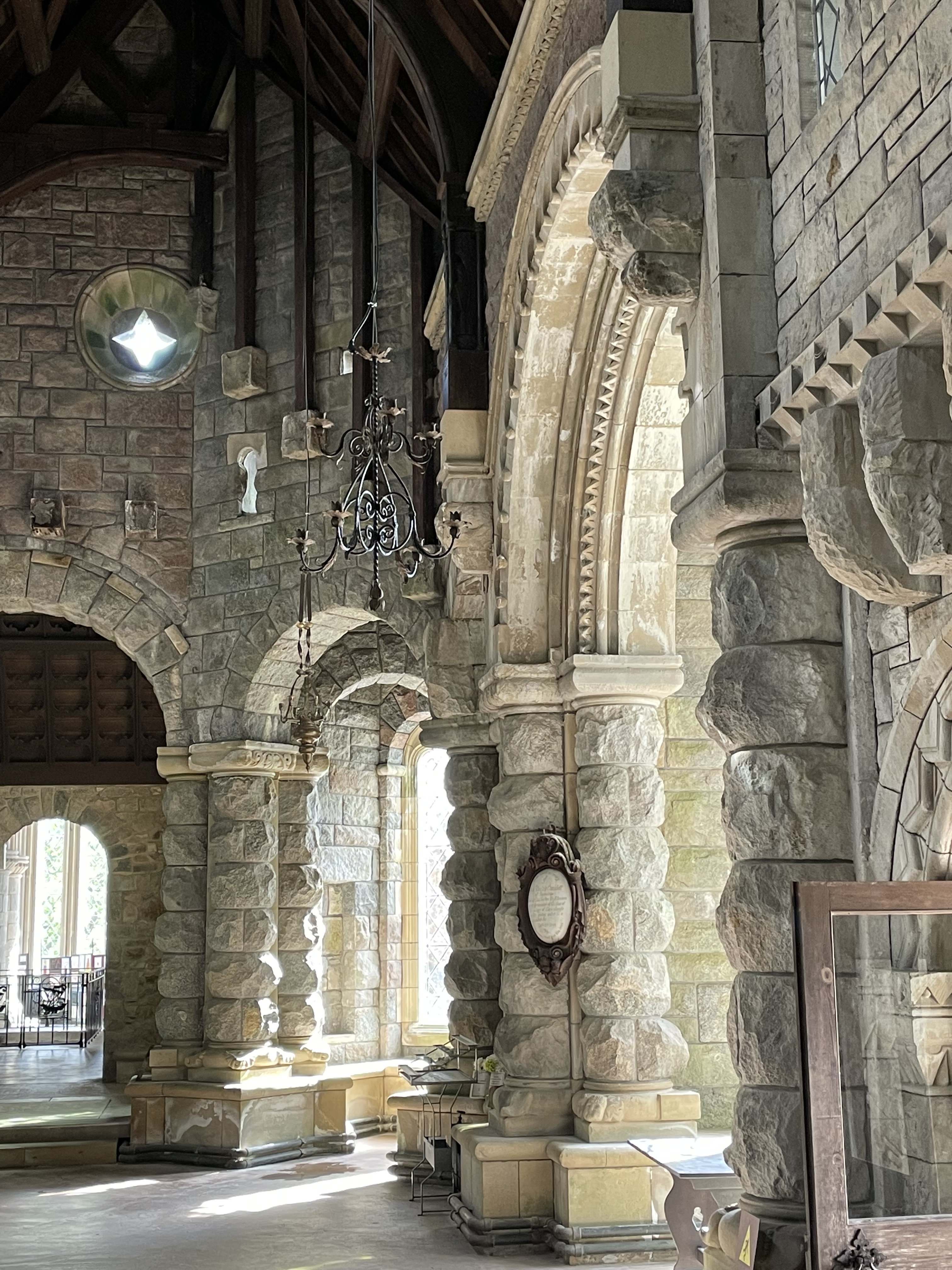
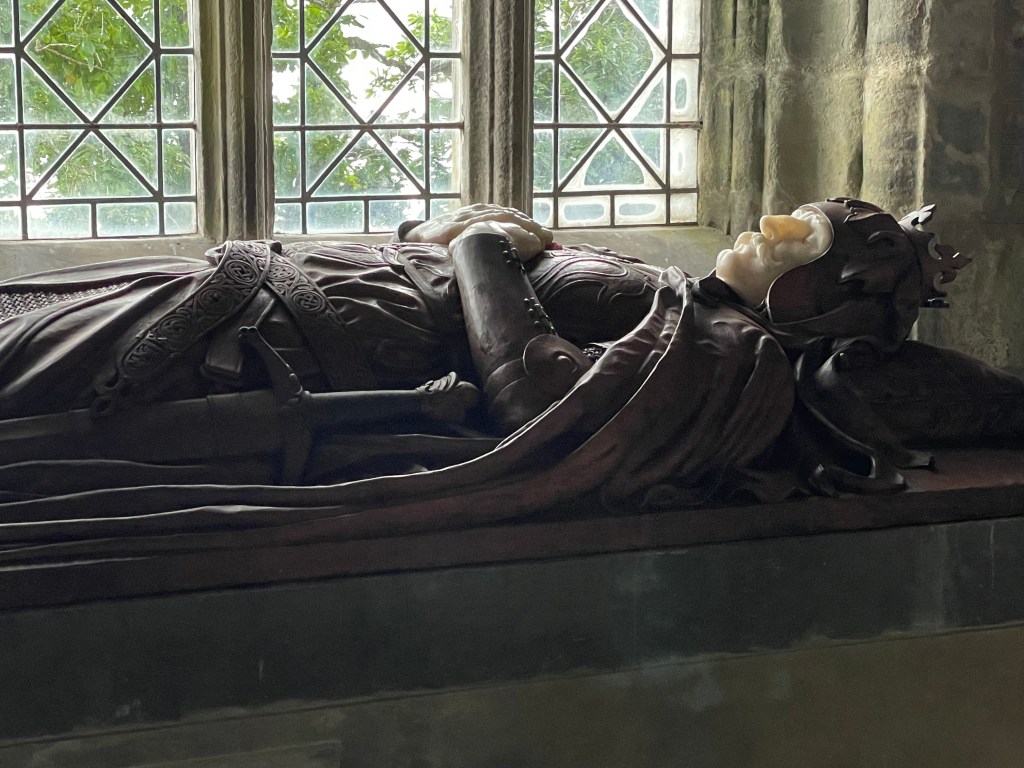
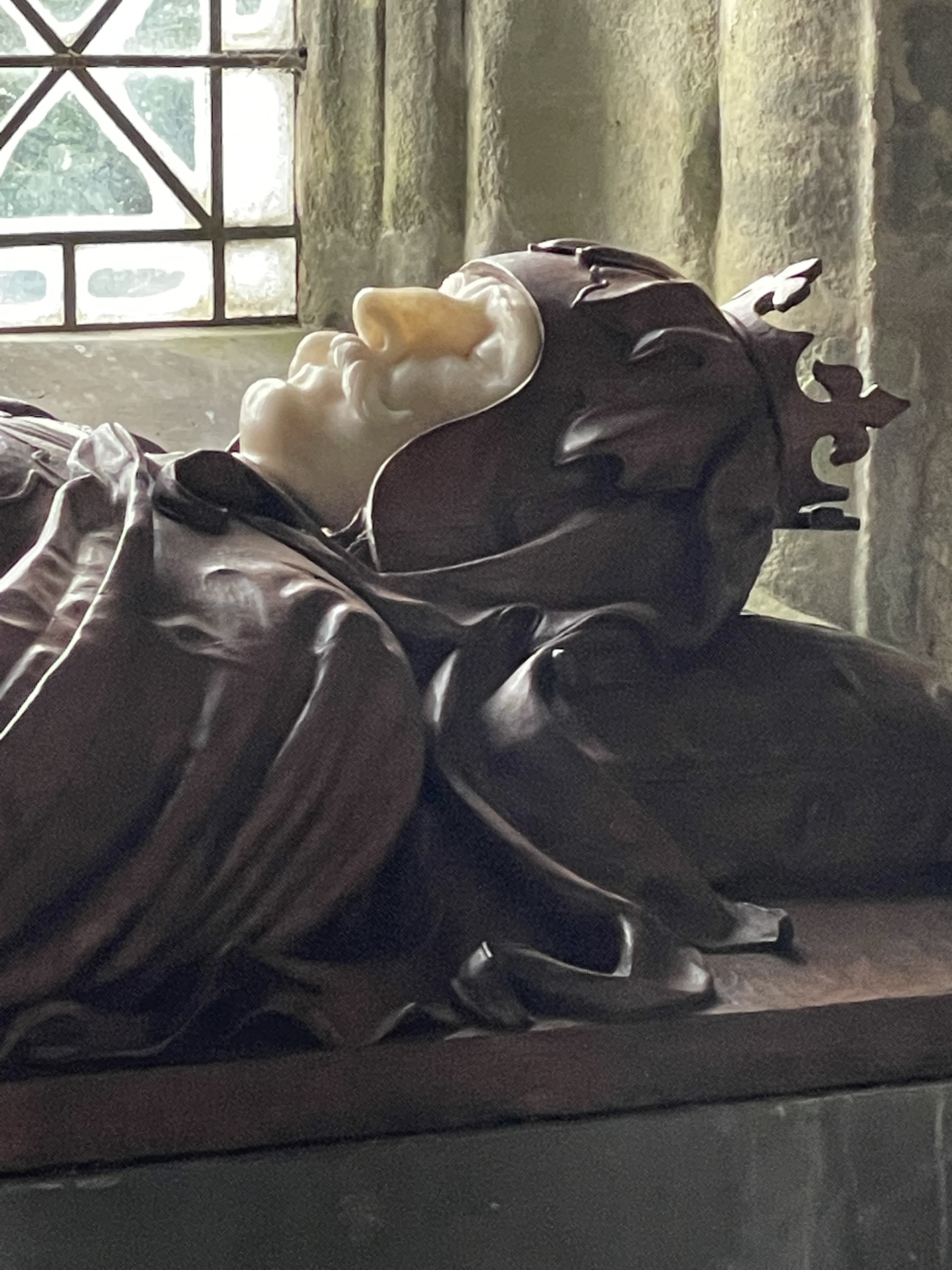
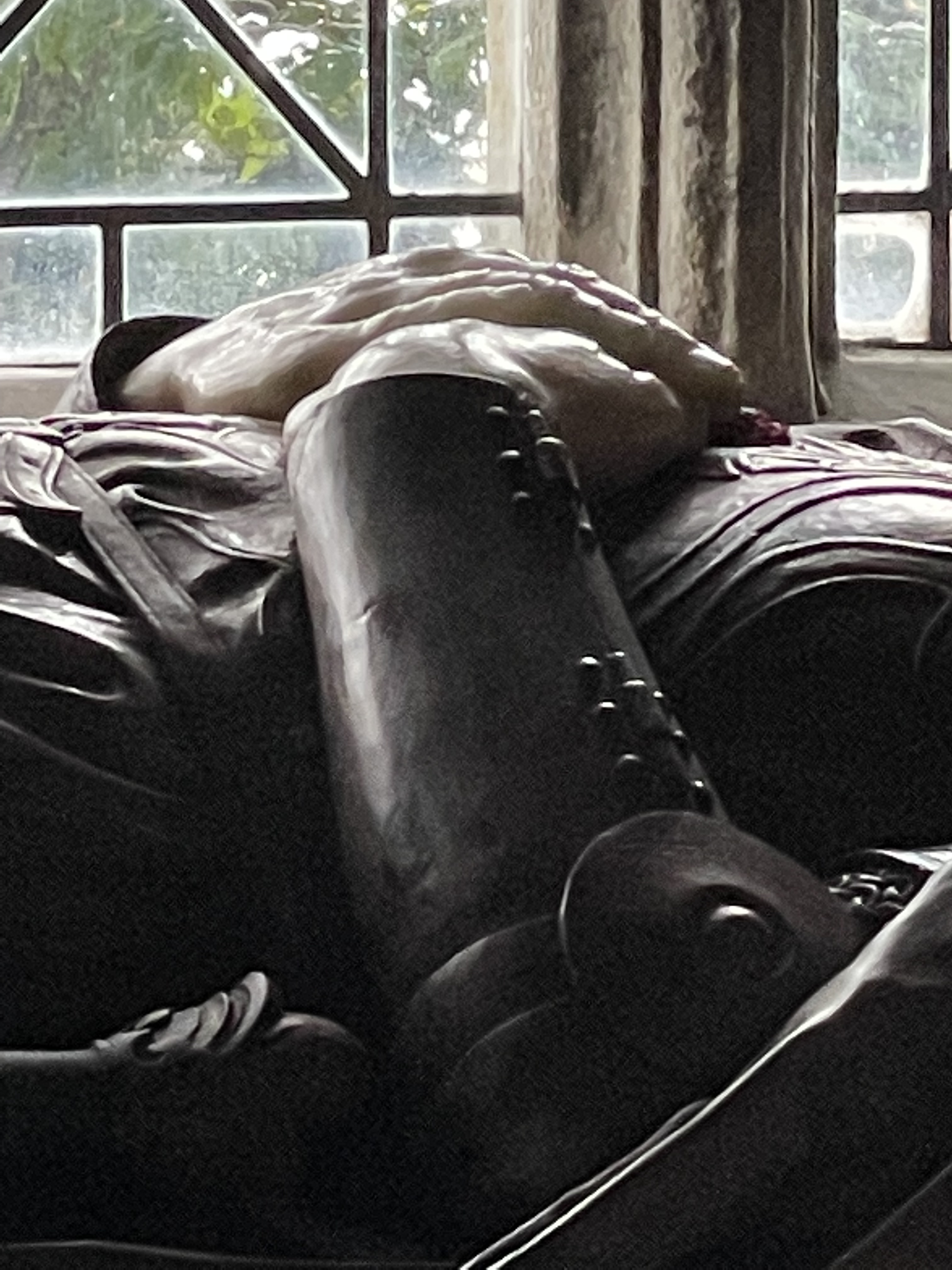
There are 3 chapels in the Church. One of them is devoted to Robert the Bruce – it has a remarkable carved wood & alabaster effigy of the man. The attention to detail is truly impeccable. Robert the Bruce is a national hero in Scotland. He was the King of Scots from 1306-1329 [the year of his death], leading Scotland during the First War of Scottish Independence against England.
One final destination for us to stop at before going back to Glasgow was Helensburgh & a remarkable historic building that was unassumingly called the ‘Hill House‘. It is such a treasure that the National Trust of Scotland commissioned architects Carmody Groarke to completely enclose it in a protective 21st century ‘box’ made from a protective steel frame covered in chainmail mesh, to protect the house completely from the harsh Scottish elements! This is enabling major repairs to be conducted on the roof & walls – without interruptions from weather over a 10 year period. In addition, once the repairs are eventually completed, there is not reason why the box cannot protect the house from long-term weather damage. Visitors can also climb the box structure on multiple level walkways to even inspect the roof of the house. Amazing… see: https://www.nts.org.uk/visit/places/the-hill-house
But what makes this house so special? The house was commissioned by the Glasgow book publisher Walter Blackie. It was designed & built by the celebrated architect Charles Rennie Mackintosh, with furniture & contents being created by his artist/designer wife Margaret Macdonald Mackintosh in the ‘Glasgow style. I tried to take some photos, but they do not do justice to the interiors of the place! They were way ahead of their time back then & their collective creative work was only really appreciated many, many year later…
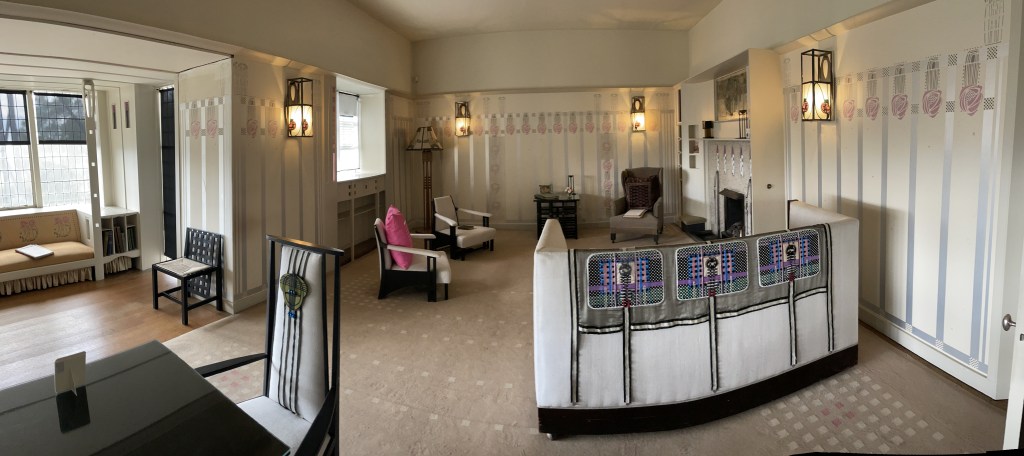

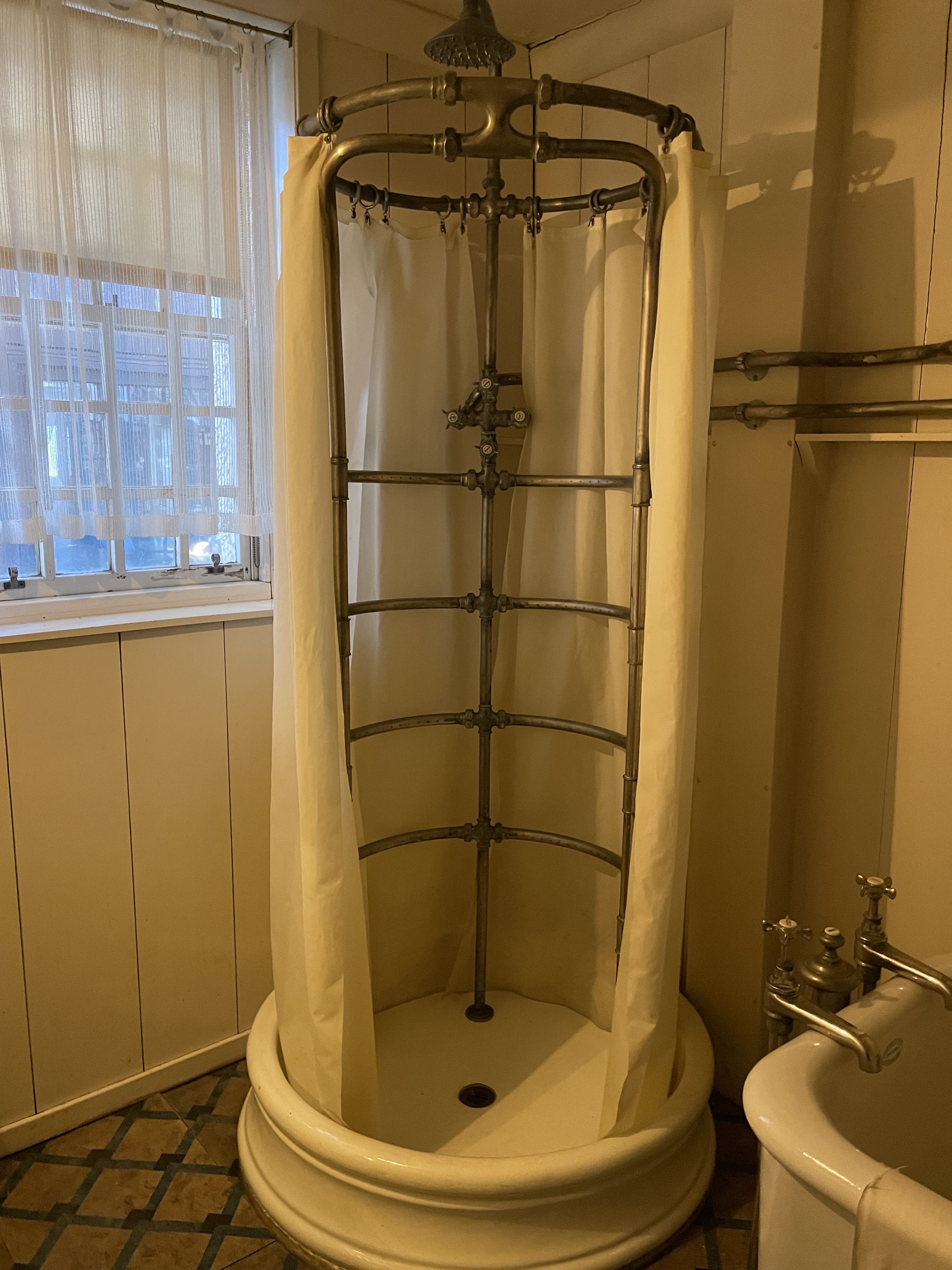

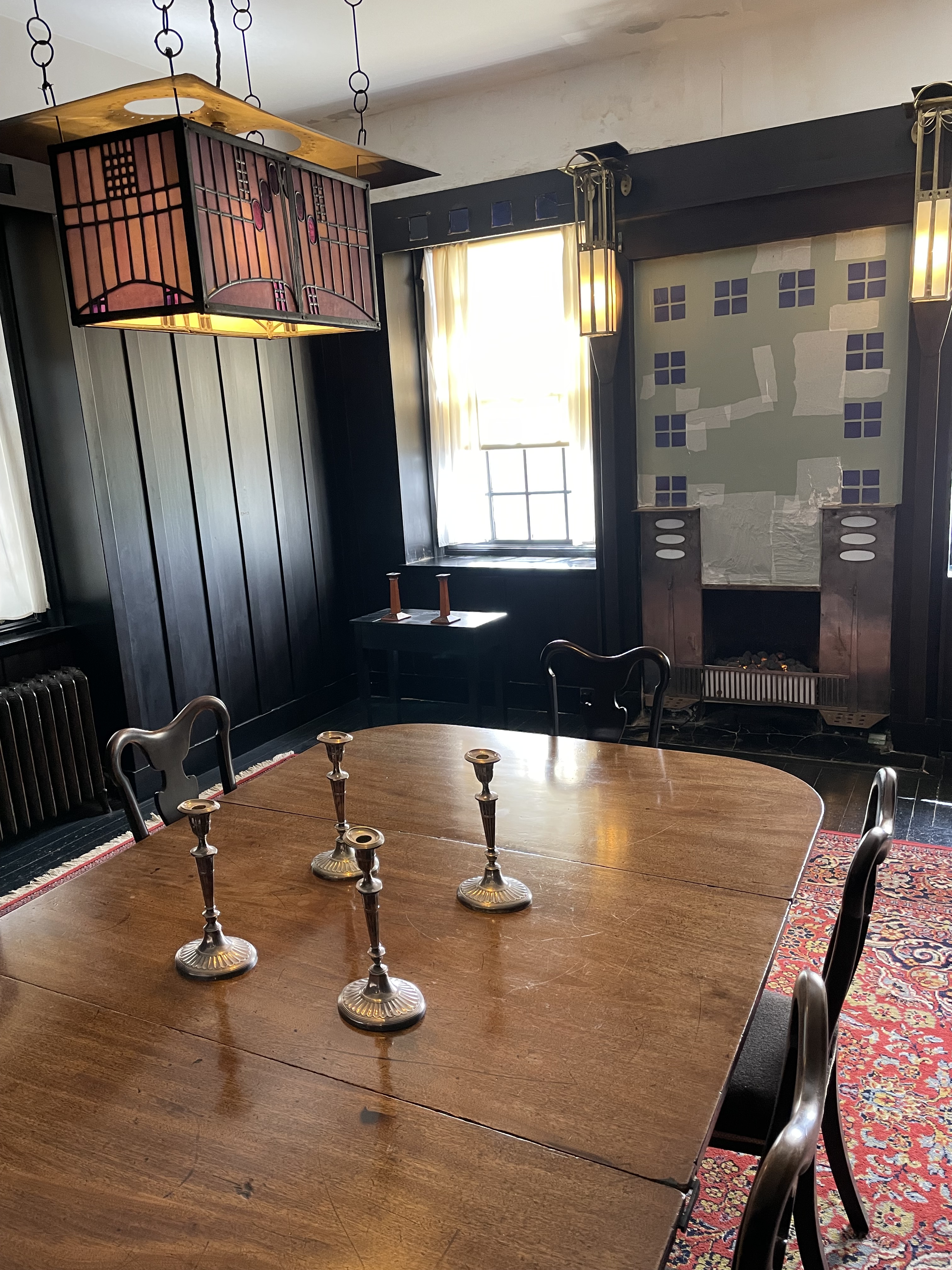
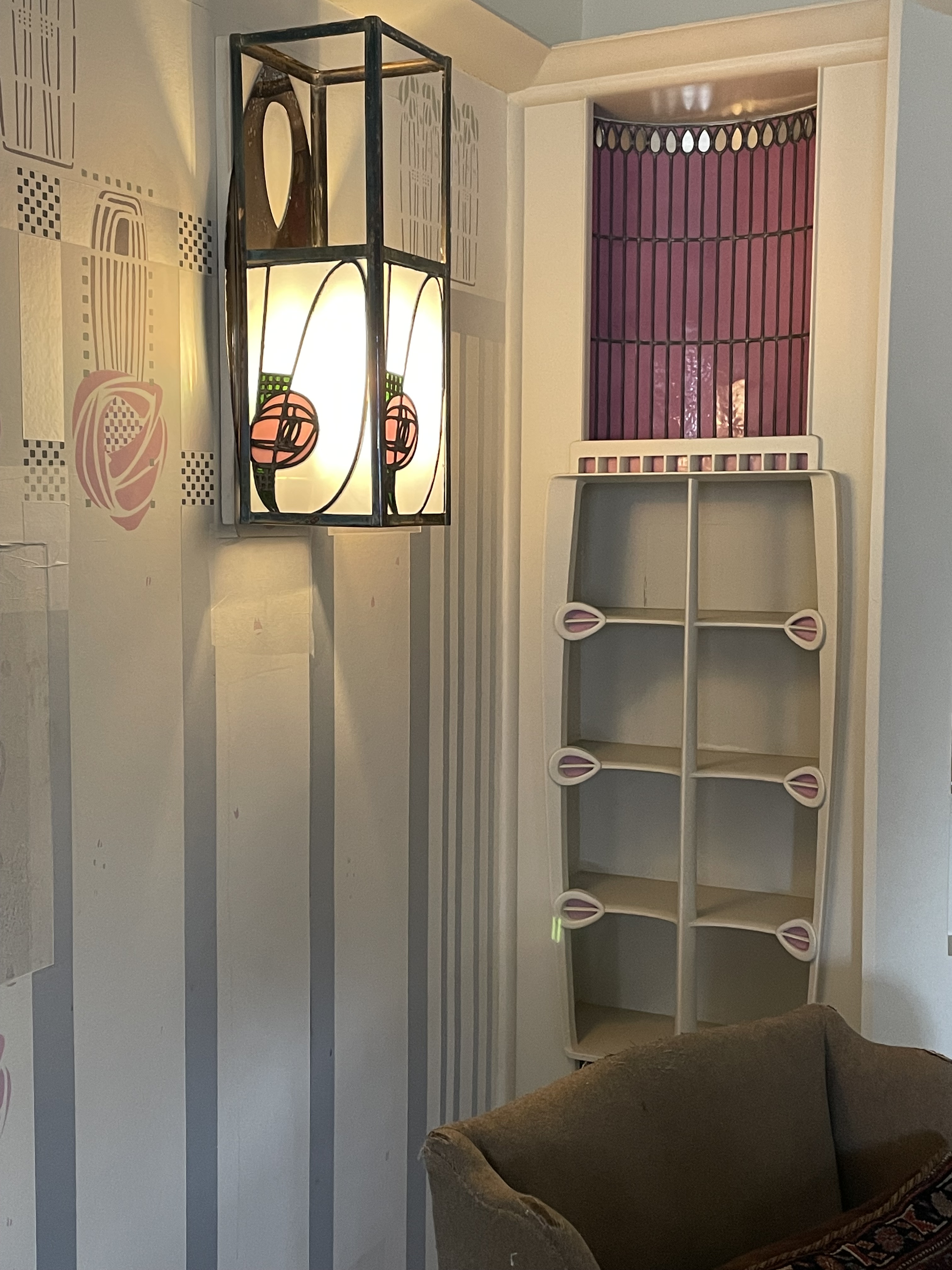
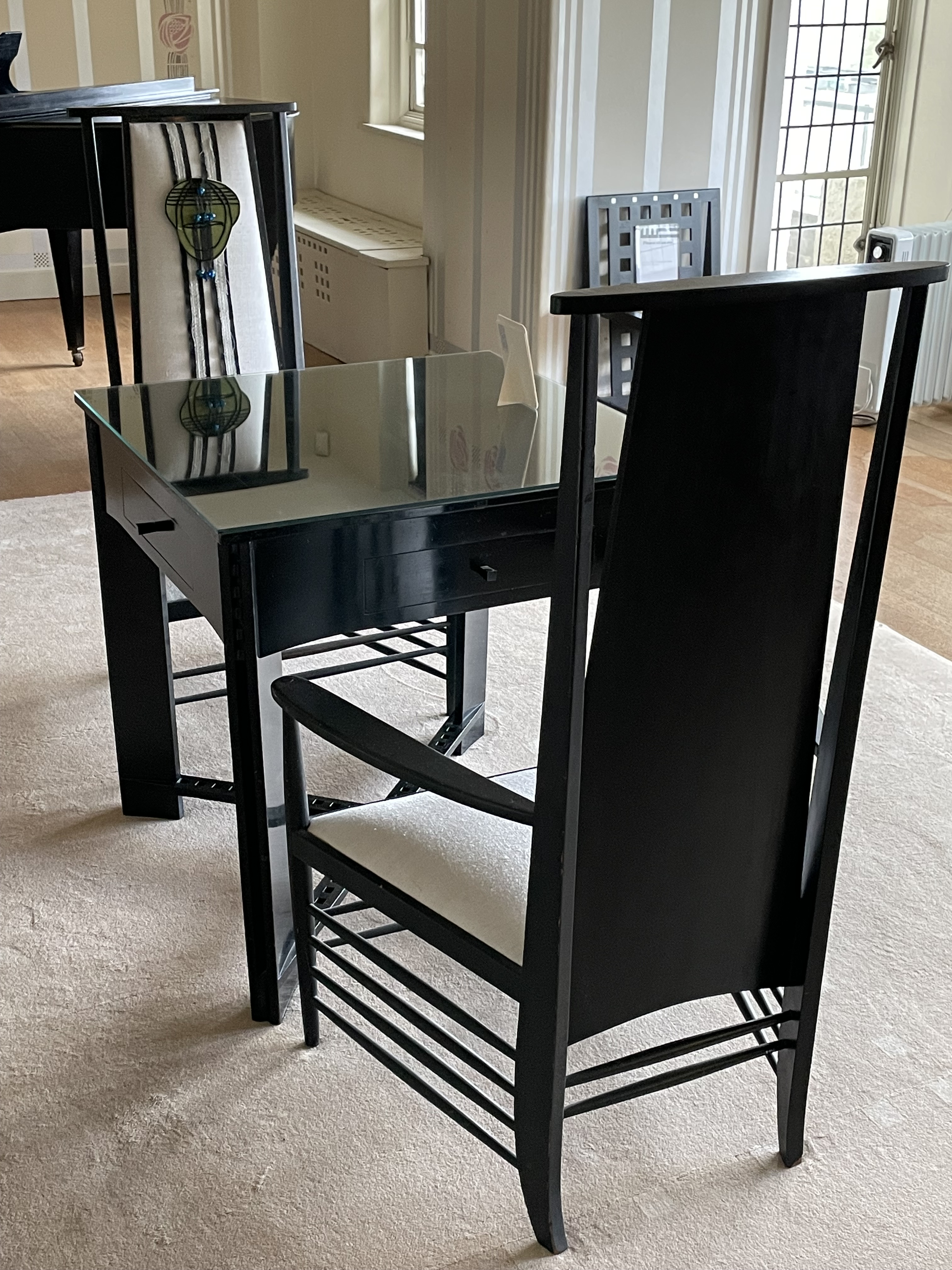
The style of the house no doubt shocked those of the times, because the emphasis was on simplicity & functionality. The general lack of clutter & open spaces seems very contemporary when one looks at it with a 20th-21st century eye. What a treasure this place was!
After a pleasant week of down time, it was time to start to think about getting to Glasgow to get ready for OHBM 2022. The afternoon we got to Glasgow, I felt good – there was a positive sign from the heavens: a HUGE rainbow came out and encircled the Convention Center… one could not ask for more than that! I texted this photo to Randy Gollub who had also seen it from her hotel room & taken a photograph as well. We breathed a [very brief] sigh of relief, before a VERY busy week ahead!

One of the things I love about traveling is that every place will have some sort of original snack food. Scotland is no exception. I found these little gems… a good thing, since I am quite partial to the odd haggis… notice I took this picture after I had finished its contents. 😉

…so, it is so nice to be able to post something to this blog again. Hopefully, the next post – will not take as long to come this time! There have been quite a few travels since then, but not near enough time to blog about them. So, I have my work cut out to do over the winter holiday season…
 Future posts will deal with more scientific topics, pet peeves [not of the four-legged kind] & important issues that concern our profession etc.
 neurowanderer.blog